April 18, 2026
Key Takeaways
- Seasonal vs. Stress: Distinguishing between natural interior needle drop and fatal “top-down” browning is vital for property safety.
- Beetle Infestations: Pine Bark Beetles can kill a healthy Florida pine in weeks and quickly spread to adjacent trees.
- Environmental Impact: Coastal salt spray and lightning strikes are silent killers that predispose pines to secondary failure.
- Fungal Blights: High humidity in the Panhandle promotes needle cast diseases that thin the canopy from the bottom up.
- Immediate Removal: A fully brown pine becomes brittle rapidly; early removal is the only way to prevent “vertical missile” failures during storms.
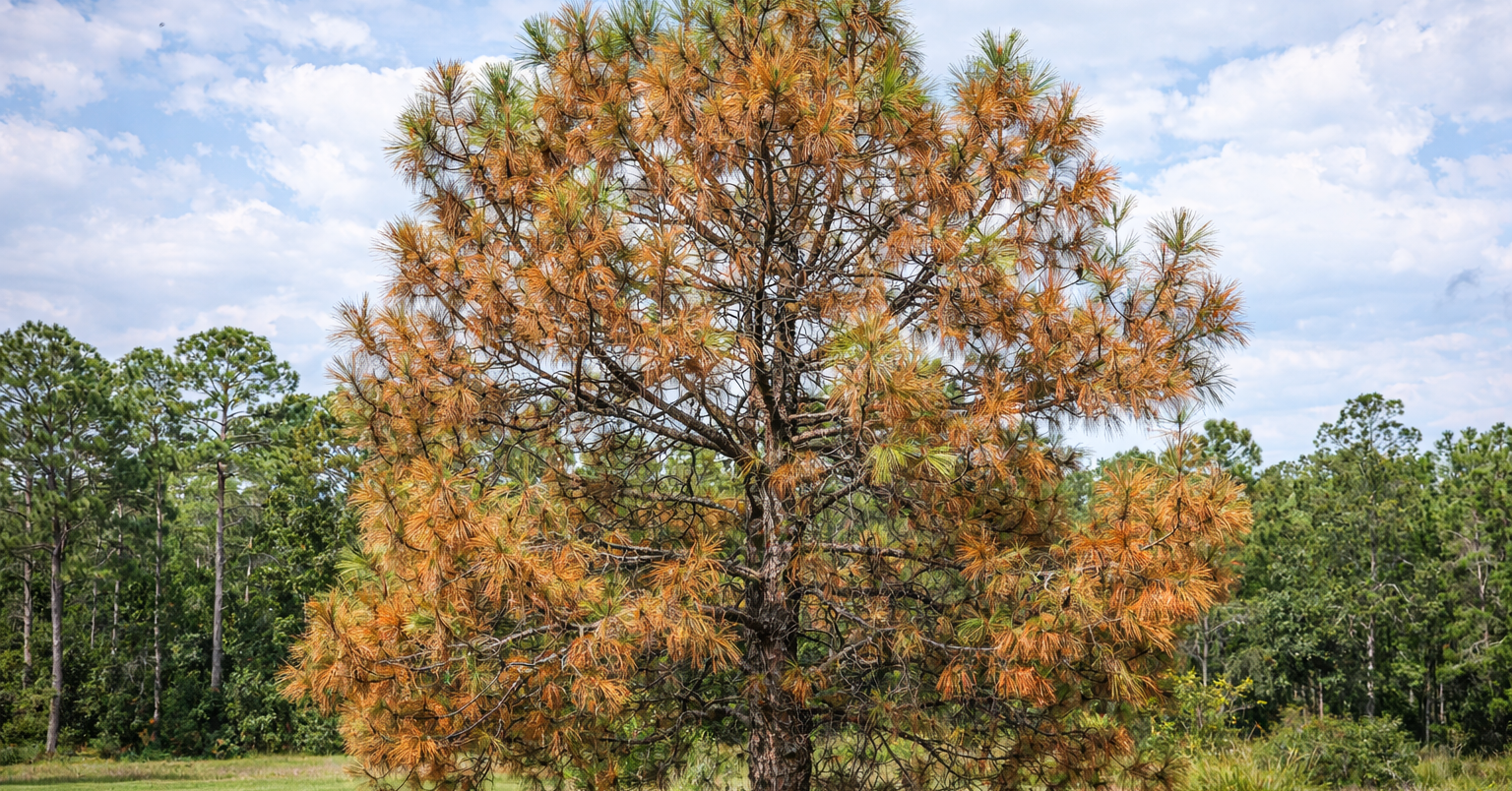
Living in Northwest Florida means sharing your property with towering Slash, Longleaf, and Loblolly pines. These trees define the skyline of Pensacola, Milton, and Gulf Breeze, providing shade and essential windbreaks. For new homeowners, however, the sight of a 60-foot pine turning a vibrant rust-brown can be a source of immediate anxiety.
Common Tree Problems New Homeowners Overlook
New homeowners often assume a browning pine simply needs a deep watering or a bit of fertilizer. Unfortunately, pines have a unique way of “masking” their declining health until the problem is advanced. By the time a pine is completely brown, it is often already structurally compromised and legally dead.
Seasonal Needle Drop vs. Fatal Dieback
In late fall and early winter, it is normal for pines to shed their older, interior needles. This is a natural “housecleaning” process that allows the tree to focus resources on new growth. However, if the needles at the very tips of the branches are turning brown (dieback), the tree is likely suffering from a systemic vascular issue.
The “Pitch Tube” Warning
New owners rarely look closely at the texture of the bark until it’s too late. Small “popcorn-looking” globs of sap on the trunk, known as pitch tubes, are the calling card of boring insects. These are the tree’s attempts to “spit out” invaders. While a few tubes might be managed by a healthy tree, a high concentration of these tubes indicates the tree’s natural defenses have been overrun.
Hidden Lightning Strikes
Northwest Florida is one of the lightning capitals of the world. A pine can be struck without showing a dramatic “shattered” trunk. Instead, the current often travels down the cambium layer, effectively “cooking” the tree from the inside out. The needles may stay green for two to three weeks before suddenly turning a uniform brown as the vascular system completely shuts down.
Why Pines Become Emergencies
Unlike hardwoods like Oaks or Maples, which may linger for years with internal decay, a dying pine becomes brittle and dangerous very quickly.
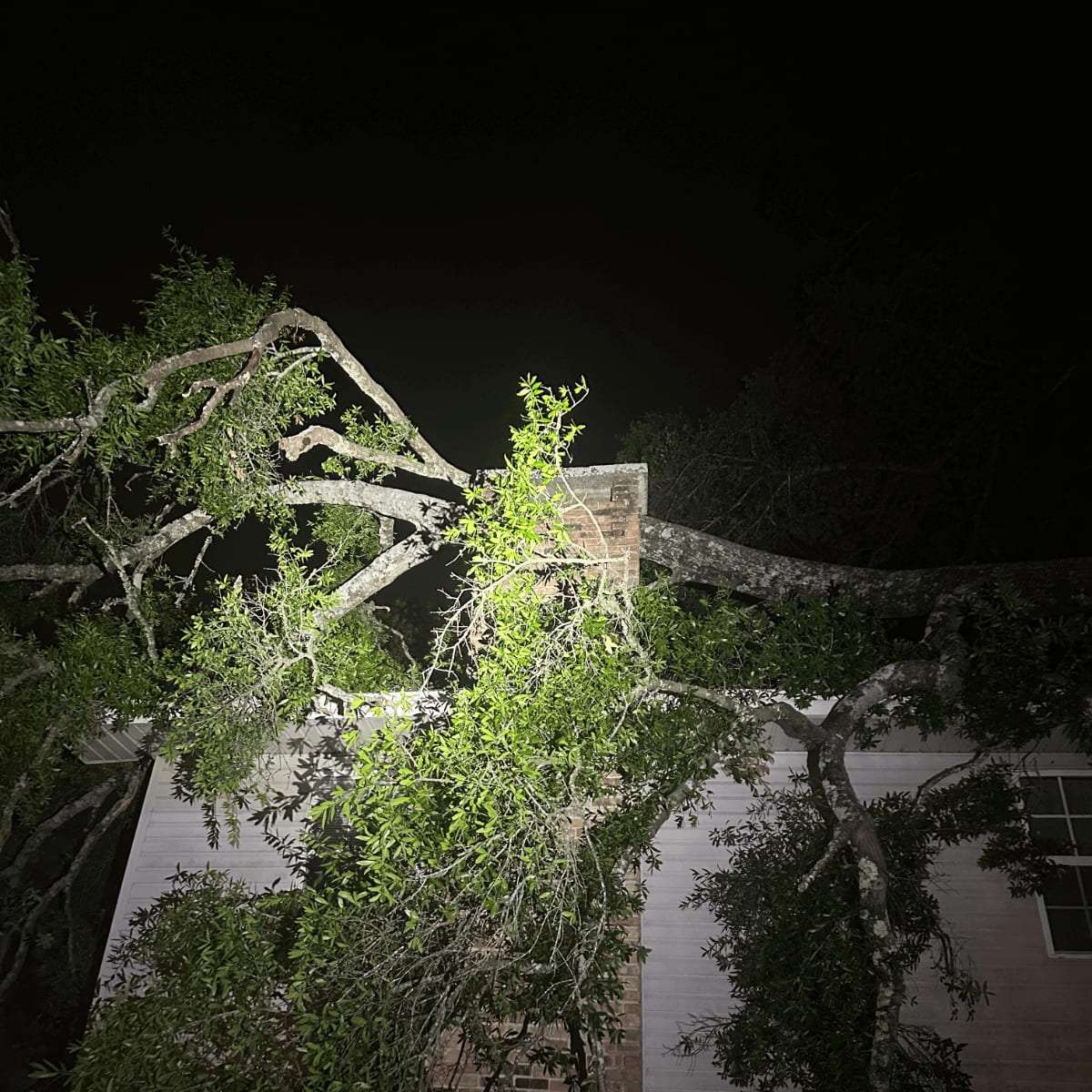
The “Snapping” Risk: Once a pine dies and turns brown, the wood fibers dry out and lose their elasticity. In the high-wind environment of the Gulf Coast, a dead pine is far more likely to snap mid-trunk than to uproot. This creates a “vertical missile” effect where the top half of a 100-foot tree can fall onto a roof with zero warning.
Infestation Spread: A brown pine infested with beetles becomes a “brood tree.” It acts as a massive breeding ground for thousands of insects that will eventually exit the dead tree and fly to the nearest healthy pines on your property. For new homeowners, a single dead pine can cause the entire backyard canopy to be lost within a single season if not addressed.
Emergency Tree Services for New Homeowners
If you notice a pine on your new property changing color rapidly, emergency tree services for new homeowners can mitigate the risk. These services are essential because they handle trees that are too brittle for standard climbing. These services include:
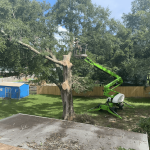
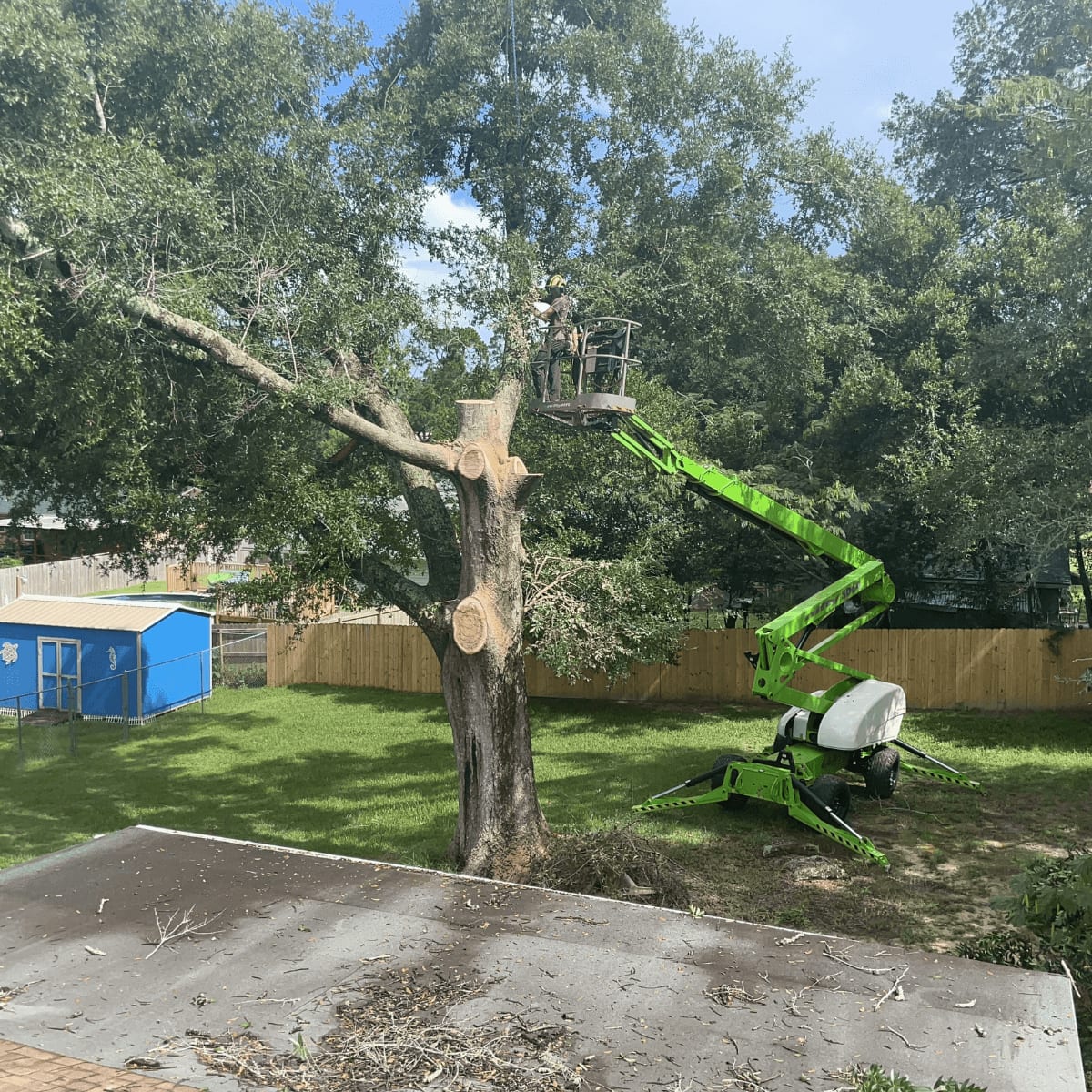
- Urgent Removal: Safely dismantling “top-down” dead pines using cranes or bucket trucks before the wood becomes too unstable for a climber.
- Infestation Containment: Removing infested trees to create a “firewall” that protects your remaining timber assets.
- Hazard Pruning: Removing dead pine limbs that overhang pools, patios, or power lines.
- Health Restoration: Using systemic treatments to bolster the tree’s resin production, which is its primary defense against invaders.
A professional tree service firm like D’s Trees helps homeowners navigate this “Double Threat” by deploying ISA-Certified Arborists who utilize professional-grade systemic trunk injections to kill EAB larvae while simultaneously providing deep-root watering and fertilization to restore the health of drought-stressed heritage trees.
The 3 Main Reasons Your Pines are Turning Brown
1. Pine Bark Beetles (Ips and Southern Pine Beetles)
Beetle infestations are the leading cause of rapid pine mortality in Northwest Florida. These insects tunnel into the phloem (the inner bark), where they lay eggs and create “galleries.” These tunnels effectively “girdle” the tree, cutting off the flow of water from the roots to the needles.
- The Pattern: Browning usually starts at the very top and moves downward.
- The Signs: You will see “frass” (fine sawdust) in the bark crevices and small holes about the size of a pencil lead.
2. Needle Cast and Fungal Blights
Florida’s extreme humidity is a perfect incubator for fungi like Lophodermium. These diseases thrive when there is poor airflow or when trees are planted too close together.
- The Pattern: Browning starts at the bottom of the canopy and moves upward, often leaving the very top of the tree green.
- The Signs: Individual needles will have tiny black spots or brown bands before they eventually drop.
3. Environmental Stress (Salt and Drought)
For homeowners in Pensacola Beach or Navarre, salt spray is a major factor. Salt dehydrates the needles on contact. Inland drought stress is more common. When a pine is thirsty, it cannot produce enough sap to “pitch out” beetles, making environmental stress the “gateway” to a beetle attack.
- The Pattern: Browning appears on the side of the tree facing the prevailing winds or uniformly across the whole canopy during a drought.
Real-World Field Insights
We recently visited a new property in Cantonment where three large Loblolly pines had turned brown in the middle of a hot July. The homeowner assumed the trees were just “dormant” due to the heat. Upon pulling back a small section of bark, we revealed the distinct S-shaped galleries of the Southern Pine Beetle.
Lesson
In Northwest Florida, “wait and see” is a dangerous strategy for pines. By acting within 48 hours, we were able to remove the three infested trees and apply preventative systemic injections to the surrounding healthy pines, saving the homeowner’s entire front yard. A local tree service firm can identify these life-and-death differences before the infestation becomes a neighborhood-wide crisis.
Placement and Long-Term Safety
- Protect the Root Zone: Pines have shallow, wide-reaching roots. Avoid parking vehicles or stacking construction materials under the canopy, as compaction is a leading cause of the stress that invites beetles.
- Diversify Species: If you are replanting, consider Longleaf Pines over Loblolly. Longleafs are historically more resistant to both beetle attacks and hurricane-force winds.
- Binocular Checks: New homeowners should use binoculars once a month to check the very top (the “leader”) of their pines for any sign of yellowing.
Frequently Asked Questions
How do I know if I need emergency tree services?
If the top of the pine is brown, or if you see sawdust at the base of the trunk, the tree is a high-risk hazard that needs an immediate professional assessment.
Can a brown pine be saved?
If the needles are 100% brown and brittle, the tree is dead and cannot be revived. If the browning is patchy or confined to the bottom, fungal treatments may save it.
How fast do beetles kill a tree?
During a “beetle bloom” in the Florida summer, a Southern Pine Beetle population can kill a healthy, mature pine in as little as 30 days.
Why is my pine’s “crying” sap?
Excessive sap (pitching) is a sign that the tree is fighting an invader. It is a good sign that the tree is still trying to defend itself, but it needs professional help to win the fight.
Does a leaning pine always need to be removed?
If the lean is old and the tree has “corrected” its growth toward the sun, it may be stable. If the lean is new or the soil is lifting, it is an emergency.
Is it safe to keep pine firewood near my house?
Only if it is debarked. Freshly cut pine logs with bark attached can attract beetles to the healthy trees on your property.
Conclusion
A browning pine is a loud, visual cry for help. Whether the cause is a natural seasonal shed or a fatal beetle infestation, new homeowners must be proactive in their monitoring. By understanding the 3 main reasons for needle browning beetles, fungus, and environmental stress, you can act quickly to protect your healthy trees and remove hazards before they cause property damage. Regular inspections and professional care from emergency tree services for new homeowners are the best ways to ensure your North Florida forest remains an asset rather than a liability.