| Clients | Region | Service | Outcome |
|---|---|---|---|
| 3 residential properties | Pace, Pensacola, Gulf Breeze | Tree Risk Assessment & Remediation | Zero property loss; 100% insurance compliance |
Background
In the lush landscapes of Northwest Florida, trees are more than scenery — they are vital to property value and environmental health. But the region’s climate, defined by high humidity, sandy soils, and the perennial threat of tropical storms, places extreme stress on even the sturdiest oaks and pines. For homeowners in Pace, Pensacola, and Milton, the line between a beautiful canopy and a major liability is often a single storm away.
A common misconception is that a tree is safe as long as it looks green. In reality, many trees that appear healthy from a distance harbor internal decay, root rot, or structural defects that only a trained arborist can detect. The three cases documented here illustrate that pattern — and the difference that a structured, data-driven risk assessment makes.
Assessment Methodology
D’s Trees follows a three-stage protocol grounded in International Society of Arboriculture (ISA) standards. Every property visit walks through the same sequence so that findings are repeatable and defensible to insurance carriers.
The arborist reads the tree’s body language: vertical cracks, V-shaped crotches prone to splitting, and fungal conks or mushrooms at the base of the trunk, which often signal internal heartwood rot.
The team evaluates root system stability and the integrity of major scaffold branches. In Northwest Florida, where wind loads can be extreme, understanding how a tree’s center of gravity has shifted due to leaning or uneven growth is critical for predicting failure during a hurricane.
Each tree is categorized as low, moderate, high, or critical risk. This lets homeowners prioritize maintenance spend so the most dangerous trees are addressed first.
Case 1 — Silent Decay in Pace, FL
Lucy E., residential homeowner, Pace, FL
Presenting Concern
Routine evaluation of a mature water oak that shaded the backyard and rear deck. The tree appeared healthy and was a centerpiece of the property.
Findings
During the on-site inspection, the arborist identified small fungal growths near the root flare and a subtle heaving of the soil on the side opposite the tree’s lean. Closer structural evaluation revealed significant internal decay that had compromised nearly 60% of the trunk’s structural integrity. Left through another summer thunderstorm season, the combined weight of the canopy and high winds would almost certainly have sent the tree through the home’s roof.
Action Taken
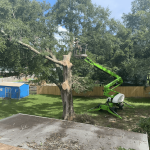
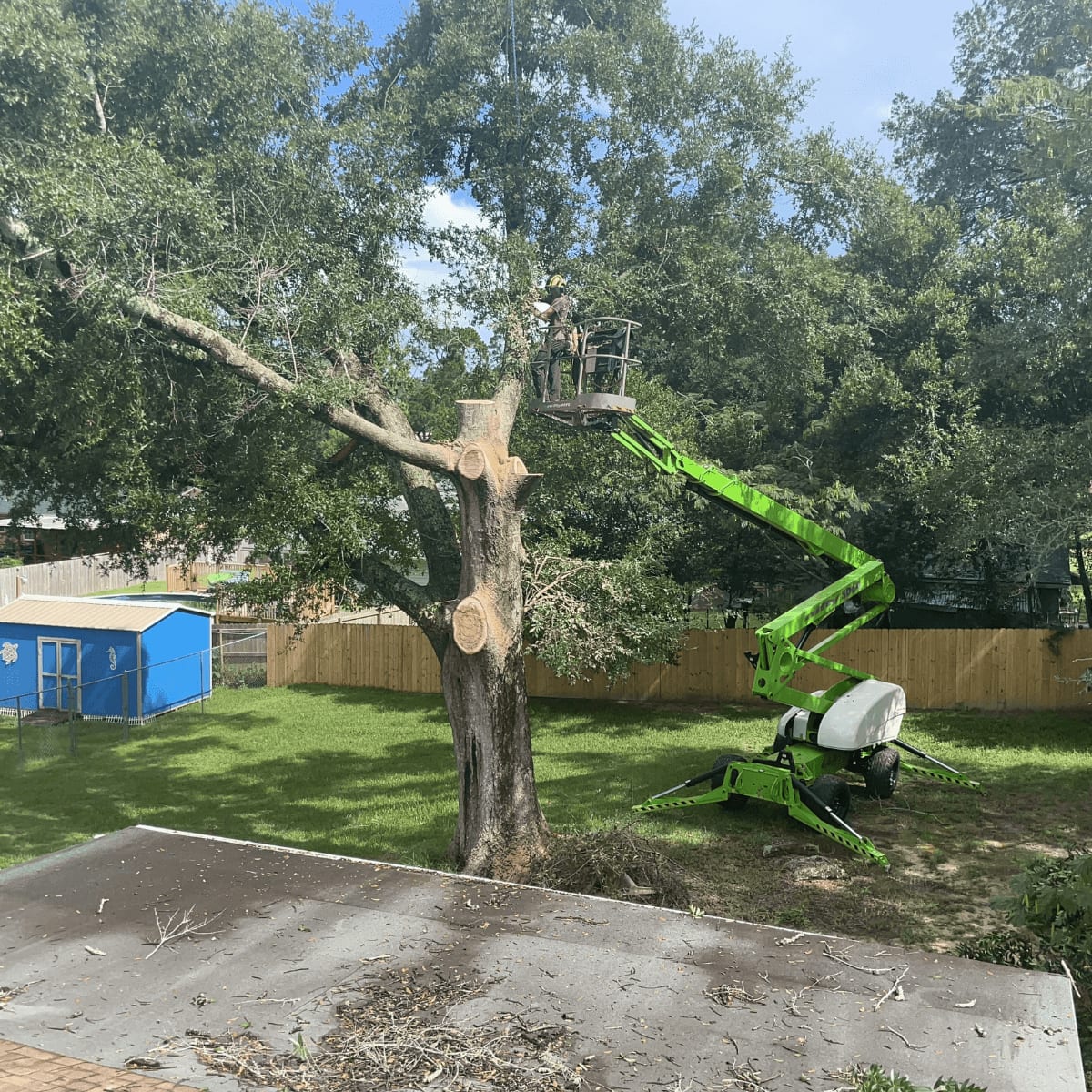
The homeowner received a personalized risk report and a customized care plan. D’s Trees deployed its specialized crane service to remove the tree in sections, with no impact to surrounding landscape or the home itself. The advanced removal process eliminated the need to climb the tree at all.
Outcome
Catastrophic structural failure averted. No insurance claim filed. Property left clean, with the homeowner reporting confidence in the diagnostic process.
Case 2 — Insurance-Driven Assessment in Pensacola
Michael H., residential homeowner, Pensacola, FL
Presenting Concern
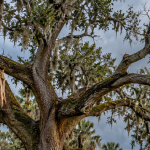
The homeowner’s insurance carrier required remediation of several limbs leaning toward the roof on a twenty-year-old oak. The carrier’s note implied removal might be necessary.
Findings
A full arborist consultation determined that while specific limbs were high-risk, the tree itself was fundamentally sound. Removal was not warranted.
Action Taken
D’s Trees implemented a plan of professional trimming and shaping that reduced the canopy’s sail effect — the surface area that catches wind during storms — while preserving the tree’s structure and appearance. The work satisfied the insurance company’s safety requirements without sacrificing a healthy mature tree.
Outcome
Insurance compliance achieved. Tree preserved. The reshaped canopy left the oak measurably more resilient to Northwest Florida’s high winds, with the aesthetic of the yard improved rather than diminished.
Case 3 — Lightning Damage and Cascading Risk
Rebecca M., residential homeowner, Northwest Florida
Presenting Concern
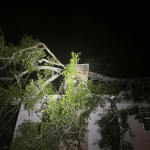
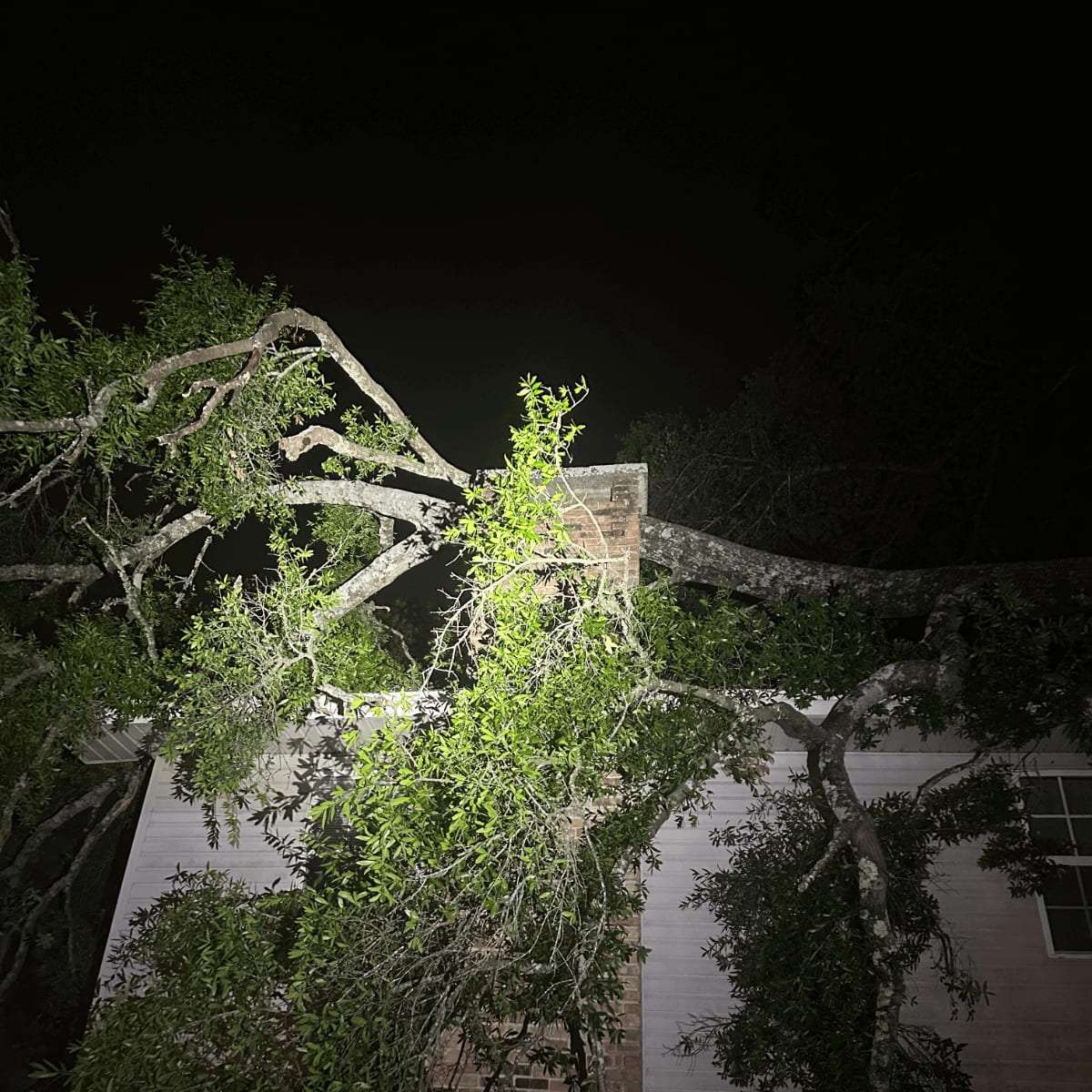
Three large trees on the property required crane removal. One had already been struck by lightning and had fallen into two neighbors’ yards. The homeowner needed both immediate cleanup and an assessment of remaining trees.
Findings
Post-event inspection confirmed that the remaining trees were also at elevated risk due to shared root systems and secondary stress from the strike. Lightning damage is often invisible from the exterior, and adjacent trees in a cluster frequently sustain unseen internal injuries from the same event.
Action Taken
D’s Trees mobilized quickly, coordinated directly with both affected neighbors, and used advanced equipment to clear the hazardous debris and remove the remaining compromised trees in a single coordinated operation.
Outcome
Further damage to neighboring fences and structures was prevented. The cross-property coordination headed off the kind of legal and financial disputes that often follow tree-fall incidents involving adjoining lots.
Why Local Expertise Made the Difference
The weather patterns in Pace, Pensacola, and Gulf Breeze are distinct. Trees in this region face intense salt spray near the coast, rapid growth cycles driven by humidity, and the physical battering of tropical systems. A locally owned firm reads these environmental stressors fluently.
D’s Trees’ ISA-certified arborists look beyond the tree to the surrounding conditions. Is the soil compacted from recent construction? Is the water table too high for the species? Has nearby grading changed how water drains during heavy rain? Each of these factors raises or lowers the probability of failure, and each was relevant to at least one of the three cases above.
Summary of Findings
| Condition | Risk Level | Recommended Action |
|---|---|---|
| Internal decay (visual fungus) | Critical | Immediate removal or stabilization |
| Encroaching roof limbs | Moderate | Selective pruning and crown thinning |
| Lightning strike damage | High | Post-storm structural assessment |
| Soil heaving at base | Critical | Emergency inspection for root failure |
| V-crotch stem splits | High | Cabling or reduction to prevent splitting |
Lessons Learned
- A green canopy is not a clean bill of health. Two of the three properties featured trees that looked sound from a distance and were not.
- Insurance-mandated work is an opportunity, not a sentence. Case 2 shows that an independent arborist assessment can satisfy a carrier without removing a healthy tree.
- Lightning events warrant a sweep of the whole property, not just the struck tree. Cluster effects from shared root systems and secondary stress are real and recurring.
- Timing converts risk into routine. Each of the three outcomes turned on the assessment happening before the next major weather event, not after.
Recommendations for Homeowners in Northwest Florida
- Schedule a professional assessment annually, and again after any significant storm or lightning event.
- Walk the property monthly. Look for mushrooms or lifting soil at the base, vertical cracks or seeping areas on the trunk, and dead or hanging branches overhead.
- Treat any new lean as a critical signal, not a cosmetic issue.
- Keep a simple record of tree health observations between professional visits — photos with dates are enough.
Closing Note
In each of the three cases above, the decisive factor was not equipment or technique. It was timing. The homeowners contacted a certified arborist before a hidden defect became a roof claim, before an insurance requirement turned into a removal, and before lightning damage spread from one tree to its neighbors. The assessment itself — methodical, documented, and grounded in local conditions — turned what could have been catastrophic events into routine maintenance.
For homeowners in Pace, Pensacola, Milton, Gulf Breeze, and the surrounding Northwest Florida communities, the takeaway is straightforward: the most cost-effective tree work is the work that happens before a storm, not after one.