May 13, 2026
Key Takeaways
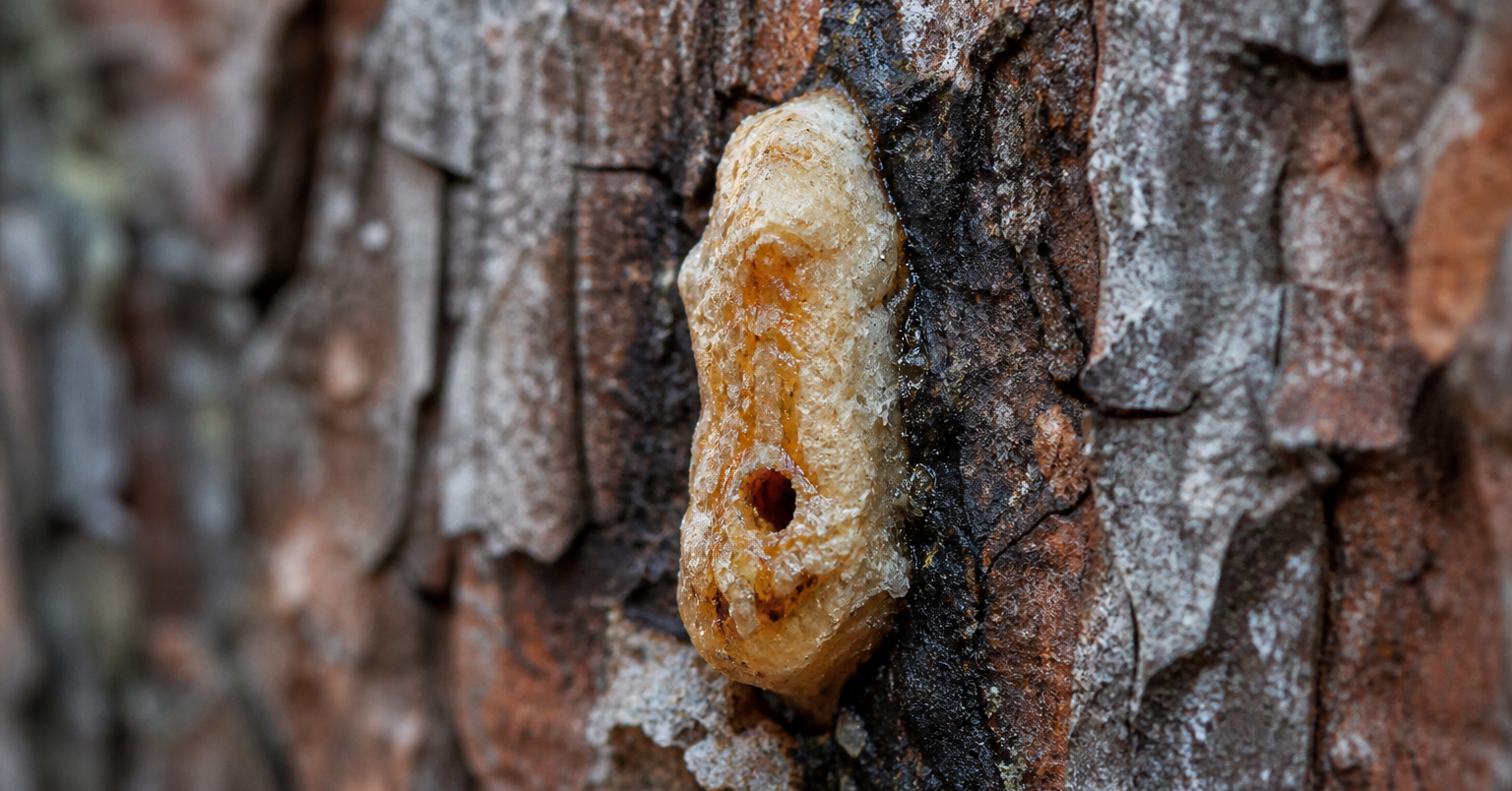
- Identify Early: Watch for pitch tubes, white or reddish popcorn-like sap globules on the trunk as the first sign of attack.
- The Red Top Signal: Once the entire canopy turns reddish-brown, the tree is typically beyond saving and has become a hazard.
- Drought Stress: Beetles target stressed trees; maintaining hydration during Florida’s dry spells is the best defense.
- Rapid Removal: Infested trees must be removed quickly to prevent the brood from migrating to healthy neighboring pines.
- Professional Diagnosis: Distinguishing between Southern Pine Beetles and Ips Engraver Beetles requires an arborist’s expertise.
In the landscapes of Northwest Florida, from the rolling hills of Pace to the coastal reaches of Pensacola, the pine tree is an iconic fixture. Longleaf, Slash, and Loblolly pines provide the high canopy and acidic soil that define our local ecosystem. However, these majestic evergreens are currently facing a quiet but deadly adversary: the Pine Bark Beetle.
For a homeowner in Pensacola, a beetle infestation is not merely a landscaping issue; it is a race against time. These tiny insects can take down a mature, fifty-foot pine in a matter of weeks, transforming a vibrant asset into a brittle, grey skeleton that threatens your home and power lines. Understanding how these beetles operate, why they target certain trees, and how to fight back is essential for any property owner in the Panhandle.
The Three Villains: Types of Pine Bark Beetles
Not all beetles are created equal. In Northwest Florida, we primarily deal with three types of bark beetles, each with different behaviors and levels of aggression.
1. The Southern Pine Beetle (SPB)
The SPB is the most destructive of the trio. They attack in massive numbers, overwhelming even healthy trees through sheer volume. They utilize pheromones to call in reinforcements, leading to spots of infestation that can jump from tree to tree with terrifying speed.
2. Ips Engraver Beetles
Ips beetles are more opportunistic. They typically target trees that are already stressed by lightning strikes, construction damage, or drought. While less aggressive than the SPB, they are far more common in suburban Pensacola neighborhoods, where yard activities often stress tree root systems.
3. Black Turpentine Beetles
Black Turpentine Beetles are the largest of the bark beetles, but usually the least lethal if caught early. They focus on the bottom six to eight feet of the trunk. While they can kill a tree, they move more slowly, often giving homeowners a larger window for treatment.
The Biology of an Attack: How They Kill
To save your pines, you must understand how such a small insect kills such a large organism. Bark beetles do not eat the wood of the tree; they mine the cambium, the thin, living layer of tissue between the bark and the wood.
Girdling the Tree
As beetles tunnel through the cambium to lay their eggs, they create galleries. These tunnels effectively cut off the tree’s ability to transport water and nutrients between the roots and the needles. This process is known as girdling. Once the circle of galleries is complete around the trunk, the tree’s vascular system is severed.
The Introduction of Blue Stain Fungus
Many bark beetles carry a fungus known as Blue Stain. As they enter the tree, the fungus spreads into the sapwood, clogging the water-conducting tissue (xylem). This dual attack of physical tunneling and fungal clogging is why a pine can turn from green to brown almost overnight.
Warning Signs: What to Look For
By the time a pine tree turns completely brown, the beetles have usually already finished their life cycle and moved on to the next victim. You must look for earlier, more subtle clues.
Pitch Tubes
When a beetle tries to bore into a pine, the tree’s natural defense is to pitch it out with a burst of resin. This creates a pitch tube, which looks like a small wad of chewing gum or a piece of popcorn stuck to the bark. If you see dozens of these tubes, the tree is under heavy attack.
Boring Dust
Look for fine, reddish-brown dust in the crevices of the bark or at the base of the tree. This is the frass or sawdust created as the beetles chew through the outer bark.
Canopy Discoloration
The fade usually starts at the top. Needles will transition from a vibrant deep green to a pale yellowish-green, then to a bright sorrel red. Once the needles are red, the tree is dead, and the focus must shift to protecting the remaining trees on your property.
Prevention: The Best Offense
In the world of arboriculture, an ounce of prevention is worth a ton of wood chips. Bark beetles are naturally drawn to stressed trees because these trees have lower resin pressure and cannot pitch out the invaders.
Water Management
Pensacola often experiences flash droughts in the late spring and summer. During these dry spells, pines become dehydrated. Deep-root watering during these periods maintains the resin pressure necessary for the tree to defend itself.
Avoiding Construction Stress
If you are building a pool, a fence, or a home addition in Pace or Milton, be mindful of root compaction. Heavy machinery driving over a pine’s root zone crushes the delicate feeder roots, signaling the beetles that a weak target is available.
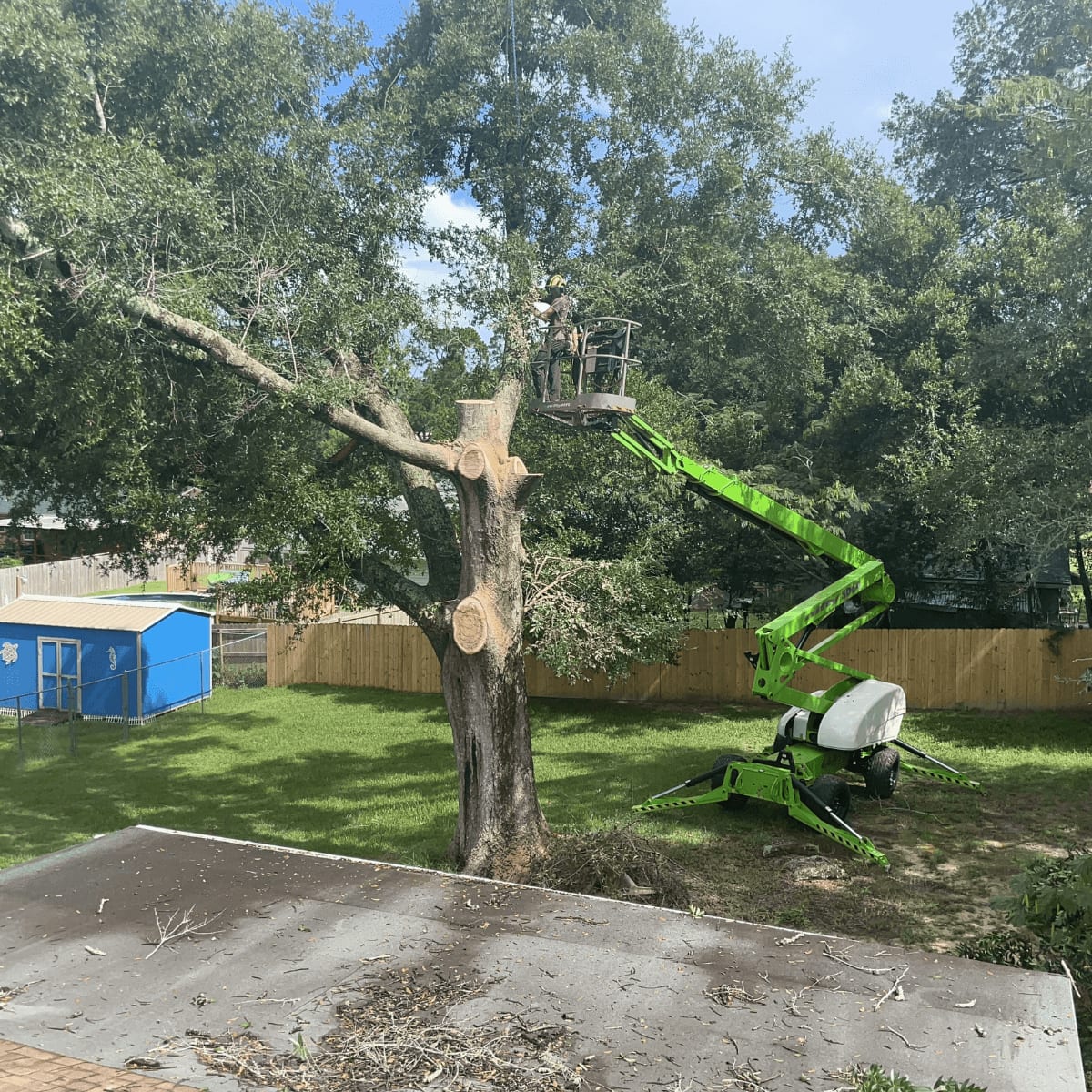
In the fight against Pine Bark Beetles, the expertise of an ISA Board Certified Master Arborist is your most powerful weapon. D’s Trees provides comprehensive beetle management strategies for homeowners across Pensacola, Pace, and Northwest Florida. Founded by retired Coast Guard pilot Doug Doll, our team applies military-level precision to every health assessment and tree extraction. We don’t just identify the infestation; we offer the specialized arborist consultations and tree risk assessments needed to save your remaining pines and safely remove the brood trees that threaten your landscape.
D’s Trees provides a wide range of tree services, such as tree removal, tree trimming, shrub removal, stump removal/grinding, 24/7 emergency tree service, lot/land clearing, crane service, arborist service/consultation, tree risk assessment, municipal permits, tree cabling & bracing, brush hogging (mulching), and wood chips. We handle every project with a Property Damage Prevention Guarantee.
Protect your forest and your home by calling the professionals at (850) 999-0110 for a free quote and expert health audit.
Frequently Asked Questions (FAQs)
1. Can I spray my tree to kill the beetles?
Surface sprays are generally ineffective once the beetles are inside the bark. Systemic injections by a professional arborist are a much better solution for high-value pines that are not yet fully infested.
2. If one tree has beetles, will they all die?
Not necessarily. Southern Pine Beetles are likely to spread, but Ips beetles may stay confined to a single stressed tree. A tree risk assessment is necessary to determine the threat level to your other pines.
3. Why did my pine die so fast after a lightning strike?
Lightning strikes create a stress signal (ethanol) that beetles can detect from miles away. A struck tree is often infested within 48 hours.
4. Is it safe to leave a dead pine standing?
No. Pine wood degrades very quickly in Florida’s humidity. A dead pine becomes brittle and prone to snapping in even moderate winds, making it a major liability.
5. Does D’s Trees offer stump grinding after beetle removal?
Yes. We provide full stump removal and grinding to restore your landscape and prevent other pests from nesting in the decaying wood.
6. Can I use the wood from an infested tree for firewood?
It is risky. If the beetles are still in the wood, you could inadvertently bring them closer to healthy trees. It is best to have the debris hauled away or mulched.
7. Do I need a permit to remove a beetle-infested tree?
In some areas of Pensacola and Gulf Breeze, municipal permits may be required for large pines. D’s Trees handles the paperwork to ensure you stay compliant.
8. What is frass?
Frass is the mixture of sawdust and beetle waste. Its presence at the base of your tree is a definitive sign that an active infestation is underway.
Summary Checklist: Emergency Tree Risk
| Condition | Risk Level | Recommended Action |
|---|---|---|
| Active pitch tubes (popcorn sap) | High | Immediate arborist consultation. Consider systemic treatment. |
| Reddish-boring dust in bark | High | Urgent inspection. Beetles are actively tunneling. |
| Red or brown needle canopy | Critical | Tree is dead. Schedule a 24/7 emergency removal to prevent spread. |
| Recent lightning strike | Moderate | Monitor for 14 days. high risk of beetle infestation. |
| Thinning or yellowing canopy | Moderate | Deep root watering and full health assessment to improve vigor. |
Final Advice
The key to winning the battle against the Pine Bark Beetle in Northwest Florida is vigilance and rapid intervention. If you notice pitch tubes or reddish-brown dust on your Pensacola pines, do not wait for the canopy to turn brown, as that signal usually indicates the tree is already lost and the beetles have begun migrating to your neighbors’ property. Your primary solution is to maintain tree health through proper hydration and avoiding root stress, but once an infestation is confirmed, the only way to protect your remaining landscape is through the swift removal of brood trees. Working with an ISA Board Certified Master Arborist ensures that you are accurately identifying the specific beetle species and implementing a targeted plan that may include systemic injections for healthy trees or crane-assisted removal for hazardous ones. By acting decisively at the first sign of sap tubes or boring dust, you can save your high-value pines and prevent a single infested tree from turning into a total property loss.