May 14, 2026
Key Takeaways:
- Soil Liquefaction: Saturated sandy soil loses its grip on the root system, allowing even healthy trees to lean or fall.
- Weight Overload: Rain-soaked leaves and branches significantly increase the top-heavy load on a tree’s structural support.
- Root Hypoxia: Prolonged standing water deprives roots of oxygen, leading to rapid health decline and root rot.
- Invisible Instability: A tree may survive a storm but become unstable days later as the soil shifts during the drying process.
- Proactive Monitoring: Identifying heaving soil or new leans early can prevent catastrophic property damage.
Northwest Florida is no stranger to water. From tropical deluges to the relentless summer afternoon thunderstorms, our region receives some of the highest annual rainfall totals in the United States. While we often associate tree failure with high-velocity winds, rain is frequently the silent accomplice that makes those failures possible. In cities like Pensacola, Pace, and Milton, the combination of our unique geology and intense weather patterns creates a specific set of challenges for tree stability.
Understanding the relationship between heavy rain and tree mechanics is vital for any property owner in the Panhandle. A tree that stands firm during a dry windstorm might topple during a relatively calm rain event simply because the ground beneath it could no longer hold its weight.
The Science of Soil Saturation and Anchor Failure
The most immediate impact of heavy rain on tree stability is the change in soil mechanics. Northwest Florida is dominated by sandy soils. While sand typically drains well, it is also highly susceptible to liquefaction when it becomes fully saturated.
Loss of Friction and Grip
A tree’s stability depends on the friction between its roots and the surrounding soil. As water fills the gaps between sand particles, the friction is reduced. Think of it like trying to stand a toothpick up in a bowl of dry sand versus a bowl of soup. When the soil becomes waterlogged, the grip that holds the root plate in place vanishes. This is why many trees in our area fall during the tail end of a storm, after the soil has been thoroughly soaked, rather than at the beginning when winds are strongest.
Soil Heaving and Root Plate Shift
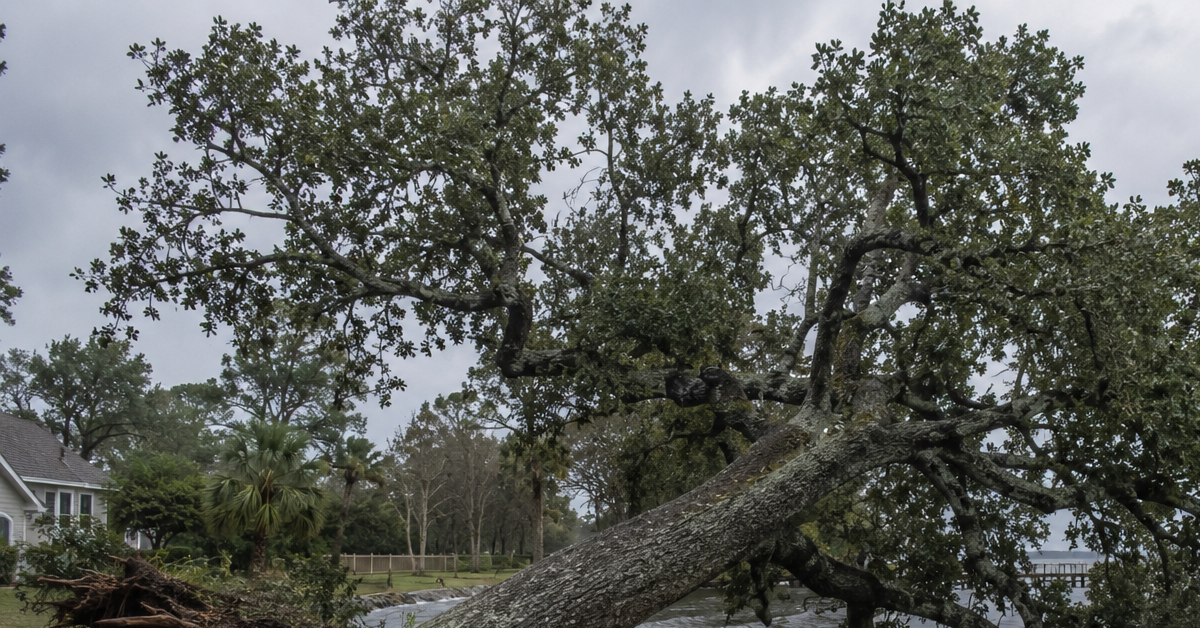
When a tree begins to sway in saturated ground, the root plate acts like a lever. As it moves back and forth, it creates a small gap in the mud. With every gust, the gap widens, and more water seeps into the hole, further lubricating the roots. If you notice a mound of dirt lifting on one side of a tree or a visible gap in the earth at the base, the tree has already begun to fail.
The Cumulative Weight of a Rain-Soaked Canopy
Another factor often overlooked is the sheer weight of the water itself. A mature Live Oak or Longleaf Pine has a massive surface area across its leaves and needles. During a heavy Northwest Florida downpour, that surface area catches and holds thousands of gallons of water.
This added weight is concentrated at the top of the tree, drastically shifting its center of gravity. This top-heavy effect places immense stress on the trunk and the root system. If the tree was already leaning or had a lopsided canopy, the extra weight of the rain can be the final straw that causes a structural snap or a total uprooting.
Root Hypoxia and Long-Term Stability Issues
While some trees fall immediately during a rain event, others suffer a slower, more insidious decline. Roots need oxygen to survive. When a yard in a low-lying area of Navarre or Gulf Breeze stays underwater for several days, the roots undergo hypoxia (oxygen deprivation).
The Onset of Root Rot
Prolonged saturation encourages the growth of fungal pathogens like Phytophthora or Armillaria. These fungi thrive in wet conditions and eat away at the tree’s anchoring roots. A tree may survive the rainy season, but its support system is being hollowed out. By the time the next hurricane season arrives, the tree is a ticking time bomb with a root system too decayed to provide stability.
Nutrient Leaching
Heavy rain also leaches essential nutrients out of our sandy Florida soil. When a tree is nutrient-deficient, it cannot produce the strong, flexible wood needed to withstand environmental stress. This leads to brittle branches that are prone to snapping under the weight of water.
Identifying Warning Signs in Your Waterlogged Yard
For homeowners in the Pensacola metro area, the days following a heavy rain event are the most important time to inspect the landscape.
- Standing Water: If water pools around the base of a tree for more than 24-48 hours, the roots are at risk.
- New Leans: Compare the tree to a vertical structure like a house or fence. If a tree has developed a lean that wasn’t there last month, it is failing.
- Cracked Ground: Look for smiles in the dirt-curved cracks around the root flare that indicate the roots are pulling upward.
- Fungus Growth: The appearance of mushrooms (conks) on the trunk or around the base after rain is a sign of internal rot.
The Impact of Construction and Drainage Patterns
In rapidly growing areas like Pace and Cantonment, new construction often changes how water flows across a property. If a neighbor’s new driveway or a city drainage project diverts water toward your mature trees, those trees are suddenly facing saturation levels they weren’t designed for.
Compacted soil, common in Northwest Florida construction, makes this worse. When soil is compacted by heavy machinery, it can’t absorb water. Instead, the water sits on the surface, drowning the tree’s root system and leading to the instability mentioned above.
Protecting Your Trees from Water-Related Failure
While we can’t control the weather in Northwest Florida, we can manage how our trees respond to it. Proactive arborist care is the most effective way to prevent rain-related accidents.
- Canopy Thinning: Reducing the sail of the tree allows wind and rain to pass through more easily, reducing the weight and leverage on the roots.
- Improving Drainage: Installing French drains or grading the yard can move excess water away from sensitive root zones.
- Mulching: A proper layer of mulch (not a mulch volcano) can help regulate soil moisture and prevent erosion around the roots.
- Structural Support: For trees with a slight lean or weak unions, cabling and bracing can provide the extra security needed when the ground gets soft.
When the Ground Gives Way: Emergency Response
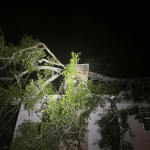
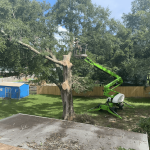
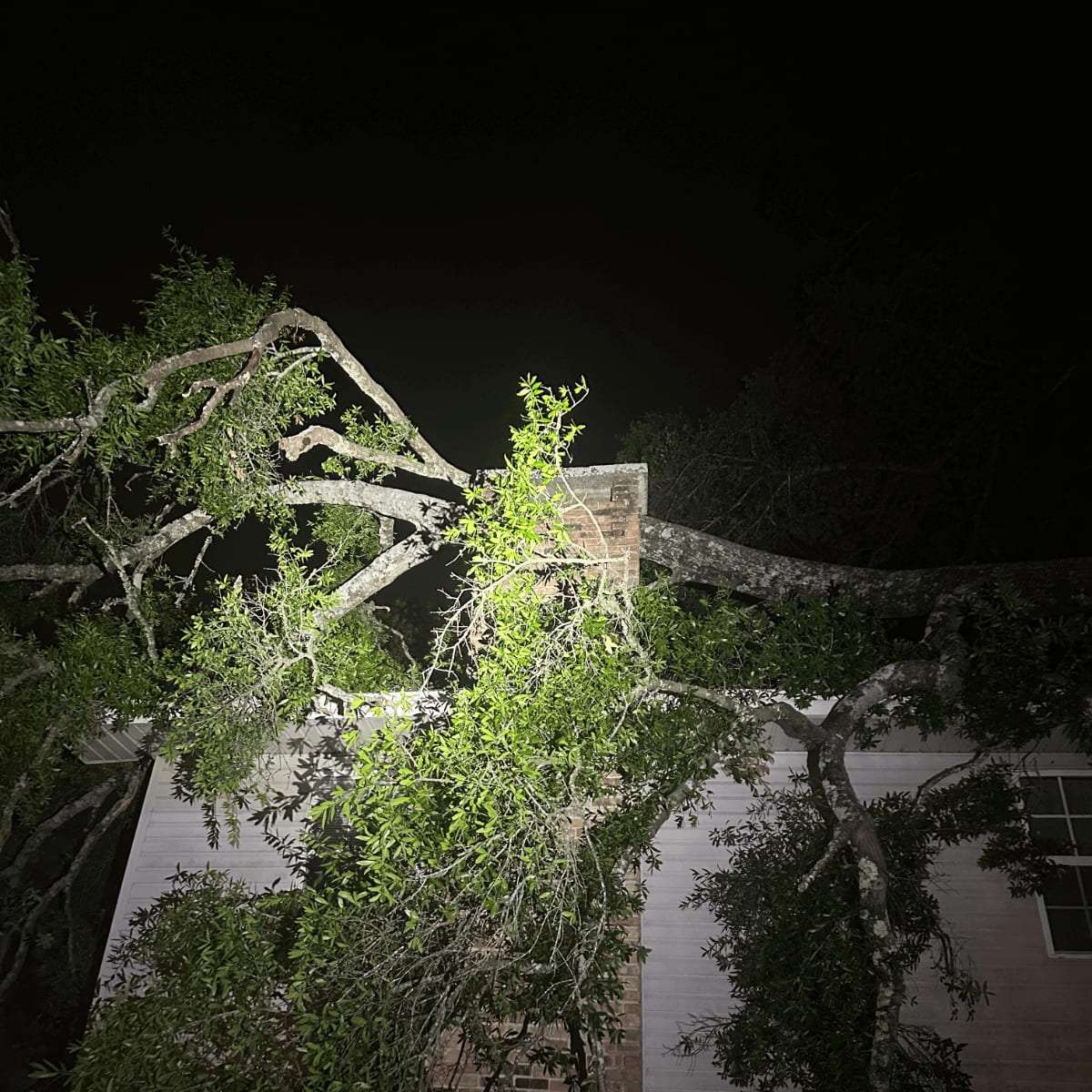
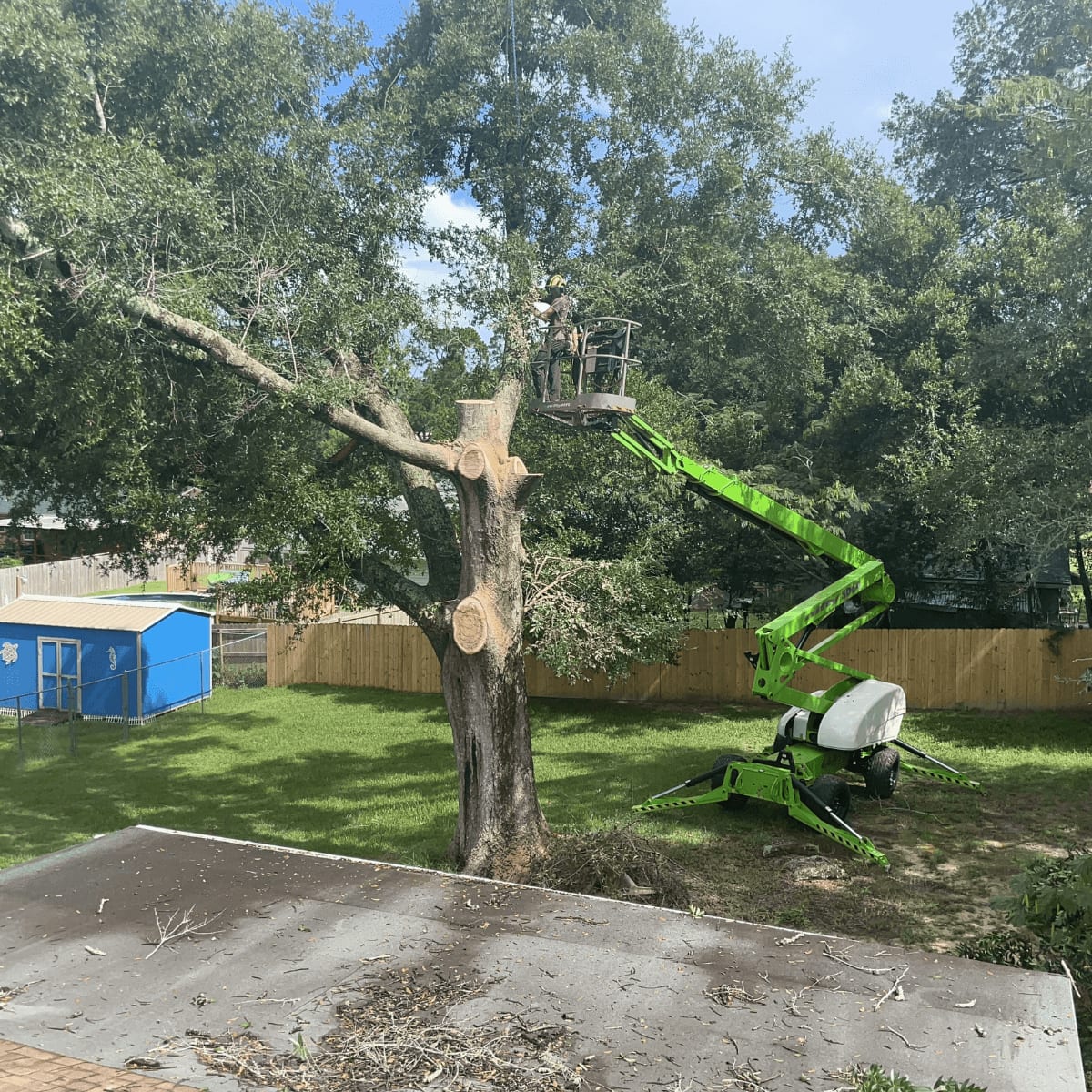
If a tree does fall or begin to lean dangerously after a rainstorm, time is of the essence. Saturated ground remains unstable for days after the rain stops. A leaning tree can continue to shift as the soil dries and settles, making it a constant threat to nearby structures. Professional emergency tree service is required to stabilize the site and remove the hazard without causing further damage to the water-weakened landscape.
Northwest Florida’s heavy rains can turn a beautiful landscape into a significant hazard overnight. At D’s Trees, founded by retired Coast Guard helicopter pilot Doug Doll, we understand the critical nature of property safety and tree health. Serving Pace, Pensacola, Milton, and the surrounding areas, we bring military precision to every job, from expert tree risk assessments to 24/7 emergency removals. Our team features an ISA Board Certified Master Arborist, ensuring your trees receive the highest level of care backed by international standards. Whether you’re dealing with saturated soil in Gulf Breeze or a leaning oak in Cantonment, we are fully insured and offer no-money-upfront insurance billing for covered services. As a family-owned business, we prioritize honesty and reliability, treating your yard with the same respect as our own. Don’t wait for the next deluge to find a weak point in your landscape. Call D’s Trees today at (850) 999-0110 for a free quote and a comprehensive health assessment to keep your property secure through every season.
Frequently Asked Questions by the Homeowners in Florida
Why do trees fall after the rain has already stopped?
As the soil begins to dry, it can shrink or shift. If the roots were already loosened during the saturation, the drying process can cause the final failure of the anchor.
Can sandy soil be too wet for a tree?
Yes. When sandy soil in Northwest Florida becomes fully saturated, it loses its structural strength, allowing the root plate to lift easily under the weight of the canopy.
Does standing water always lead to root rot?
Not always, but if water stays for more than 48 hours, the lack of oxygen begins to kill the fine feeder roots, which can lead to fungal infections and decay.
Is a leaning tree always a hazard?
A tree that has grown with a lean over many years is usually stable. A new lean that appears after a heavy rain event is a major red flag for failure.
What is crown thinning, and how does it help?
Crown thinning involves removing specific branches to reduce the weight and wind resistance of the tree, making it less likely to topple when the ground is soft.
How can D’s Trees help with insurance after a tree falls?
We offer no-money-upfront insurance billing and work directly with your provider to ensure the emergency removal and cleanup process is as stress-free as possible.
Do certain Florida trees handle rain better than others?
Yes. Bald Cypress and Cabbage Palms are highly water-tolerant, whereas certain Pine species and even Live Oaks can struggle if their roots are submerged for too long.
How can I tell if the soil is heaving?
Look for a mound of soil lifting on the side of the tree opposite the lean. If you see roots becoming visible or the dirt rising, the tree is uprooting.
Summary Checklist: Heavy Rain Safety
| Condition | Risk Level | Recommended Action |
|---|---|---|
| Standing water around roots for more than 48 hours | Moderate | Improve drainage conditions and monitor for stress symptoms such as leaf yellowing or canopy decline |
| Visible soil cracks around the base | High | Arrange immediate professional inspection to assess root plate movement and structural instability |
| New lean appearing after a storm | Critical | Treat as an emergency hazard, restrict access, and request urgent stabilization or removal assessment |
| Mushroom or fungal growth after rain | Moderate | Schedule a decay and stability evaluation to rule out internal deterioration |
| Large limbs sagging under water weight | Moderate | Assess structural load and schedule appropriate pruning to reduce breakage risk |
Final Advice
Heavy rain is a primary catalyst for tree failure in Northwest Florida, acting as a mechanical wedge that loosens the bond between the root system and our sandy soil. To protect your property, it is essential to move beyond a fair-weather mindset and actively monitor your trees during and after periods of significant saturation. Pay close attention to subtle changes in the ground around the root flare; any sign of soil lifting or spongy turf near a mature tree indicates that the structural anchor has been compromised. In the flat, low-lying regions of Pensacola and Gulf Breeze, where drainage is often slow, a proactive approach including crown thinning and target management can drastically reduce the risk of a top-heavy failure. Do not ignore a tree that survived a hurricane only to show a slight lean after a week of summer rain. This is often the sign of a slow-motion failure that can be mitigated through professional cabling or bracing. Investing in a professional tree risk assessment from a local Master Arborist is the most reliable way to identify these invisible threats. By managing your landscape’s response to water, you ensure that your trees remain a safe, thriving part of your Northwest Florida home for years to come.