May 11, 2026
Key Takeaways:
- Desiccation Hazard: Salt air pulls moisture directly out of tree tissues, leading to salt burn and brittle foliage.
- Soil Salinity: Salt buildup in Northwest Florida’s sandy soil can prevent roots from absorbing water, even during rainy periods.
- Species Selection: Choosing salt-tolerant species like Live Oaks or Saw Palmettos is essential for long-term coastal survival.
- Structural Weakness: Constant exposure to salt spray and coastal winds can lead to asymmetrical growth, making trees more prone to storm failure.
- Proactive Rinsing: Regularly washing salt residue off foliage after onshore winds can mitigate long-term chemical damage.
Living along the Emerald Coast offers unparalleled views, but for the trees in your yard, the environment is far from a paradise. From Pensacola Beach to the coastal stretches of Gulf Breeze and Navarre, the trees of Northwest Florida are in a constant battle with a silent, airborne invisible force: salt spray. While many homeowners focus on hurricane winds or summer droughts, the cumulative effect of salt air is often the primary driver of tree decline in coastal communities.
In Northwest Florida, the salt air isn’t just a smell; it’s a physical presence that coats every leaf, branch, and trunk. Understanding how this sodium chloride exposure alters the biology of your landscape is the first step in preserving your property’s curb appeal and safety. Without intervention, salt air can turn a thriving backyard canopy into a graveyard of brittle, hazardous timber.
The Mechanism of Salt Spray Damage
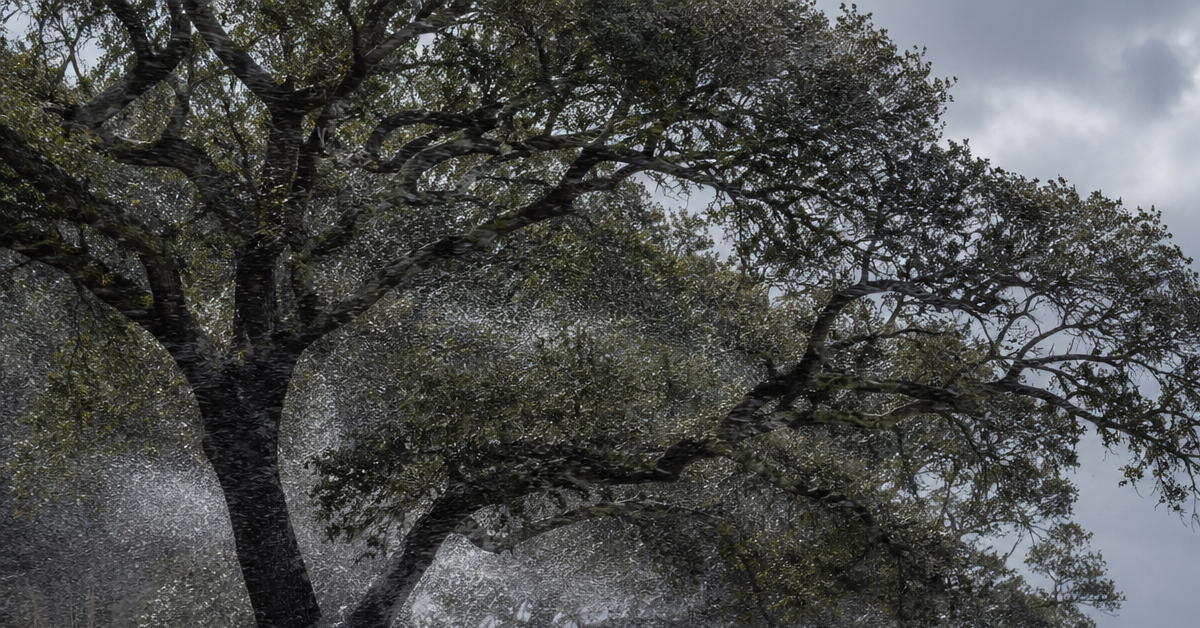
Salt air affects trees through two primary pathways: aerial spray and soil deposition. When the wind picks up off the Gulf of Mexico, it carries microscopic droplets of seawater inland. These droplets land on leaves and needles, where the water evaporates, leaving behind a concentrated salt crust.
Salt is highly hygroscopic, meaning it naturally attracts and holds water. When it sits on a leaf, it pulls moisture out of the plant cells through a process called osmosis. This creates a physiological drought; even if your yard is well-watered, the salt is effectively sucking the tree dry from the outside in. This often manifests as salt burn, where the edges of leaves turn brown or orange and eventually drop prematurely.
Soil Salinity and the Invisible Root Crisis
While the damage to the leaves is visible, the impact on the soil is often more dangerous. In Pace, Milton, and Pensacola, our soil is predominantly sandy. While this allows for good drainage, it also allows salt-laden rain and spray to penetrate deep into the root zone.
When salt concentrations in the soil rise, it creates a toxic environment for the roots. High salinity interferes with the tree’s ability to take up essential nutrients like potassium and magnesium. Over time, the salt can collapse the fine feeder roots responsible for water absorption. In Northwest Florida’s high-heat summers, a tree with a compromised root system will quickly show signs of dieback, starting from the outermost tips of the canopy and moving inward.
Identifying Salt Stress in Northwest Florida Landscapes
For property owners in Santa Rosa and Escambia Counties, recognizing the signs of salt stress early can save a tree from permanent failure.
Necrosis and Marginal Leaf Burn
Look at the edges of the leaves. If they appear scorched or rusty, particularly on the side of the tree facing the water, salt air is the likely culprit. This is especially common after a period of strong onshore winds without following rainfall.
Stunted Growth and Small Leaves
Trees struggling with salt air often produce smaller leaves than normal as a survival mechanism to reduce surface area for salt contact. If your trees appear thin or lack the lushness of inland specimens, they may be reaching a state of chronic salt stress.
Witches’ Broom and Abnormal Branching
The death of terminal buds (the tips of the branches) caused by salt often triggers the tree to sprout many small, weak branches from a single point. This witches’ broom effect results in a dense, messy look that compromises the tree’s natural structural integrity.
The Role of Wind and Terrain
In Northwest Florida, the topography is relatively flat, allowing salt air to travel surprisingly far inland. However, the severity of the damage is often dictated by local wind breaks. Trees situated behind dunes or man-made structures often fare better than those in open, exposed yards.
Furthermore, the constant pruning effect of salt air and wind creates a phenomenon known as anamorphosis. This is where trees grow in a slanted, one-sided fashion away from the prevailing salt winds. While this looks characteristic of the coast, it creates an unbalanced weight distribution. In a major Northwest Florida storm, these asymmetrical trees are far more likely to fail because their center of gravity has been shifted by years of salt exposure.
Choosing the Right Species for Coastal Survival
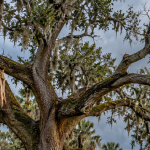
The most effective way to combat salt air is through strategic species selection. Not all trees are created equal when it comes to sodium tolerance. In our region, the Live Oak (Quercus virginiana) is the undisputed king of the coast. Its thick, leathery leaves are naturally designed to shed salt spray and retain moisture.
Other resilient options for Northwest Florida include:
- Sand Live Oak: Extremely hardy in sandy, salt-prone soils.
- Southern Red Cedar: Highly resistant to salt spray and wind.
- Cabbage Palm: The classic Florida choice, capable of handling both salt air and periodic flooding.
- Yaupon Holly: A native shrub that can be trained into a small tree and thrives in coastal conditions.
Conversely, species like the Dogwood or certain maples tend to struggle immensely within a few miles of the Gulf and should be avoided in favor of more robust native alternatives.
Mitigating Salt Damage Through Maintenance
If you already have established trees facing salt stress, maintenance is your best defense. One of the simplest yet most effective strategies is rinsing. After a period of high winds or a tropical system that didn’t bring much rain, use a garden hose to rinse the foliage of your trees. This washes away the salt crust before it can desiccate the leaf tissues.
Deep-root watering is also beneficial. By applying water directly to the root zone, you help flush excess salts deeper into the soil, away from the sensitive feeder roots. However, this must be balanced carefully to avoid over-saturating the ground, especially in areas with a high water table.
Professional Risk Assessment and Structural Support
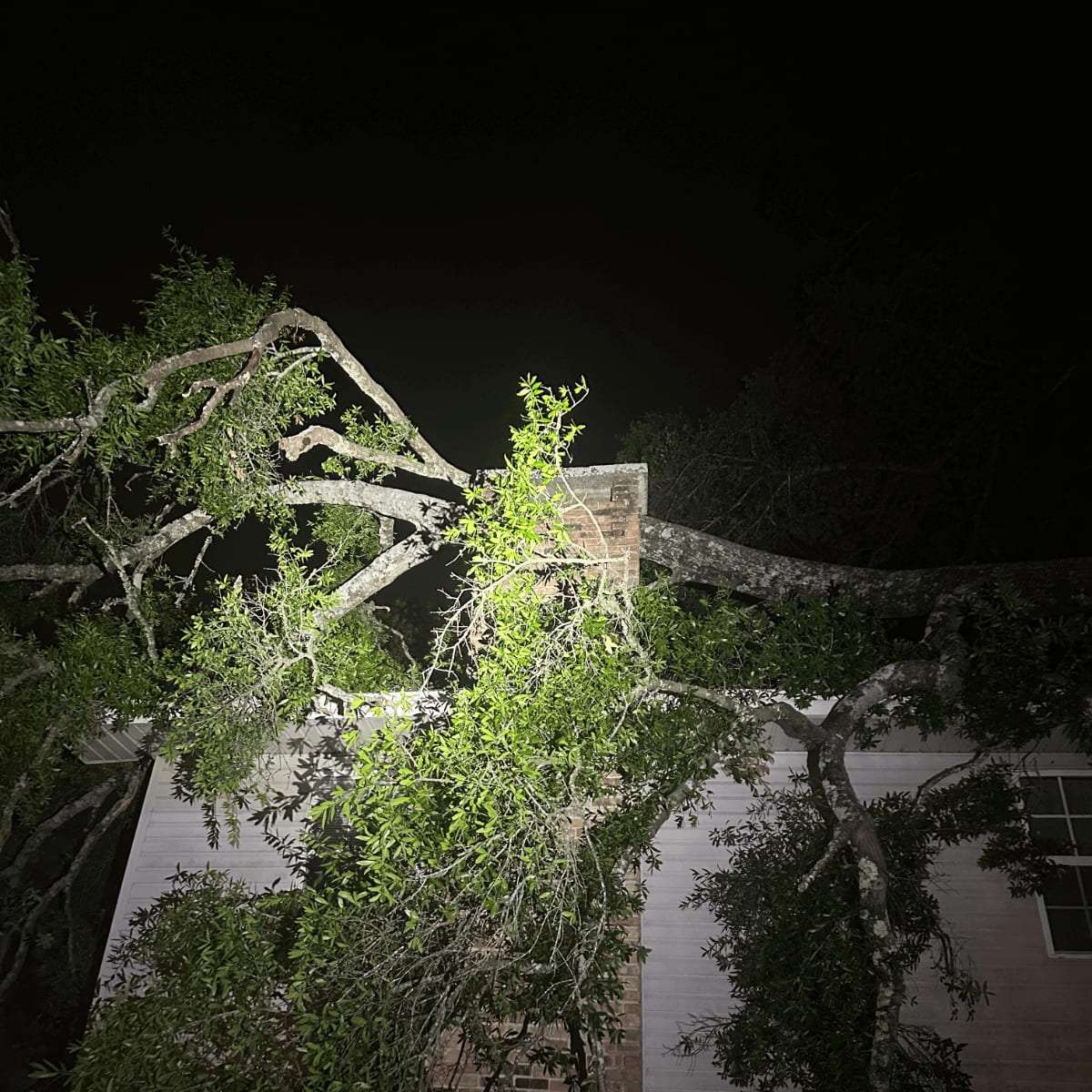
When trees are weakened by salt, they become liabilities. A brittle, salt-stressed limb is much more likely to snap during a routine summer thunderstorm. In Pensacola and Pace, where mature oaks and pines dominate residential lots, a single failure can lead to significant roof or vehicle damage.
Certified arborists can provide cabling and bracing for trees that have grown asymmetrically due to salt winds. By installing high-strength cables, the tree’s weight is redistributed, allowing it to withstand the lateral forces of wind without splitting. Additionally, a professional tree risk assessment can determine if a tree’s internal decay, often accelerated by the entrance of pests through salt-burned wounds, has made it too dangerous to keep.
Why Expert Care Matters in the Emerald Coast
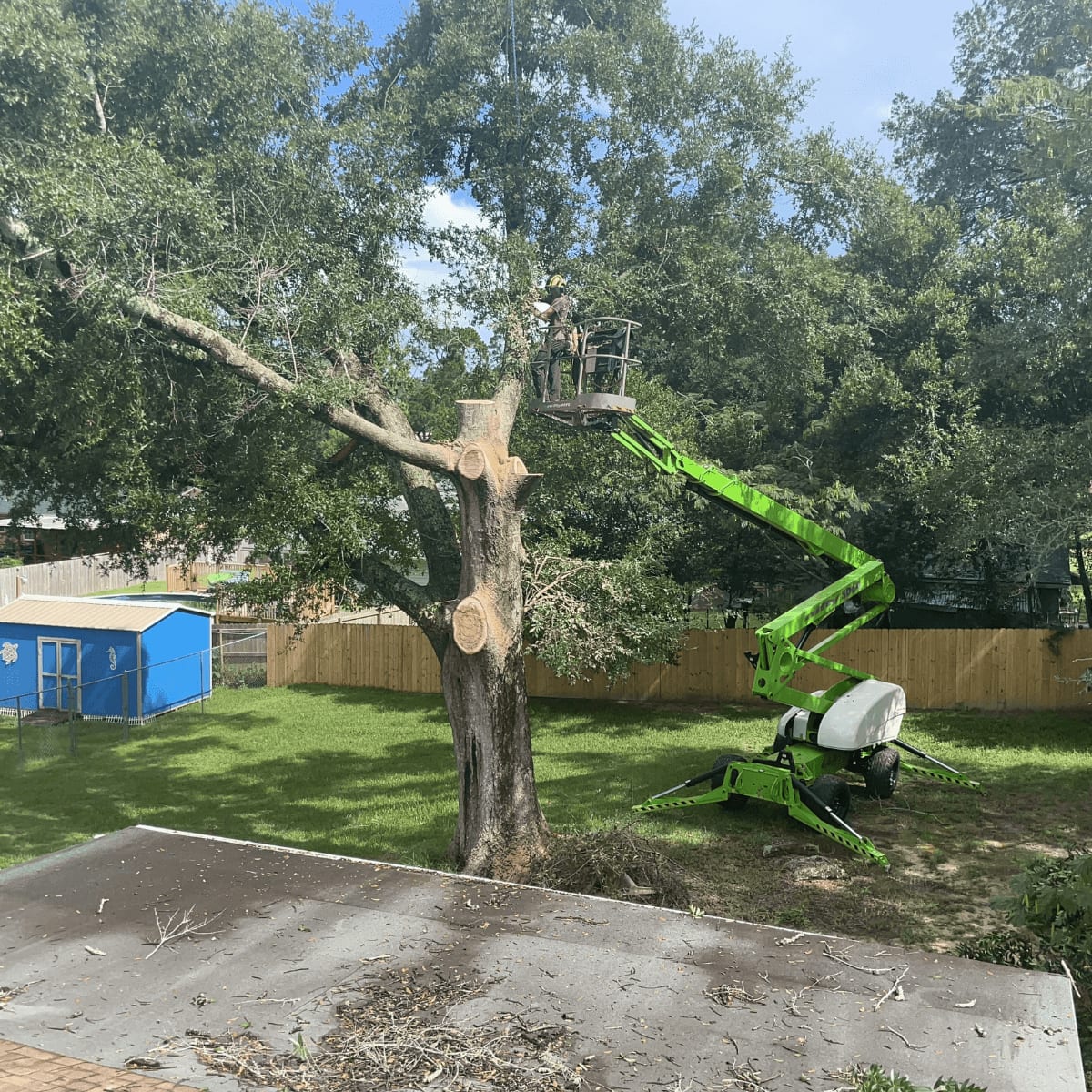
Navigating the unique challenges of coastal arboriculture requires more than just a chainsaw. It requires an understanding of soil chemistry, local weather patterns, and the specific physiological responses of Florida’s native and exotic species. When salt air leads to the death of large canopy sections, the removal process itself becomes a high-stakes operation. These trees are often more brittle and unpredictable than their inland counterparts, requiring specialized rigging and crane services to dismantle safely.
For homeowners in Northwest Florida, the goal is to maintain a landscape that is both beautiful and resilient. By understanding the invisible impact of salt air and taking proactive steps to mitigate its effects, you can enjoy the coastal lifestyle without sacrificing the safety and value of your property.
When salt air and coastal elements take a toll on your landscape, you need the expertise of Northwest Florida’s premier tree care team. D’s Trees is a family-owned and operated company serving Pace, Pensacola, Milton, and the surrounding areas with a commitment to integrity and safety. As ISA Certified Arborists and Tree Care Safety Professionals, we specialize in everything from precision tree trimming to hazardous crane-assisted removals. Whether you need a comprehensive tree risk assessment or 24/7 emergency service after a storm, our BBB A+ rated team is equipped to handle the job with no money up front for insurance billing. Protect your coastal investment by working with a company that understands the unique needs of Florida greenery. Call D’s Trees today at (850) 999-0110 for a free quote and experience why we are the #1 choice for tree service in Northwest Florida.
Frequently Asked Questions by Homeowners in Florida
How far inland can salt air affect my trees in Florida?
In the flat landscape of Northwest Florida, salt air can impact sensitive tree species up to 5 to 10 miles inland, especially during high-wind events or tropical storms.
Can salt air kill a mature tree?
Yes. While it usually happens over several seasons, the combination of leaf desiccation and soil toxicity can lead to a death by a thousand cuts for a mature tree.
What does salt burn look like?
Salt burn typically appears as brown, dry, or scorched edges on leaves. In evergreens, the needles may turn a rusty orange starting from the tips.
Is there a fertilizer that helps with salt stress?
There is no anti-salt fertilizer, but a balanced nutrient program tailored to your soil’s specific needs can help a tree stay healthy enough to withstand environmental stress.
Should I rinse my trees with tap water?
Yes. Rinsing the foliage with fresh water after a salt event is one of the most effective ways to prevent leaf desiccation and long-term damage.
Why are my coastal trees leaning away from the water?
This is likely anemomorphosis. The salt spray kills the buds on the windward side, forcing the tree to grow exclusively on the leeward side, creating a slanted appearance.
Can mulch protect my trees from salt?
Mulch helps retain soil moisture and can buffer the root zone, but it won’t stop salt spray from hitting the leaves. It is, however, excellent for overall root health.
Do you have a special offer for veterans?
We offer the best price upfront to veterans as a thank-you to our community and those who served.
Summary Checklist: Coastal Tree Assessment
| Condition | Risk Level | Recommended Action |
|---|---|---|
| Brittle, orange needles or leaves | Moderate | Rinse salt residue from foliage and evaluate soil moisture levels for drought or salt stress |
| Significant lean away from coastal wind exposure | High | Arrange a professional structural assessment to evaluate anchorage strength and failure risk |
| Deadwood in the upper canopy | High | Schedule professional pruning to remove elevated falling branch hazards |
| Visible salt crust on bark or leaves | Moderate | Flush foliage and deeply water the root zone to reduce salt accumulation stress |
| Exposed or heaving roots in sandy soil | Critical | Request immediate stability inspection due to elevated wind-failure risk |
Final Advice
Salt air is a persistent environmental stressor that requires consistent management to prevent it from compromising the trees in your Northwest Florida yard. To protect your property, prioritize the planting of salt-tolerant native species that have evolved to thrive in the high-salinity environment of the Emerald Coast. For existing trees, a proactive routine of rinsing foliage and deep-root watering after storm events can flush out toxic sodium levels before they lead to permanent vascular damage. It is also vital to monitor for asymmetrical growth; trees that lean away from the salt spray may become dangerously unbalanced, necessitating structural support like cabling or strategic pruning to reduce wind resistance. Do not wait for a branch to fall to address the health of your coastal canopy.
Regular consultations with a certified arborist will ensure that hidden issues like internal decay or root rot, often exacerbated by salt stress, are identified before they become a liability. By combining proper species selection with professional maintenance, you can ensure your coastal landscape remains a safe, vibrant, and valuable asset for your home.