May 4, 2026
Key Takeaways
- Lifespan Disparity: Live Oaks can thrive for centuries, whereas Laurel Oaks typically decline rapidly after just 50 to 70 years.
- Structural Strength: Live Oaks possess dense, interlocking wood fibers; Laurel Oaks are prone to internal rot and hollow heart.
- Storm Resilience: Live Oaks are among the most hurricane-resistant species in Florida; Laurel Oaks are frequent storm victims.
- Property Value: A healthy Live Oak is a multi-generational asset that increases curb appeal and real estate value.
- Identification is Key: Early identification by a certified arborist can prevent catastrophic property damage during hurricane season.
In Northwest Florida, specifically throughout Pace, Pensacola, and Milton, the oak tree is an iconic symbol of Southern landscapes. However, to the untrained eye, one oak looks much like another. This lack of distinction can be a costly mistake for homeowners. While the Southern Live Oak (Quercus virginiana) and the Laurel Oak (Quercus laurifolia) may appear similar when young, they follow entirely different life trajectories.
The Southern Live Oak is a slow-growing titan that acts as a lifelong asset, increasing property value and surviving for centuries. In contrast, the Laurel Oak is a fast-growing, short-lived species that quickly becomes a significant storm risk, often reaching its breaking point just as it attains a majestic size. Understanding this distinction is essential for any property owner concerned with long-term safety and insurance liability.
The Southern Live Oak: The Lifelong Asset
The Southern Live Oak is legendary for its strength and endurance. It is considered a premier landscape asset because it is built to survive the specific environmental pressures of the Gulf Coast.
Multi-Generational Longevity
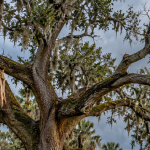
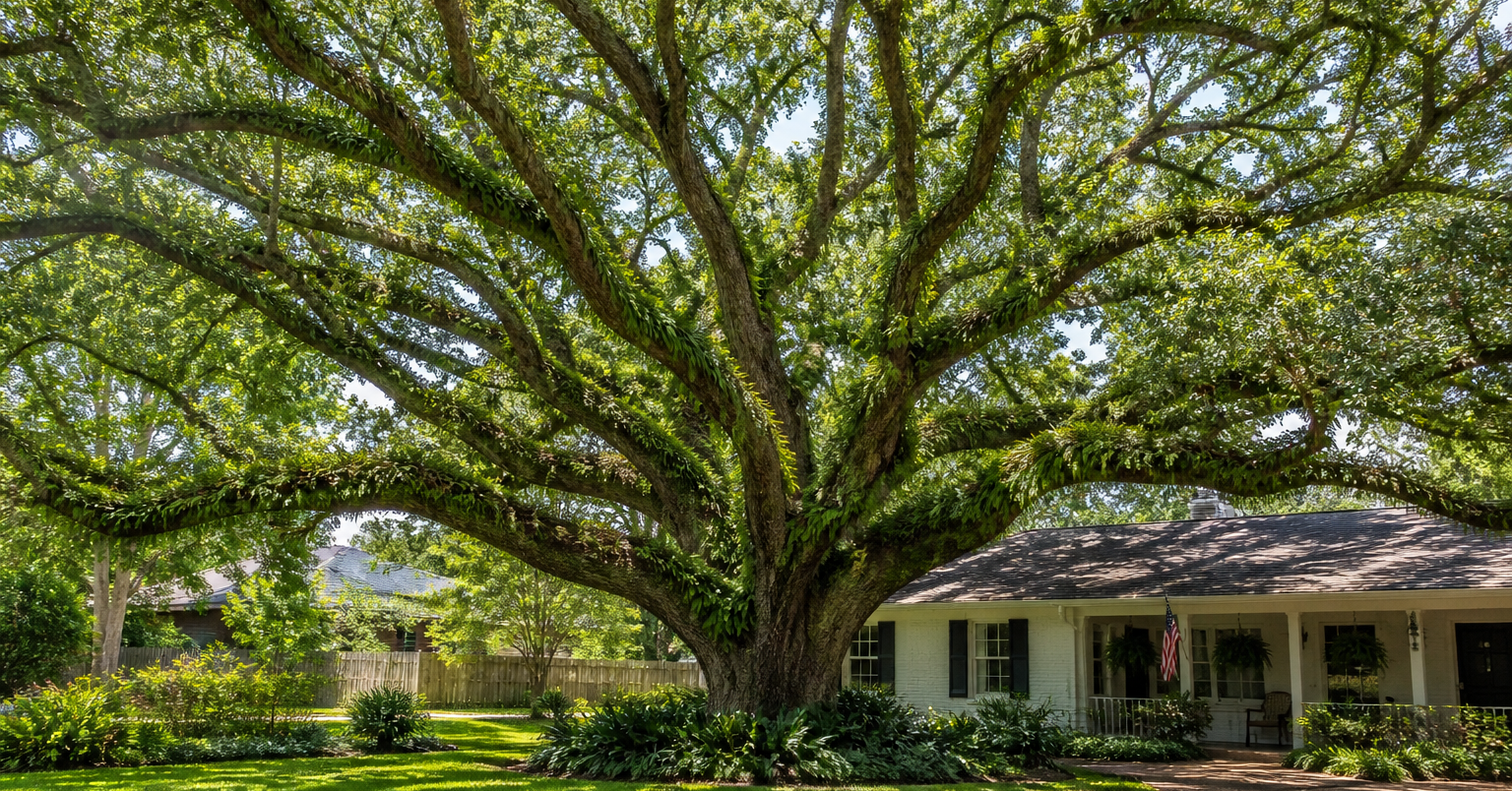
Unlike many other species, a Live Oak is a permanent fixture. These trees can easily live for 200 to 300 years, with some specimens exceeding several centuries. When you plant or preserve a Live Oak, you are investing in a tree that will provide shade and beauty for your children and grandchildren.
Exceptional Wood Density and Strength
The wood of a Live Oak is among the densest and heaviest in the world. Historically, it was used to build the hulls of American warships because cannonballs would literally bounce off the dense grain. For a homeowner, this density translates to incredible structural integrity. Live Oak limbs rarely snap in high winds; they are flexible yet immensely strong, making them an anchor for your property rather than a threat to it.
Hurricane Resilience
Data from the University of Florida’s hurricane research consistently ranks the Live Oak at the top of the High Wind Resistance list. Their root systems are wide and deep, often interlocking with the roots of surrounding trees to create a subterranean mat that resists uprooting even in saturated soils and Category 3+ winds.
The Laurel Oak: The Ticking Storm Risk
Laurel Oaks are ubiquitous in Northwest Florida because they grow quickly and provide immediate shade. Developers often favor them for new neighborhoods because they reach a mature look in half the time it takes a Live Oak. However, this rapid growth leads directly to structural instability.
A Short and Volatile Lifespan
While a Live Oak is just reaching its teenage years at age 50, a Laurel Oak is already entering its twilight years. Laurel Oaks typically begin to decline rapidly after 50 to 70 years. Because they grow so quickly, their wood is much softer and more porous, making them highly susceptible to fungal infections and wood-boring insects.
Internal Decay and Hollow Heart
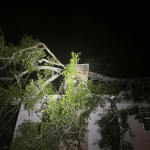
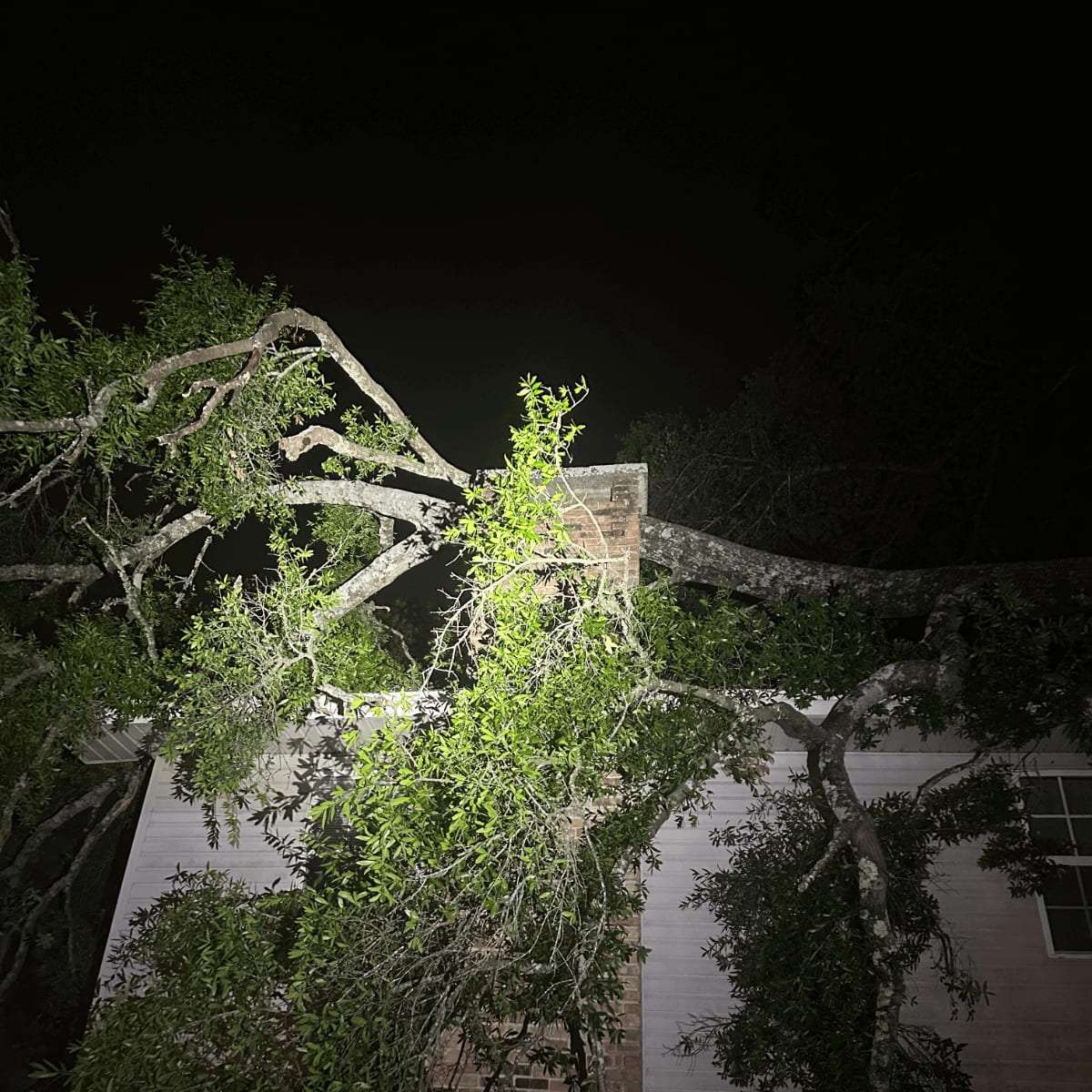
The most dangerous trait of the Laurel Oak and the reason it is a major storm risk is its tendency to rot from the inside out. A Laurel Oak can appear perfectly green and healthy on the outside, while the center of the trunk is completely hollow. This hollow heart makes the tree structurally unstable. During a tropical storm or hurricane, these trees often implode or snap mid-trunk, causing catastrophic damage to homes and power lines.
Key Identification Markers: Telling Asset from Risk
Knowing which tree is on your property is the first step in risk management. Identification is easiest when looking at the leaves and the bark.
1. Leaf Shape and Texture
- Live Oak (The Asset): The leaves are small (usually 1–3 inches), stiff, and leathery. They have a dark green top and a pale, fuzzy underside. The edges typically curl slightly downward.
- Laurel Oak (The Risk): The leaves are longer (3–5 inches), thinner, and shaped like a laurel leaf (oblong). They are smooth on both sides and lack the leathery stiffness of the Live Oak.
2. Bark Pattern
- Live Oak: As the tree matures, the bark becomes deeply furrowed and very dark, almost black. It feels incredibly hard to the touch.
- Laurel Oak: The bark is generally smoother and lighter gray, particularly in the upper branches. It often develops shallow fissures but lacks the craggy look of an ancient Live Oak.
The Economics of Oak Management
Choosing to keep or plant a tree is a financial decision. A mature, healthy Live Oak can add up to 15% to a property’s value. Conversely, a large, decaying Laurel Oak is a significant financial liability that can lead to expensive insurance claims and emergency removals.
Removal Costs vs. Maintenance
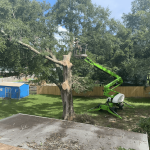
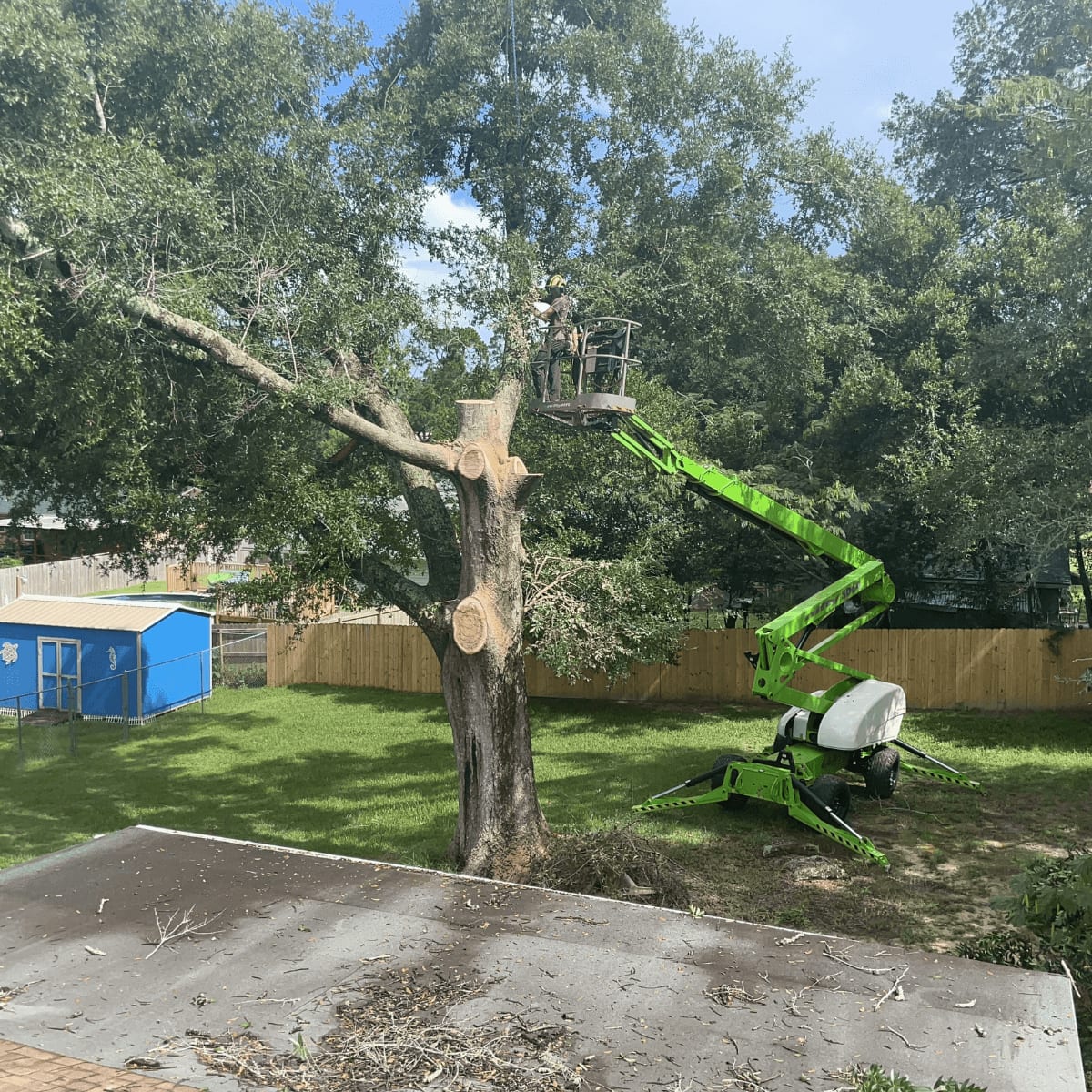
Because Laurel Oaks often become hazardous near homes, removing them when they are large and dying is an expensive, high-risk operation that often requires crane services. In contrast, a Live Oak requires occasional precision trimming to remove deadwood and maintain structure, but it rarely requires the emergency removal that plagues Laurel Oak owners.
Specialized Care and Assessment
Whether you are looking to preserve a historic Live Oak or need a risk assessment on a suspicious Laurel Oak, you need expert guidance. D’s Trees is Northwest Florida’s premier provider of professional arboriculture, serving Pace, Pensacola, and the surrounding communities.
As an ISA Certified Arborist and a BBB, A+ rated company, we specialize in identifying structural weaknesses that the average homeowner might miss. Our team, led by ISA Board Certified Master Arborists, offers comprehensive Tree Risk Assessments to determine the internal health of your oaks.
D’s Trees provides a wide range of tree services, such as tree removal, tree trimming, shrub removal, stump removal/grinding, 24/7 emergency tree service, lot/land clearing, crane service, arborist service/consultation, tree risk assessment, municipal permits, tree cabling & bracing, brush hogging (mulching), and wood chips. We handle every project with a Property Damage Prevention Guarantee.
D’s Trees is available for you 24/7 for emergency tree services and works directly with your insurance company to ensure a seamless, no-money-upfront billing process. Don’t wait for a hurricane to reveal the hidden rot in your trees; call (850) 999-0110 for an expert consultation today.
Frequently Asked Questions (FAQs)
1. Can a Laurel Oak be saved with cabling and bracing?
In some cases, yes. If the tree has a split but the wood is still sound, D’s Trees can install tree cabling and bracing to extend its life. However, if internal rot is present, removal is usually the only safe option.
2. Why did my Live Oak drop all its leaves in March?
Don’t panic! This is normal. Live Oaks push off their old leaves in the spring as the new buds form. It usually stays bare for only a week or two.
3. Does D’s Trees handle municipal permits for removal?
Yes. Many areas in Northwest Florida have protections for large heritage oaks. We assist with obtaining the necessary municipal permits to ensure your project is compliant with local laws.
4. How can I tell if my tree is rotting inside?
Look for conks or mushrooms growing on the trunk, hollow-sounding bark when tapped, or a significant amount of deadwood in the upper canopy. A professional arborist uses specialized tools to check for internal voids.
5. Are Laurel Oaks ever a good idea to plant?
If you need very fast shade and aren’t concerned with the tree lasting more than 40-50 years, they are an option. However, for a permanent landscape, a Live Oak or a White Oak is always a better choice.
6. Do Live Oaks require a lot of trimming?
They need structural pruning when young to ensure they don’t develop co-dominant stems. Once mature, they only need occasional deadwooding to maintain health and safety.
7. Is crane service necessary for oak removal?
If a large Laurel Oak is located close to a house or over a pool screen, a crane service is often the only way to remove it safely without dropping heavy sections on your property.
8. What should I do with the wood after removal?
D’s Trees offers brush hogging (mulching) and can provide high-quality wood chips for your landscaping. If you prefer, we can haul everything away to leave your yard spotless.
Summary Checklist: Emergency Tree on Roof
| Condition | Risk Level | Recommended Action |
| Hollow-sounding trunk | Critical | Call for an immediate arborist consultation or risk assessment. |
| Mushrooms at the tree base | High | Evaluate for root rot and risk of uprooting during storms. |
| Limbs overhanging the roof | Moderate | Schedule precision trimming to prevent roof and shingle damage. |
| Slow growth or small leaves | Low to Moderate | Run a tree health audit to check for nutrient or soil issues. |
| Co-dominant trunks (V-split) | High | Install cabling and bracing to reduce splitting risk. |
Final Advice
The distinction between a Southern Live Oak and a Laurel Oak is the difference between a multi-generational legacy and a looming homeowner’s insurance claim. If your property is home to a Southern Live Oak, your primary objective is preservation. Because this species is a lifelong asset, your final advice is to invest in structural pruning every 3–5 years to maintain its legendary wind resistance and clear any limbs encroaching on your roofline. Conversely, if you identify a Laurel Oak on your lot, especially one that has surpassed the 40-year mark, you must shift your strategy to risk mitigation. Because these trees are a significant storm risk due to their propensity for hollow heart decay, they require an annual assessment by an ISA Certified Arborist to check for internal rot that isn’t visible to the naked eye.
Do not wait for a hurricane to reveal structural weaknesses; proactive removal of a declining Laurel Oak is far more cost-effective than an emergency crane extraction after it has already compromised your home’s structural integrity. By prioritizing the health of your Live Oaks and the timely removal of hazardous Laurel Oaks, you ensure that your Northwest Florida landscape remains a source of beauty and value rather than a source of catastrophic liability.