April 30, 2026
Key Takeaways:
- Visual inspections immediately following a storm can prevent secondary property damage.
- Leaning trunks and heaving soil are high-priority red flags for uprooting.
- Small cracks in branches often expand into major failures if left unaddressed.
- Saturated soil increases the risk of “root plate” failure even days after the wind stops.
- Professional assessments are necessary for “hangers” and high-canopy damage.
A tropical blast or severe storm can leave a landscape looking like a war zone. For many residents, the immediate focus is on the roof or power lines, but the trees often hold the most significant hidden risks. Tree problems for new homeowners after a storm refer to the structural compromises, some subtle, some obvious, that can turn a standing tree into a falling liability. Identifying these hazards early is the key to preventing the “second storm” of falling debris.
Common Tree Problems New Homeowners Overlook
In the wake of heavy rain and high-velocity winds, trees undergo immense physical stress. New homeowners often assume that if a tree is still standing, it is safe.
- Root Plate Heaving: When a tropical system saturates the ground, the soil loses its “grip” on the roots. Check the base of your trees for “mounding” or “fluffing” of the soil. If the earth on one side of the tree is lifting or showing fresh cracks, the tree is in the process of uprooting.
- Hairline Trunk Fractures: High winds cause trees to twist and flex. This can create vertical or horizontal cracks in the bark that aren’t immediately visible from a distance. These fractures compromise the tree’s “skeleton,” making it unstable for the next gust of wind.
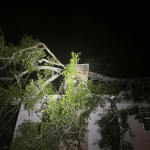
- The “Hanger” Hazard: Broken branches that remain lodged high in the canopy are known as “widowmakers.” These can fall days or weeks after a storm, often on a clear, calm day when the wood finally dries out and snaps.
Why Trees Become Emergencies
A storm-damaged tree is often a ticking clock. Factors that accelerate a tree’s transition into an emergency include:
- Soil Saturation and Weight: Tropical blasts bring massive amounts of water. A canopy full of wet leaves adds thousands of pounds of “dead weight” to a tree. When combined with “soupy” soil, the tree’s center of gravity shifts, leading to sudden failure.
- Compromised Structural Integrity: If a tree already had “included bark” (V-shaped unions), the storm likely acted as a wedge, widening existing gaps. These trees are high-risk for splitting down the middle.
Emergency Tree Services for New Homeowners
If you identify any of the 6 signs below, emergency tree services for new homeowners are required to stabilize the property. These services include:
- Removal of “leaners” that have shifted more than 15 degrees.
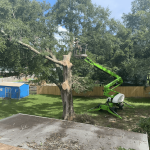
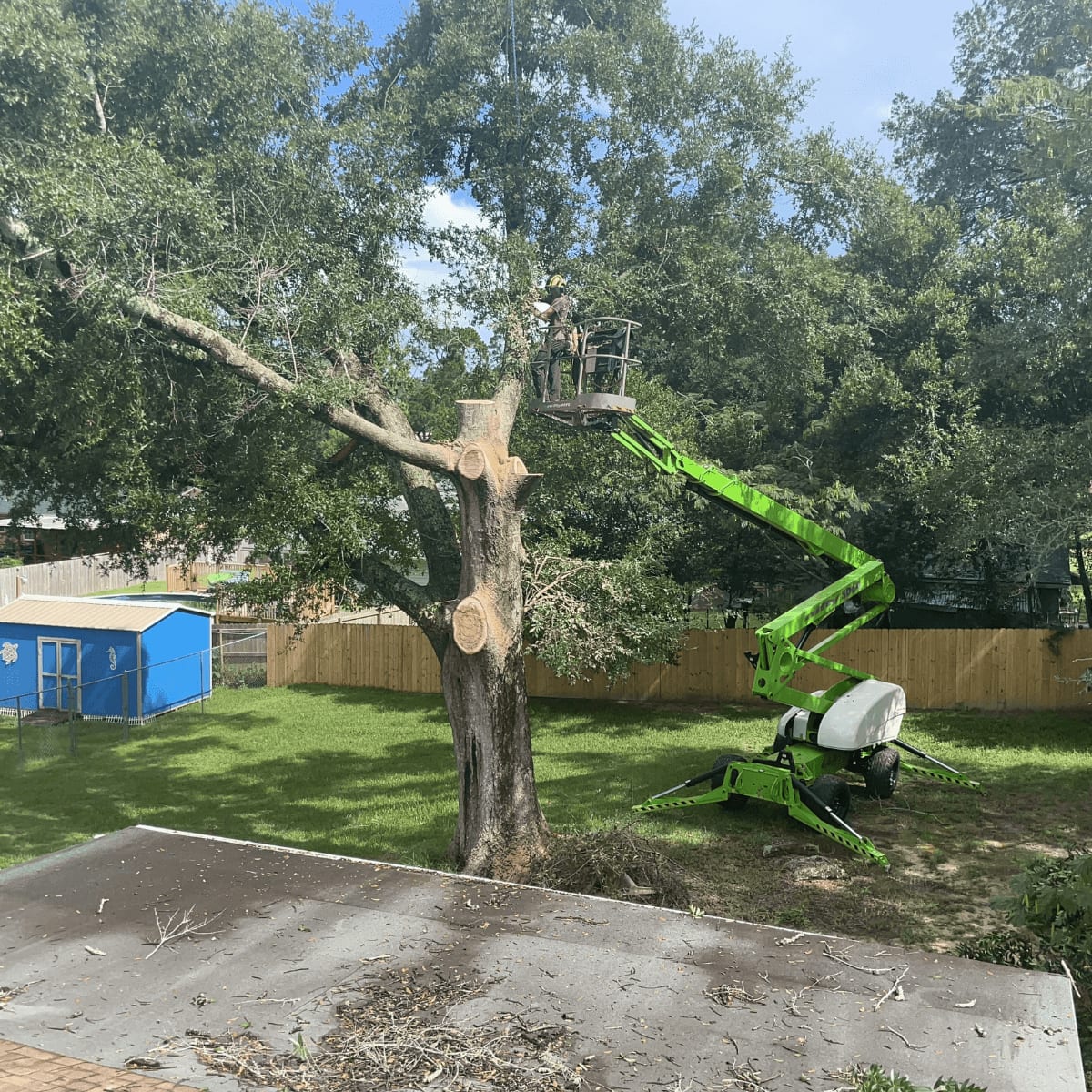
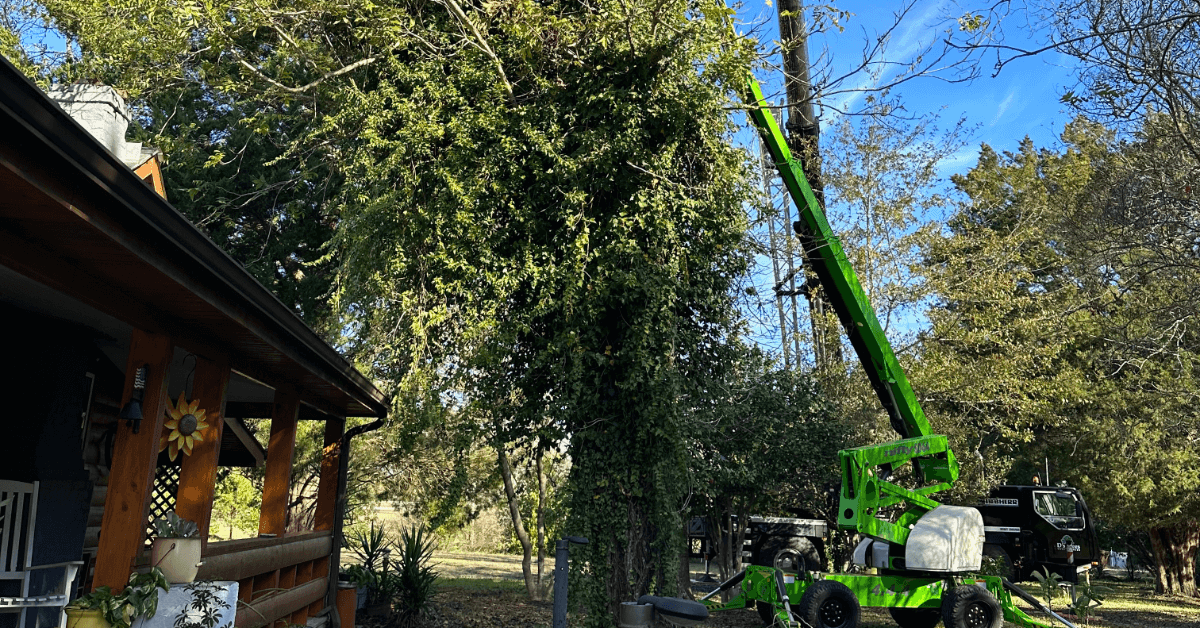
- Technical rigging to remove “hangers” safely from high canopies.
- Structural pruning to balance trees that have lost major limbs.
- Assessment of tree health and stability through specialized diagnostic tools.
A Professional Tree Service firm helps homeowners navigate these post-storm hazards by deploying ISA-Certified Arborists who utilize professional-grade structural assessments and technical rigging to remove dangerous limbs while simultaneously providing restorative pruning and soil care to stabilize the health of storm-stressed heritage trees.
6 Things to Check on Your Trees: The Post-Storm Checklist
- The Lean Test: Is the tree tilting more than it was yesterday? Any new lean is a sign of root failure.
- Soil Integrity: Look for mounded soil or “bubbles” in the lawn near the trunk.
- Trunk Cracks: Search for fresh, white wood showing through deep fissures in the bark.
- The Canopy “Gap”: Does the tree look lopsided? A missing chunk of the canopy often means a large limb is gone or hanging.
- Utility Line Clearance: Check if branches are touching or swaying dangerously close to power lines.
- Fungal Activity: While fungi grow over time, a storm can expose old rot. Look for mushrooms growing out of the “wound” where a branch broke off.
Real-World Field Insights
Last season, we inspected a property in the Milwaukee River Valley after a severe microburst. The homeowner thought the trees were fine because none had fallen. However, our “Sounding Test” on a mature Oak revealed a massive internal split that had occurred during the wind event. The tree was hollow and held together by less than two inches of healthy wood.
Lesson: Visual “standing” status is not a safety guarantee. We were able to remove the tree before it hit the neighboring house.
Placement and Long-Term Safety
When evaluating your property’s storm resilience, consider:
- Windbreaks: Trees on the edge of a property take the full force of a tropical blast.
- Proximity: If a tree is within “striking distance” of your home, it needs a higher frequency of post-storm checks.
- Species Resilience: Fast-growing trees like Silver Maples or Willows are more likely to fail than slow-growing Oaks.
Verified Resources & Expert Guidelines
For detailed safety protocols and technical recovery steps, refer to these official guidelines:
- Purdue University Extension: Trees and Storms: Mitigating the Damage
Detailed breakdown of tree risk management and identifying structural failures.
- Texas A&M Forest Service: Tree Care From Storm Damage
Official first-aid rules for trees, including repair of torn bark and pruning safety.
- Oregon.gov (Department of Forestry): How to Make Trees Storm Resistant
Comprehensive PDF guide on structural stability and long-term storm resilience.
Frequently Asked Questions
How do I know if I need emergency tree services?
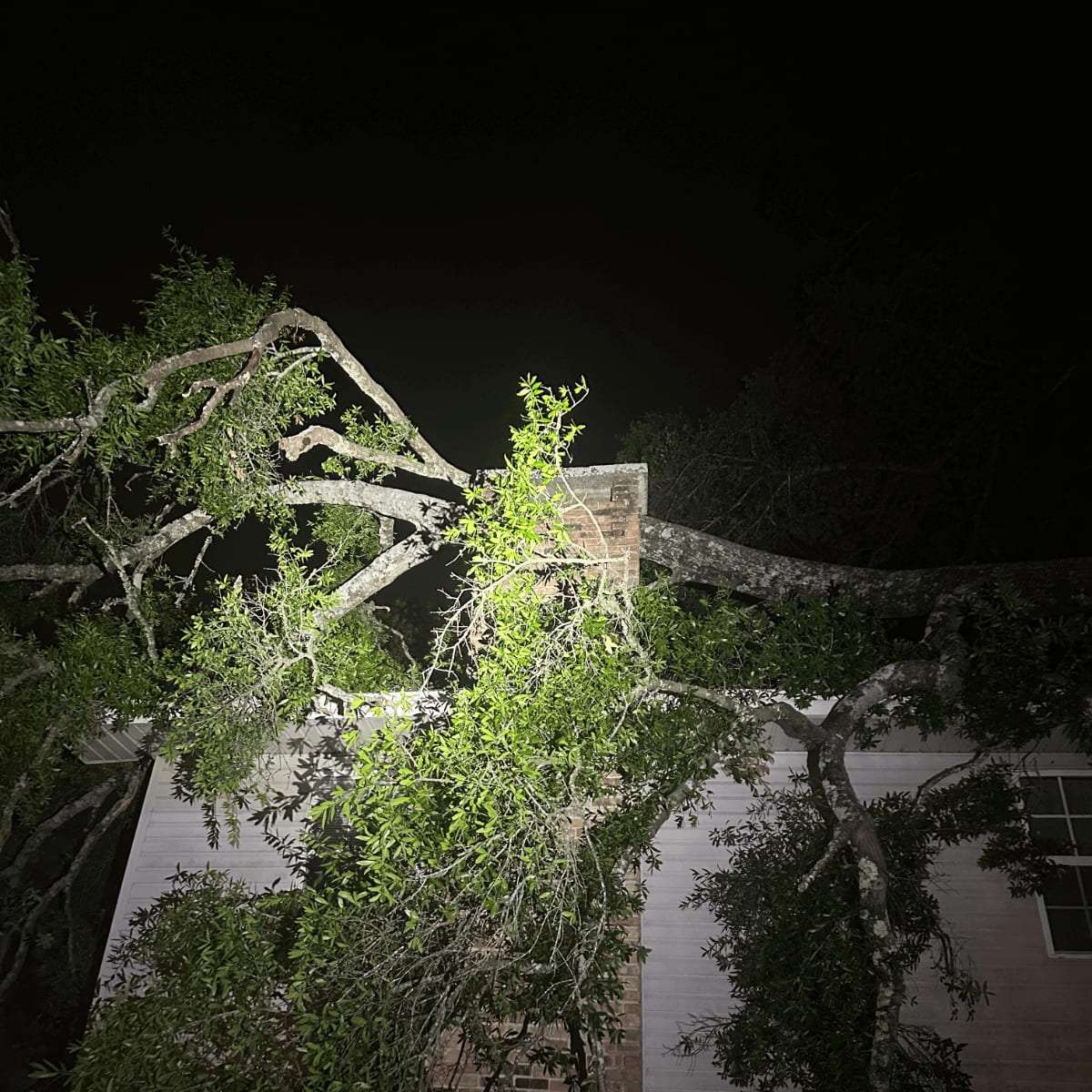
If the tree is leaning, has cracked soil at the base, or has limbs resting on your roof, it is an emergency.
Can a leaning tree be straightened?
Rarely. Once the “anchor roots” have snapped or pulled, the tree’s structural foundation is gone.
Is it safe to clear fallen branches myself?
Only if they are small and on the ground. Never cut branches under tension or those tangled in other limbs.
How often should I check my trees after a storm?
Check immediately after the winds die down, then again 48 hours later, once the soil begins to dry and shift.
Does insurance cover storm-damaged tree removal?
Usually, only if the tree hits a “covered structure” like your house or fence. Insurance rarely pays to remove a tree that fell safely in the yard.
What if the tree is on the city’s property?
If the tree is between the sidewalk and the street, it is likely a municipal tree. Call your local DPW.
Can “cabling” save a storm-damaged tree?
Sometimes. If the damage is a split union but the roots are intact, an arborist can use steel cables to reinforce the tree.
Why is my tree “bleeding” after the storm?
The “wounds” from broken branches allow sap to leak out. While messy, it is the tree’s natural way of trying to seal the wound.