Key Takeaways
- Salt Spray Resilience: Waterfront trees must withstand “salt burn,” which dehydrates foliage and kills sensitive species.
- Wind Resistance: Strategic tree selection reduces the risk of uprooting during tropical storms and hurricanes.
- Soil Adaptation: Trees for Pensacola Beach must thrive in nutrient-poor, sandy, and alkaline soils.
- Aesthetic & Shade: The right coastal trees provide essential shade and privacy without blocking Gulf views.
- Professional Guidance: Early inspection and proper placement prevent future emergency tree removals.
Living on the Santa Rosa Sound or the Gulf side of Pensacola Beach offers breathtaking views, but the environment is notoriously harsh on vegetation. For new homeowners, the “Double Threat” of constant salt spray and high-velocity winds can quickly turn a lush backyard into a graveyard of brown, brittle branches. 6 Salt-Tolerant Trees Perfect for Waterfront Lots in Pensacola Beach refers to a specific group of hardy species that have evolved to thrive where others fail, anchoring your coastline and protecting your property investment.
Common Tree Problems New Homeowners Overlook
In Escambia County, many newcomers attempt to plant inland favorites like Dogwoods or certain Maples, only to see them succumb to “Salt Burn” within weeks. Because the barrier island environment is so specialized, typical residential landscaping rules do not apply.
- Leaf Necrosis (Salt Burn): Salt spray draws moisture out of leaf tissue through a process called osmosis. The salt on the leaf surface pulls water out of the cells, causing the edges to turn brown and “crispy.” This is often mistaken for underwatering, leading homeowners to overwater, which can drown the roots in the poorly draining pockets of the island. Over time, this weakens the tree, making it a target for pests and disease.
- Sand Shifting and Root Exposure: Pensacola’s sugar-white sand is beautiful but unstable. Heavy rains and storm surges can wash away the top layer of soil, exposing roots to the air and salt, which leads to rapid dehydration and instability. Furthermore, sand is highly alkaline (high pH), which prevents many trees from absorbing essential nutrients like iron and manganese, leading to yellowing leaves (chlorosis).
- Wind Shearing and Asymmetry: Trees not adapted to the coast often grow asymmetrical “lopsided” canopies due to the constant onshore breeze. This is known as the “Krummholz” effect. While it looks interesting, it creates a physical imbalance. When a hurricane strikes, these lopsided trees act like a sail, catching the wind unevenly and making them prime candidates for falling during and after a tropical blast.
Why Coastal Trees Become Emergencies
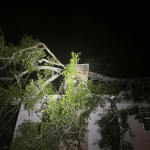
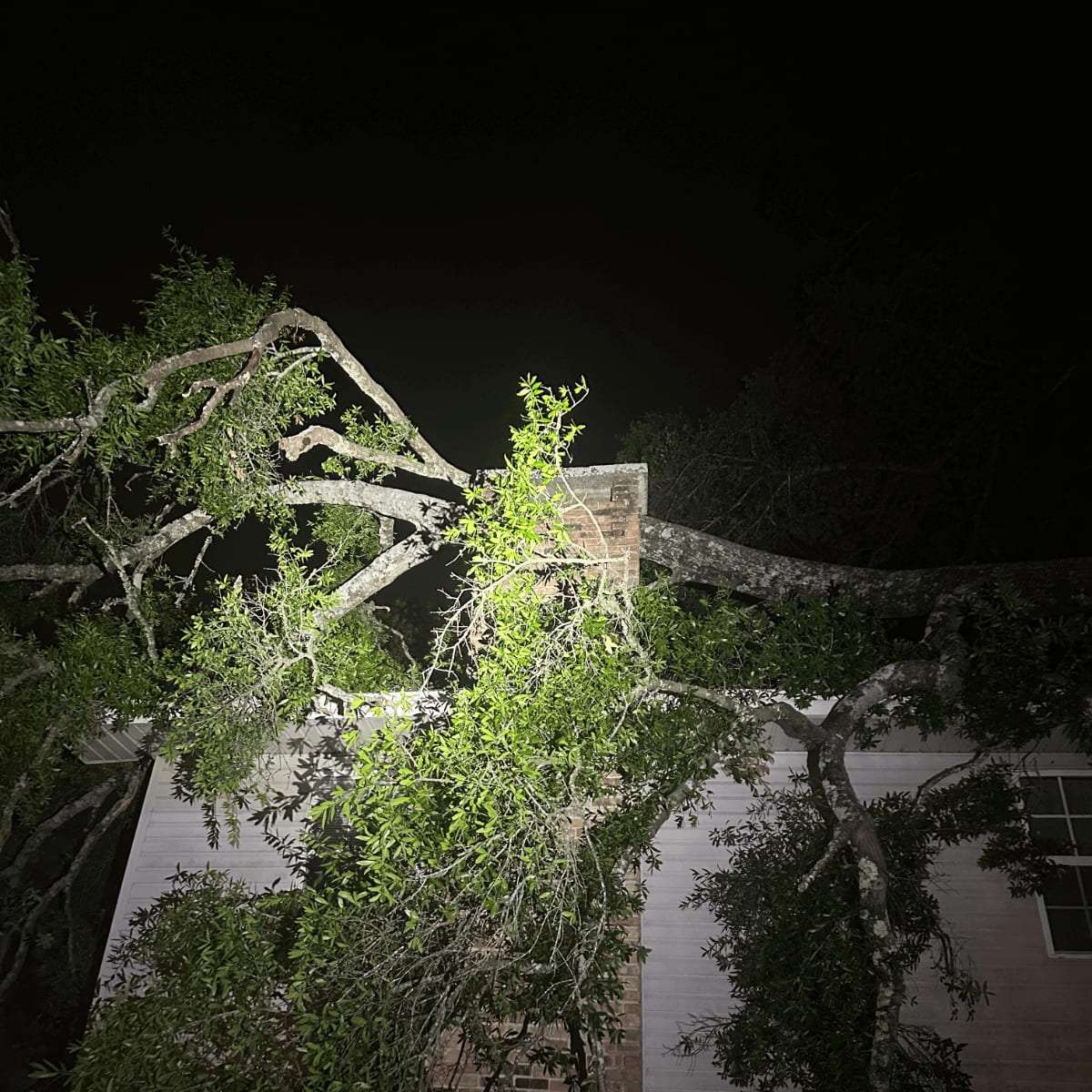
In a waterfront environment, a tree that isn’t built for the salt becomes an emergency faster than an inland tree. The degradation happens from the outside in and the bottom up.
- Rapid Decay from Salt Stress: When a tree is chronically stressed by salt, it stops healing internal wounds – a process arborists call “compartmentalization.” This leads to hidden hollows in the trunk that can snap without warning during a minor storm. A tree that looks green on the outside may be structurally “hollow” inside due to years of salt-induced stress.
- Storm Surge Uprooting: Species without deep taproots or wide-spreading “anchor” roots are easily lifted when the ground becomes saturated during a hurricane. On Pensacola Beach, the water table is high; trees that try to grow deep roots often hit saltwater, causing root rot. Successful coastal trees have evolved unique lateral root systems that act like outriggers on a canoe.
Emergency Tree Services for New Homeowners
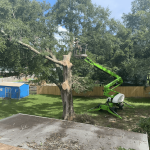
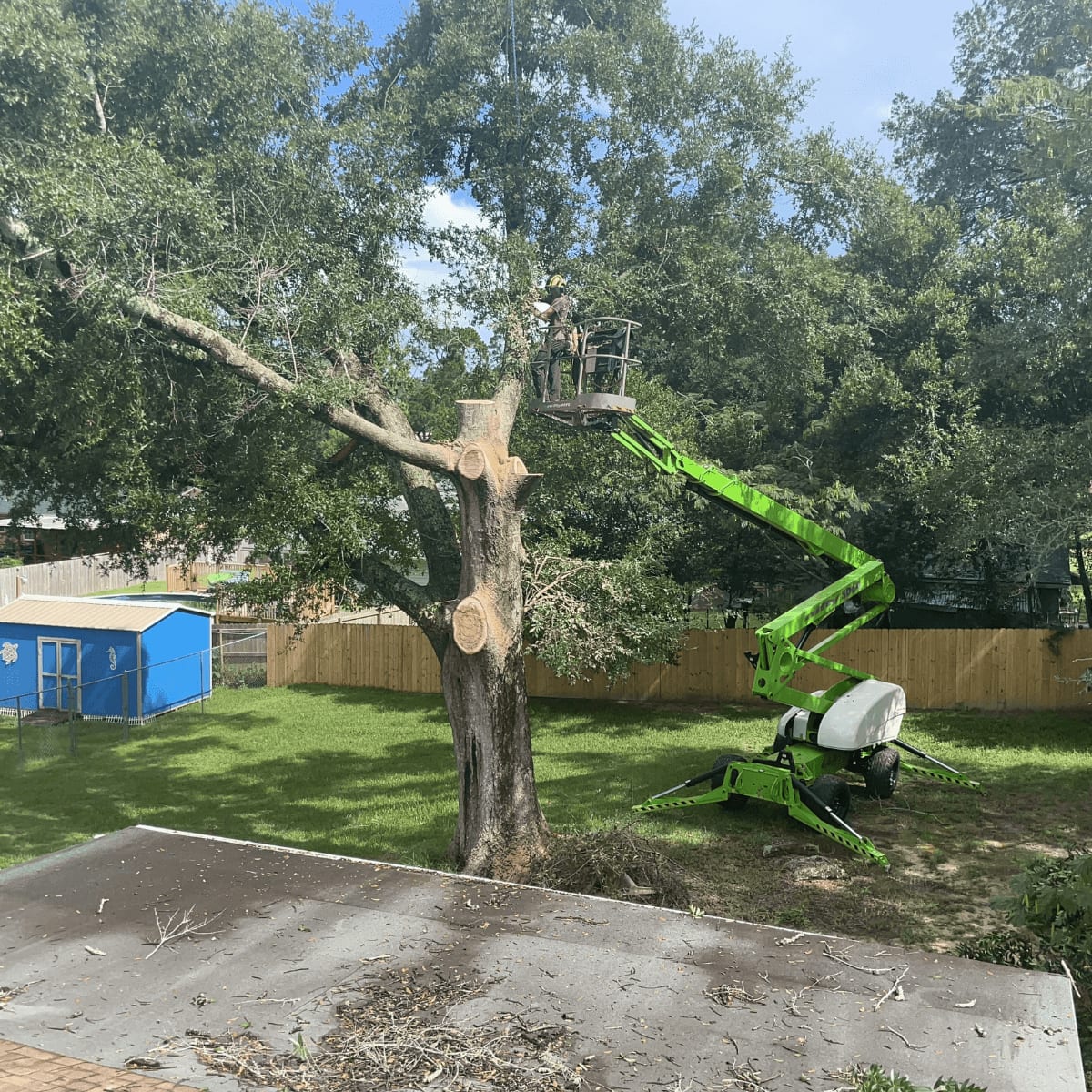
If you’ve inherited a property with leaning or salt-damaged trees, emergency tree services for new homeowners can stabilize your lot. These services are not just about removal; they are about preservation and risk mitigation. These services include:
- Hazardous Tree Removal: Identifying and removing dead or dying “non-native” trees that pose a strike risk to your home.
- Structural Weight Reduction: Strategic pruning to reduce the “wind sail” effect in the canopy before hurricane season.
- Cabling and Bracing: Providing structural support for heritage Live Oaks that may have developed heavy, overextended limbs.
- Post-Storm Surge Assessment: Expert assessment of root health following a surge to determine if the tree can be saved through soil flushing and fertilization.
A Professional Tree Service firm helps homeowners navigate this “Double Threat” by deploying ISA-Certified Arborists who utilize professional-grade systemic trunk injections to kill EAB larvae while simultaneously providing deep-root watering and fertilization to restore the health of drought-stressed heritage trees.
The Top 6 Salt-Tolerant Trees for Pensacola Beach
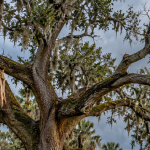
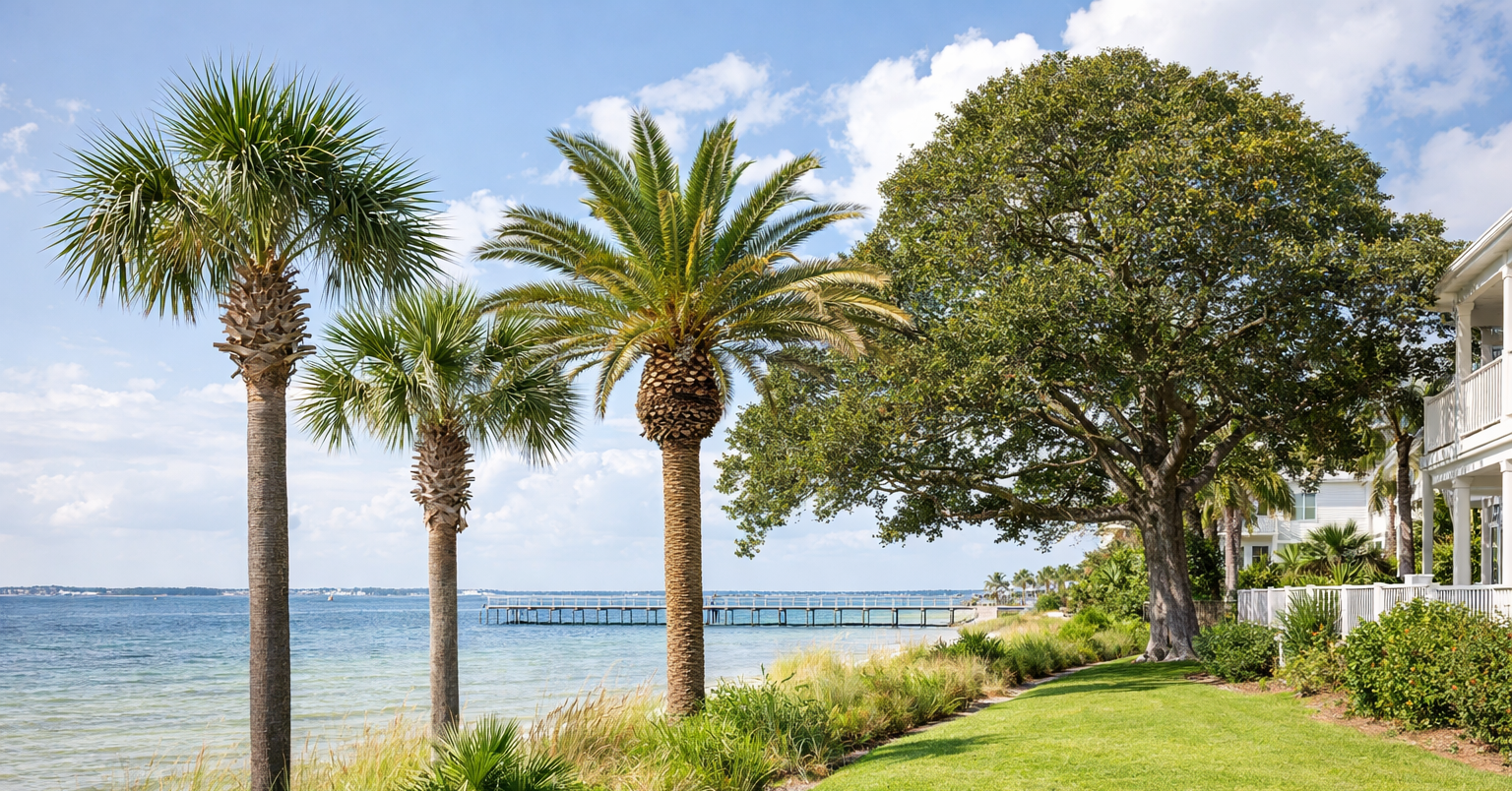
- Live Oak (Quercus virginiana): The king of the coast. Its sprawling limbs and deep, thick roots make it nearly hurricane-proof. Its leathery leaves have a waxy coating that naturally repels salt.
- Southern Red Cedar (Juniperus silicicola): Highly salt-tolerant with a “flexible” wood structure that bends rather than breaks in high winds. It often grows in picturesque, twisted shapes that define the Florida coastline.
- Sand Pine (Pinus clausa): Specifically adapted to the nutrient-poor sands of the Florida Panhandle. It is one of the few pines that can handle the high-heat, high-salt environment of the barrier islands.
- Cabbage Palm (Sabal palmetto): Florida’s state tree. It handles salt spray and flooding with zero complaints. Its “trunk” is actually made of fibrous material that absorbs wind energy like a shock absorber.
- Sea Grape (Coccoloba uvifera): A tropical favorite with large, leathery, circular leaves that are virtually immune to salt burn. It provides excellent privacy and produces edible fruit for local wildlife.
- Yaupon Holly (Ilex vomitoria): A hardy evergreen that can be pruned into a hedge or a small tree. It is extremely drought-tolerant once established and produces bright red berries that attract birds.
Real-World Field Insights
We recently consulted for a homeowner on Via De Luna Drive who had planted several non-native palms that were leaning dangerously toward the pool. The trees were suffering from “root rot” because they couldn’t handle the alkaline, salty water table of the island. Upon further inspection, we found the sand had compacted around the root balls, suffocating the trees. Lesson: Native species like the Sabal Palmetto or Sea Grape would have saved the homeowner thousands in replacement costs and emergency removal fees. A professional tree service firm like D’s Trees can identify these species’ suitability before you invest in expensive landscaping.
Placement and Long-Term Safety
Strategic placement is just as important as species selection:
- Primary Dune Zone: Only the hardiest palms and shrubs (like Sea Oats and Sea Grapes) should be planted here.
- Secondary Zone: Larger trees like Live Oaks can thrive if they have a small windbreak provided by the primary dune or a fence.
- Utility Clearance: Always account for the “lean” that coastal trees develop; ensure they won’t lean into power lines over time as they grow toward the light and away from the salt-heavy wind.
Frequently Asked Questions
How do I know if I need emergency tree services?
If you see exposed roots after a storm, a new lean in the trunk, or large dead branches (widowmakers) in the canopy, call a professional. On the beach, a “wait and see” approach often leads to property damage.
Can I use fresh water to wash salt off my trees?
Yes. Rinsing your foliage with fresh water after a heavy salt spray event or a tropical storm can significantly reduce salt burn. Think of it as “showering” your landscape.
Are Palm trees the most wind-resistant?
Sabal Palms are very resistant, but “Queen Palms” and “Washingtonias” are notorious for blowing over or snapping in Pensacola Beach winds. Species choice is critical.
How often should I inspect my waterfront trees?
At least twice a year, once in late spring before hurricane season (June) and once in late fall after the season ends.
Does salt-tolerant mean salt-proof?
No. Even the hardiest trees can be damaged by extreme, prolonged exposure or a direct hit from a storm surge. Proper fertilization helps them build the “immunity” needed to recover.
Can I plant a Live Oak right on the beach?
They prefer to be slightly set back (at least 50-100 feet) from the high-tide line to protect their early growth from the harshest direct spray.
What is “Deep-Root Fertilization”?
It is a process where nutrients are injected directly into the root zone (about 8-12 inches deep). This bypasses the sandy, nutrient-poor surface soil and ensures the tree gets what it needs despite the high pH.
Will insurance cover a tree that dies from salt spray?
Typically, no. Insurance usually only covers trees that cause physical damage to a “covered structure” (like your house or fence) during a wind event.
Conclusion
Navigating the landscape of Pensacola Beach requires a balance of aesthetics and survival. By choosing the right salt-tolerant trees, new homeowners can prevent costly emergencies and create a resilient waterfront oasis. Regular inspections, deep-root care, and professional maintenance from emergency tree services for new homeowners ensure your canopy remains a coastal asset rather than a storm-time liability.