May 8, 2026
Key Takeaways
- Structural Support: Cabling and bracing provide supplemental support to structurally weak trees, extending their life and protecting property.
- Co-dominant Trunks: The V-shaped union is the most common point of failure and the primary candidate for bracing.
- Included Bark: When bark grows inward between two stems, it creates a weak attachment that cannot support heavy weight or wind.
- Storm Prevention: In Northwest Florida, cabling is a proactive measure taken before hurricane season to prevent catastrophic limb failure.
- Expert Installation Only: Improperly installed cables can choke a tree or cause more damage; always hire a certified arborist.
In the lush landscapes of Pensacola, Pace, and Milton, we are surrounded by majestic oaks and sweeping canopies. For many homeowners, these trees are more than just scenery; they are historical landmarks of the property. However, as trees age or grow rapidly in Florida’s humid climate, they often develop structural flaws that the average person might overlook.
When a tree becomes structurally compromised, the immediate thought often turns to removal. But for high-value heritage trees, there is a middle ground: Cabling and Bracing. This arboricultural technique involves installing high-strength cables and steel rods to limit the movement of branches and stabilize weak unions. It doesn’t fix the tree in a biological sense, but it provides the mechanical support necessary to prevent a catastrophic split during a storm. Recognizing the early indicators for this service is the difference between preserving your canopy and losing it to the next tropical system.
1. The Presence of Co-dominant Trunks (V-Unions)
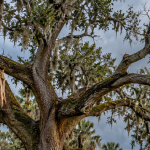
The most frequent indicator that a tree requires supplemental support is the development of co-dominant trunks. This occurs when two main stems grow from the same point on the trunk and compete for space.
Why V-Unions Fail
A strong tree union is U-shaped, where the wood fibers of the branch and trunk are deeply integrated. In contrast, a V-union creates a narrow angle where the two stems essentially push against each other. As the stems grow in diameter, they have nowhere to go but out. During a high-wind event in Northwest Florida, the wind acts as a wedge, forcing the two trunks apart until the wood fibers fail and the tree splits down the middle.
2. Deep Structural Cracks at the Crotch
If you can see a visible crack where two large limbs meet, your tree is in the critical stage of structural failure. These cracks are often the result of the tree already beginning to yield under its own weight or from previous minor wind events.
The Indicator of Included Bark
Look closely at the junction. If you see bark that appears to be folded inward between the two stems, this is known as included bark. This means there is no actual wood-to-wood connection at that junction; it is simply bark pressing against bark. This is a massive structural liability. Bracing rods are often used here to bolt the two stems together, creating a rigid connection that compensates for the lack of natural integration.
3. Overextended and Heavy Limbs
Sometimes the trunk is perfectly fine, but a single, massive limb has grown horizontally far beyond the rest of the canopy. These are known as overextended limbs.
The Lever Effect
Think of a long branch as a lever. The further the weight (foliage and secondary branches) is from the trunk, the more stress is placed on the attachment point. In a heavy rainstorm, the weight of the water on the leaves can double or triple the load on that limb. Cabling these limbs to a higher, more central part of the tree helps redistribute that weight back toward the main trunk, preventing the branch from snapping under its own pressure.
4. Multi-Stemmed Trees with Leaning Tendencies
Many ornamental and shade trees in the Panhandle grow with multiple stems. Over time, one of these stems may begin to lean significantly away from the center of the tree.
Correcting the Center of Gravity
A lean doesn’t always mean the tree is uprooting. Often, it is simply a phototropic response; the tree is growing toward the sunlight. However, if that lean is over a driveway, a pool screen, or a roof, it becomes a hazard. Dynamic cabling allows the leaning stem to remain part of the tree while preventing it from over-swaying or falling if the root plate becomes saturated during a Florida summer downpour.
5. Splits Following a Previous Storm
Northwest Florida is no stranger to near misses. Your tree may have survived the last hurricane, but it might not be the same.
Investigating Stress Fractures
After a major storm, inspect your trees for stress fractures along the main limbs. These may not be full breaks, but small splits that allow moisture and decay to enter the heartwood. Cabling can stabilize these fractured limbs, allowing the tree to potentially produce wound wood or reaction wood to close the gap while the hardware takes the mechanical strain.
6. High-Value Trees in Target Zones
The final indicator isn’t just about the tree’s health; it’s about what is underneath it. If you have a large tree overhanging your primary living space, the risk tolerance is much lower.
Proactive Mitigation
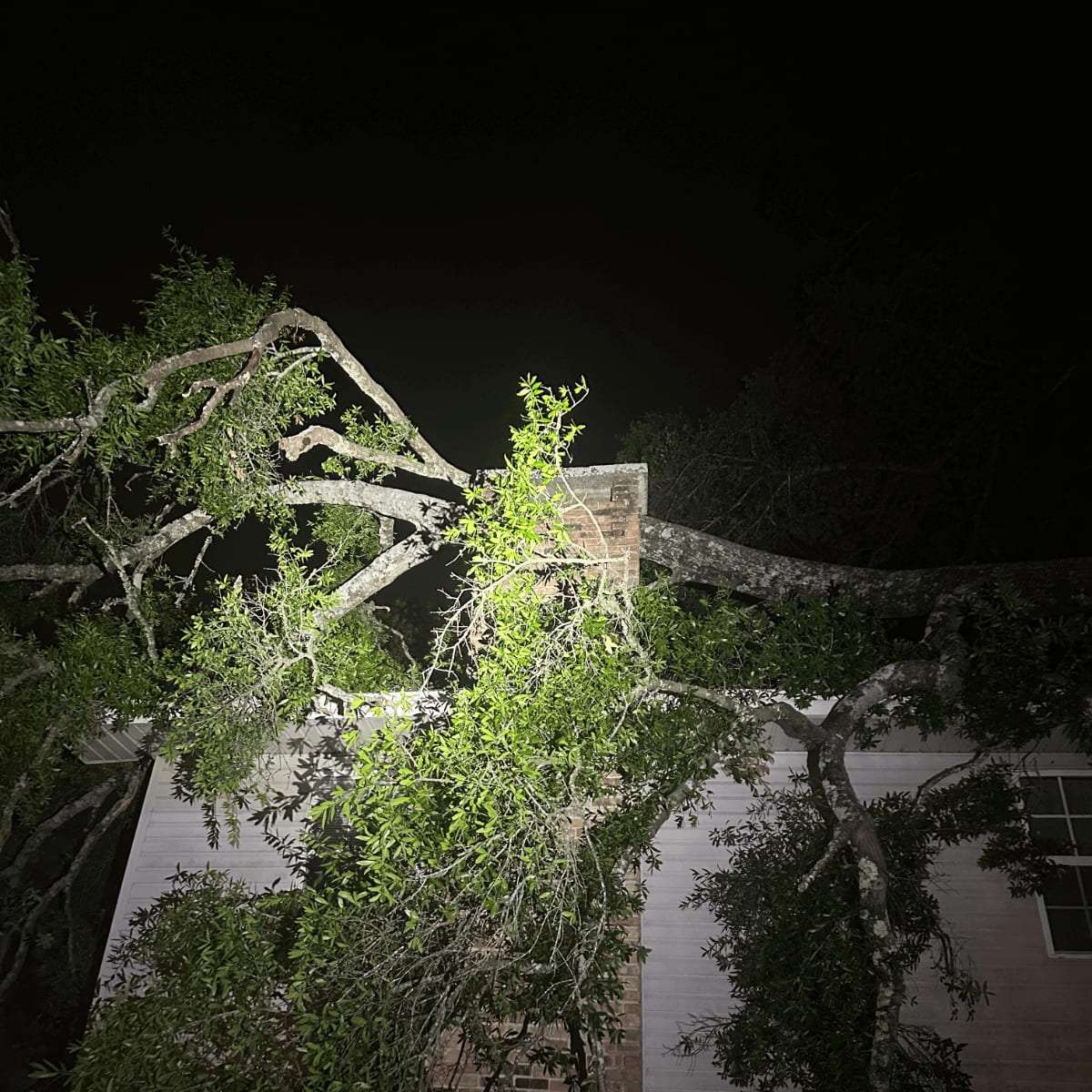
Even if a tree looks relatively healthy, if it has a high-value structure underneath it, cabling is often recommended as an insurance policy. It provides peace of mind that even in a severe gust, the most likely points of failure are physically restrained from hitting the house.
When it comes to the complex mechanics of cabling and bracing, you need a team that understands the intersection of physics and biology. D’s Trees is led by Doug Doll, a retired Coast Guard helicopter pilot, whose military-instilled attention to detail ensures that every support system is installed with surgical precision.
As an ISA Board Certified Master Arborist-led firm, D’s Trees serves Pace, Pensacola, and Milton with expert tree cabling and bracing designed for our unique Gulf Coast climate.
We don’t just bolt trees; we perform comprehensive tree risk assessments to ensure your property remains safe and your heritage trees thrive for decades. Our family-owned business offers no-money-upfront insurance billing and a Property Damage Prevention Guarantee, providing the integrity and professional expertise your landscape deserves.
Protect your lifelong assets. Call (850) 999-0110 for immediate 24/7 assistance and a free quote and health audit today.
Frequently Asked Questions (FAQs)
1. Does cabling hurt the tree?
When performed by a professional, no. We use specialized hardware that allows the tree to grow around the attachment points without girdling the limb.
2. Can I install a cable myself with hardware from a store?
Absolutely not. Improperly placed cables can cause a tree to snap at the cable line or choke the tree. Arborists use specific tensile-strength steel or dynamic cobra cabling that is not available at standard retail stores.
3. How long do tree cables last?
Generally, cables should be inspected every 2-3 years and may need replacement or adjustment every 7-10 years as the tree grows.
4. Will the cable be visible from the ground?
Usually, yes, but they are relatively thin. Most people find the thin profile of a professional cable much more attractive than a split tree or a stump.
5. Does cabling guarantee the tree won’t fall?
No system can withstand every possible weather event, but it significantly reduces the probability of failure during standard high-wind events.
6. Can any tree be cabled?
No. If the tree has excessive internal rot or hollow heart, cabling is like putting a Band-Aid on a broken bone. A Tree Risk Assessment is necessary first.
7. What is the difference between Cabling and Bracing?
Cabling uses flexible steel or synthetic lines to limit movement in the upper canopy. Bracing uses rigid steel rods to bolt together a split or weak crotch in the lower trunk.
8. Is cabling cheaper than removal?
Almost always. For a high-value oak, the cost of cabling is a fraction of the cost of a full removal and stump grinding.
Summary Checklist: Cabling and Bracing Indicators
| Condition | Risk Level | Recommended Action |
| Visible crack in the trunk crotch | Critical | Immediate bracing rod installation to prevent structural failure |
| Included bark (V-shaped union) | High | Schedule a professional cabling assessment to reinforce weak structure |
| Overextended limb above the roof or structure | High | Install dynamic cabling to redistribute weight and reduce stress load |
| Slight lean toward structure | Moderate | Monitor regularly and consider cabling or support if lean increases |
| Multi-stemmed canopy | Low to Moderate | Structural pruning followed by cabling to stabilize growth over time |
Final Advice
Cabling and bracing are not one-size-fits-all solutions, but they are essential tools for any property owner in Northwest Florida who values their mature canopy. If you identify any of the six indicators, especially the presence of V-unions or visible cracks, do not wait for storm season to test the tree’s strength. Your primary goal should be a proactive Tree Risk Assessment by an ISA Certified Arborist. They can determine if the tree’s internal structure is sound enough to support the hardware.
Always remember the objective of cabling is to limit the movement of the tree to prevent it from reaching its breaking point. By investing in these supplemental support systems now, you are choosing to preserve a lifelong asset while significantly reducing the potential for catastrophic property damage. A tree that is properly cabled is a tree that is prepared for the unpredictable nature of Gulf Coast weather.