May 28, 2026
Key Takeaways
- Safety First: Cranes eliminate the need for dangerous climbing in structurally compromised or dead trees.
- Property Protection: Specialized equipment prevents heavy limbs from dropping and damaging roofs or landscaping.
- Efficiency: Crane-assisted removals can often be completed in hours rather than days.
- Limited Access: Cranes can reach over fences, pools, and structures to remove trees in tight backyards.
- Hazard Mitigation: After Gulf Coast storms, cranes provide the stability needed to remove uprooted or leaning trees safely.
In the lush landscapes of Northwest Florida, from the towering pines of Milton to the sprawling Live Oaks of Gulf Breeze, maintenance is a constant necessity. While the chainsaw remains the iconic tool of the trade, not every tree can be tackled with a blade and a ladder alone. As our urban canopies grow denser and our storm seasons become more intense, the choice between traditional felling and crane-assisted removal becomes a critical decision for property safety. Understanding why certain trees require specialized equipment isn’t just about technical trivia; it’s about protecting your home, your family, and your investment.
The Limits of the Chainsaw: When Traditional Felling Isn’t Enough
For many, tree removal conjures images of a lumberjack making a notch and watching a tree fall into a clear field. This is known as directional felling, and while it is efficient, it requires a massive amount of open space, typically at least 1.5 times the height of the tree. In the residential neighborhoods of Pensacola or Navarre, that kind of space is a luxury few homeowners have.
The Challenges of Urban Environments
When trees are nestled between a house, a swimming pool, and a neighbor’s fence, there is no drop zone. Traditional methods then shift to rigging, where climbers dismantle the tree piece by piece and lower sections on ropes. However, rigging has its own physical limits. The forces generated by a falling log caught by a rope can put immense stress on the remaining structure of the tree. If the tree is hollow, diseased, or weakened by pests, it may not be strong enough to act as an anchor point for its own removal.
Enter the Crane: A Game-Changer for Northwest Florida Trees
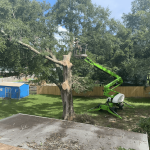
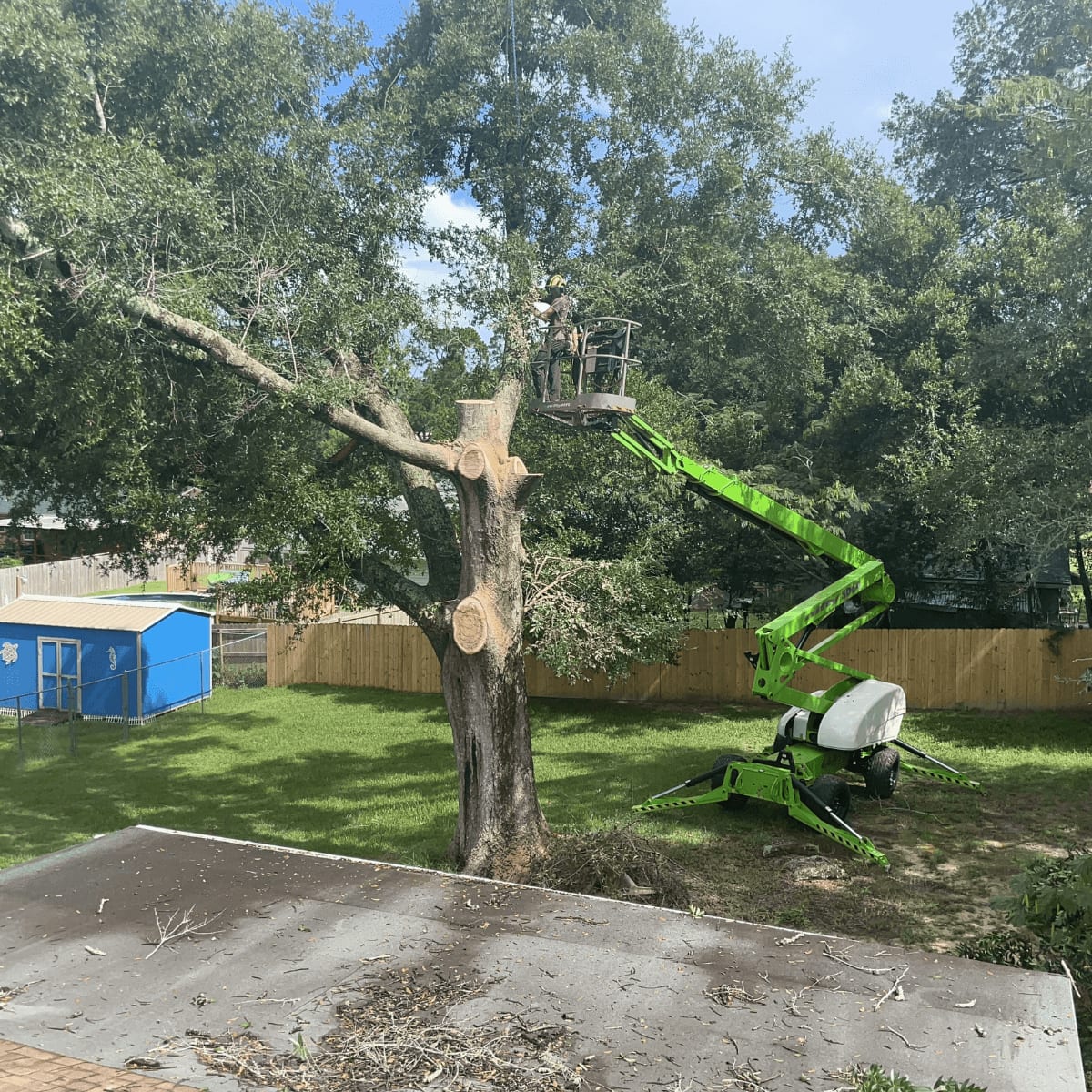
Crane-assisted tree removal represents the pinnacle of modern arboricultural technology. Instead of depending on the tree’s integrity to support a climber and rigging gear, a hydraulic crane reaches into the canopy from a stable position on the ground.
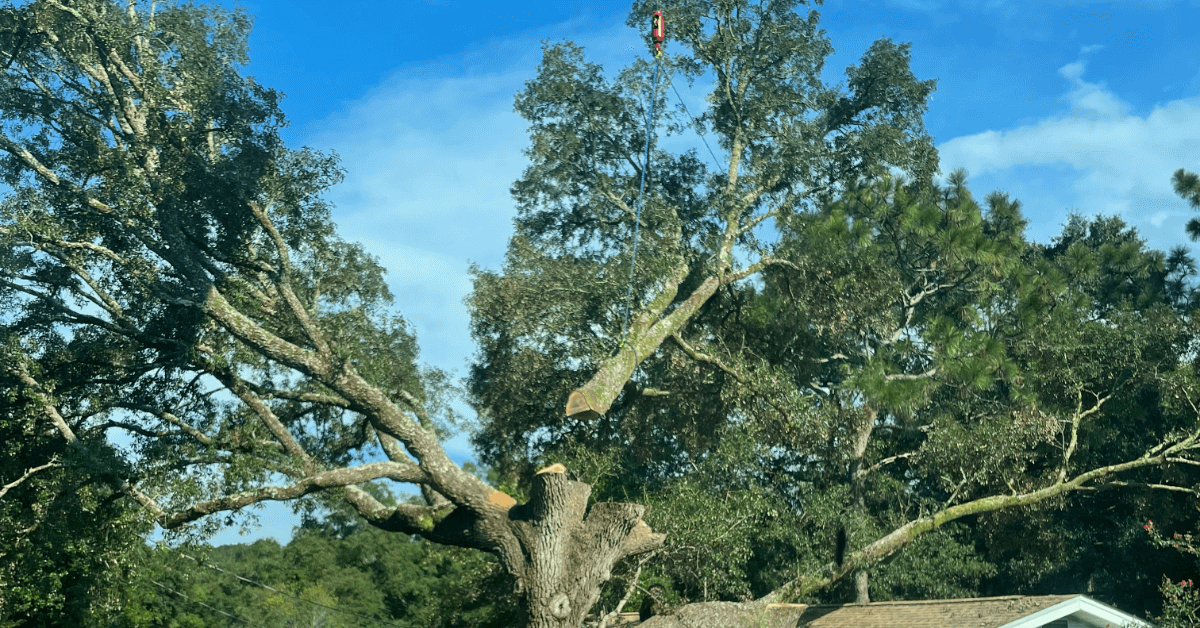
The process is a synchronized dance between the crane operator and the ground crew. A climber or a bucket operator is lifted into the canopy to attach a specialized sling to a section of the tree. Once the crane has tension on the line, the arborist makes the cut. Instead of the limb falling toward the ground, the crane simply lifts it vertically. The piece is then swung over obstacles and lowered gently into a designated landing zone or directly onto a trailer for hauling.
Why Specialized Equipment is Mandatory for Certain Species
Northwest Florida is home to specific tree species that present unique challenges due to their size, weight, and growth patterns.
- Sand Pines and Slash Pines: These trees often grow remarkably tall and straight. When they die, they become brittle very quickly. A climber in a dead pine is at high risk, as the top can snap without warning. A crane allows these widow-makers to be removed without a human ever having to put their weight on the trunk.
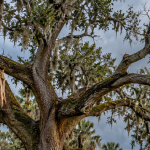
- Live Oaks and Laurel Oaks: These Florida staples are known for their massive, horizontal limbs that can weigh several tons each. Lowering such weight with ropes is incredibly labor-intensive and risky. Specialized cranes can handle the sheer tonnage of these heavy hitters with ease.
The Post-Storm Reality: Hurricane and Tropical Storm Damage
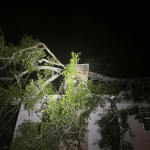
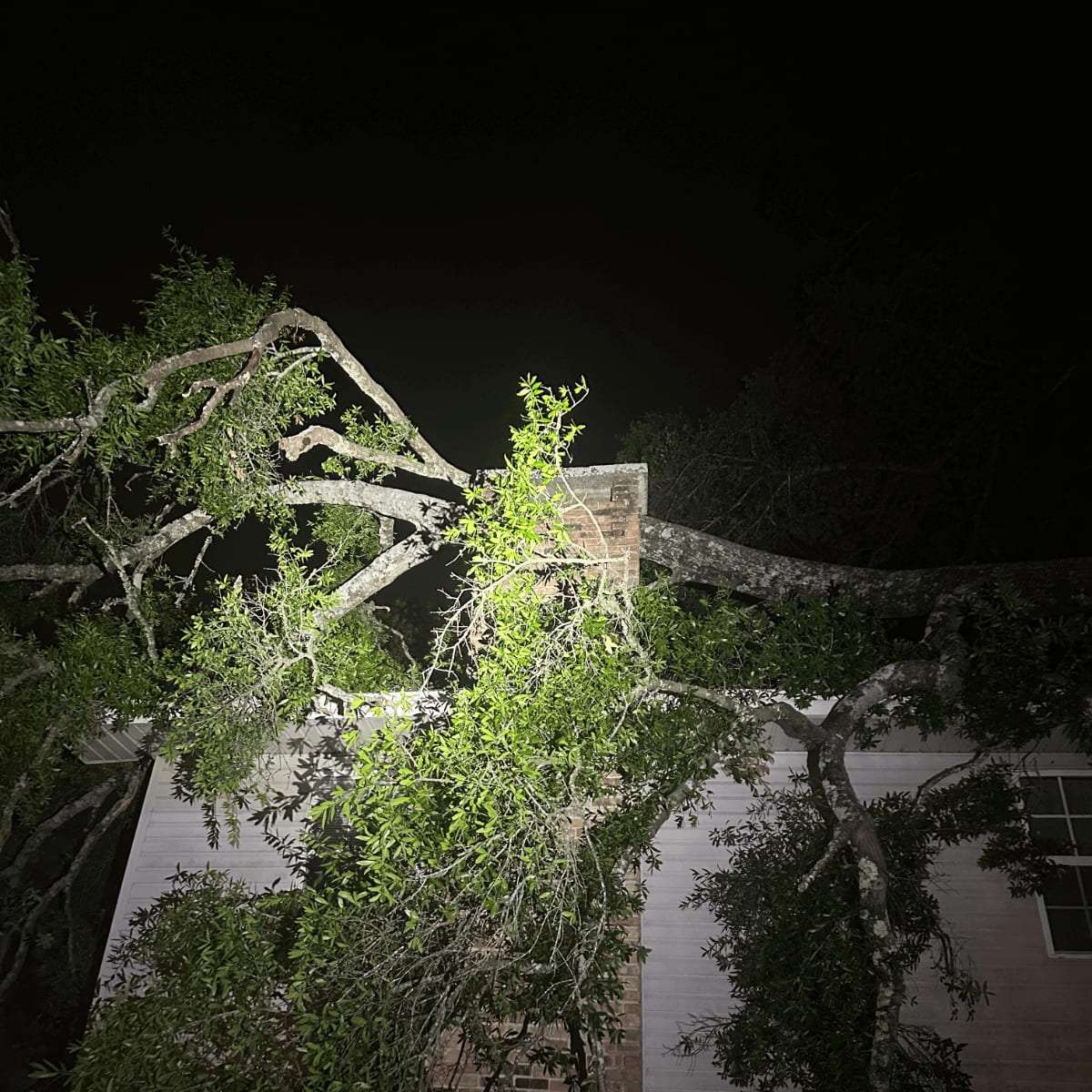
Along the Emerald Coast, the need for specialized equipment skyrockets after a tropical blast. Storm-damaged trees are notoriously unpredictable. They may be under tension, meaning a single cut could cause the wood to explode or the tree to shift violently.
Uprooted and Leaning Trees
A tree that is partially uprooted is a ticking time bomb. Because the root plate is no longer secure, it cannot be climbed. In these scenarios, a crane is the only responsible way to perform tree removal. The crane provides the necessary support to keep the tree from falling onto the home while the crew dismantles it from the top down.
Protecting Your Landscape and Infrastructure
One of the most overlooked benefits of specialized equipment is the zero-impact factor. Traditional tree work involves dragging heavy logs across the lawn, which can crush irrigation lines, compact soil, and destroy expensive landscaping.
- Preserving Hardscapes: Cranes eliminate the need for heavy equipment to drive across your driveway or pavers.
- Avoiding Utility Lines: Precision control allows operators to navigate around power and communication lines that often weave through Florida canopies.
- Septic System Safety: Many homes in rural Santa Rosa and Escambia counties rely on septic tanks. Heavy logs dropped or dragged near these systems can cause catastrophic failures.
The Efficiency and Cost-Effectiveness Factor
While the daily rate for a crane is higher than that of a crew with just chainsaws, the total project cost is often lower. What might take a traditional crew three days of grueling, dangerous climbing can often be accomplished by a crane crew in six hours. Homeowners save money on labor hours and avoid the stress of a multi-day construction zone in their backyard.
When your property faces the challenge of a massive oak or a hazardous leaning pine, you need more than just a guy with a saw; you need a team equipped with the latest technology and a deep understanding of local arboriculture. D’s Trees provides professional tree removal services in Northwest Florida, specializing in high-stakes crane removals that others simply can’t handle. Based in Pace, FL, our family-owned business combines decades of local experience with professional-grade hydraulic cranes and precision rigging equipment.
We serve communities across Pace, Pensacola, Milton, and Navarre, ensuring that even the most impossible trees are removed safely without a scratch on your home. Our OSHA-certified operators and expert ground crews handle every detail, from initial site assessment to the final meticulous cleanup. We pride ourselves on transparency, reliability, and a commitment to protecting the beautiful landscapes of the Gulf Coast. Don’t risk your home to outdated methods when specialized equipment is available.
Frequently Asked Questions by Homeowners in Northwest Florida
How do I know if my tree requires a crane for removal?
If a tree is dead, leaning over a structure, located in a fenced backyard with no wide access, or is exceptionally large (like an old-growth Oak), it likely requires a crane. A professional site assessment is the only way to be sure.
Will the crane damage my driveway or street?
Professional crews use outrigger pads to distribute the weight of the crane evenly, protecting asphalt and concrete. We perform a thorough check of the ground conditions before setting up any heavy machinery.
Is crane-assisted removal louder than traditional methods?
While the crane engine runs, the process is actually quieter overall because it reduces the amount of time chainsaws are running and eliminates the thud of heavy wood hitting the ground.
Can a crane be used near power lines in Northwest Florida?
Yes, but it requires specific safety protocols and often coordination with the local utility company. The precision of a crane is actually safer near lines than traditional dropping methods.
What happens to the wood once the crane lowers it?
Once in the landing zone, the wood is processed by the ground crew. Large logs are usually loaded onto a trailer with a grapple truck, and smaller branches are fed into a high-capacity wood chipper.
Does insurance cover the cost of a crane for tree removal?
If a tree has fallen on a covered structure due to a storm, insurance often covers the reasonable cost of removal, which includes necessary specialized equipment like cranes.
How much space does a crane need to set up?
A typical tree crane needs a level area about the size of two or three parking spaces. We are experts at finding the best setup point in cramped Northwest Florida neighborhoods.
Is it dangerous to have a crane operating over my house?
When operated by certified professionals, it is significantly safer than traditional rigging. Every lift is calculated based on the crane’s load chart to ensure it is well within safe operating limits.
Summary Checklist: Chainsaw vs. Crane Removal
| Feature | Traditional Chainsaw Removal | Crane-Assisted Tree Removal |
|---|---|---|
| Ideal For | Small trees, open-access properties, and straightforward removals | Large hazardous trees, tight residential spaces, and complex removals near structures |
| Property Risk | Moderate due to falling debris and larger drop zones | Lower because sections are lifted vertically with controlled movement |
| Speed | Slower because the tree is dismantled in smaller sections | Faster due to large controlled lifts and efficient removal workflow |
| Worker Safety | Higher risk because of climbing exposure and manual rigging complexity | Improved safety with reduced climbing and more controlled lifting operations |
| Landscape Impact | Possible turf or landscape disruption from falling material and equipment movement | Minimal landscape disturbance when properly staged and executed |
Final Advice
To ensure the safety and longevity of your property, you must look beyond the simple utility of a chainsaw when dealing with complex removals. Start by evaluating the physical context of your tree; if it is within striking distance of your roof, pool, or power lines, traditional felling should be dismissed in favor of mechanized precision. Always request a detailed rigging plan from your contractor to understand how they intend to manage heavy timber over your structures. If a tree is dead or structurally compromised, never allow a climber to ascend without a secondary support system, such as a crane or aerial lift, as the risk of catastrophic failure is too high. You should also consider the impact on your soil and hardscape; opting for crane-assisted removal prevents the heavy ground impacts that lead to cracked driveways and dead lawn patches. In our unique Northwest Florida climate, rapid decay can turn a sturdy tree into a brittle hazard in just one season, so proactive assessments are vital. By partnering with professional tree removal services in Northwest Florida like D’s Trees, you gain access to the specialized equipment necessary to neutralize these risks.