October 6, 2026
Key Takeaways
- Pensacola trees face hurricanes, saturated sandy soil, extreme humidity, lightning, and occasional hard freezes in a single year.
- Most storm failures start as root problems or weak branch unions that were visible long before the wind arrived.
- Sandy Gulf Coast soil drains fast but anchors roots poorly, which raises uprooting risk during sustained tropical winds.
- Heat and humidity drive fungal disease and beetle pressure, so summer decline is often weather-related rather than random.
- Scheduled inspection and structural pruning is far cheaper than emergency removal after a named storm.
Florida weather affects trees in Pensacola due to the mix of hurricane-force winds, heavy rain, saturated soil, extreme heat and humidity, lightning, salty coastal air, and occasional freezes. Each of these stresses works on a different part of the tree. Wind tests the root plate and branch unions. Rain and sandy soil loosen anchorage. Heat and humidity encourage fungal disease and beetle activity. Lightning damages the tree internally. Over time these forces stack. The result is that a Pensacola tree ages faster and fails more suddenly than the same species growing inland.
Understanding that pattern is the first step toward preventing damage to your property.
The Gulf Coast Climate Pensacola Trees Live In
Pensacola’s Gulf Coast location brings long, hot, humid summers and heavy rainfall, often in intense bursts, with over 60 inches annually. Winters are mild but can bring occasional hard freezes, while tropical storms and frequent summer thunderstorms add further challenges for local trees.

The soil adds another layer. Much of Escambia and Santa Rosa County sits on deep, sandy, fast-draining soil. Sand drains well, which trees generally like. But sand also holds roots loosely. When that sand becomes fully saturated during a tropical system, anchorage drops sharply. A tree that stood through decades of ordinary weather can lean or fall in a single afternoon.
Hurricanes and Tropical Storms
Hurricanes are the most obvious weather threat to Pensacola trees. They are also the most misunderstood. Healthy, well-structured trees survive high wind far more often than people expect. The trees that fail usually have a pre-existing defect.
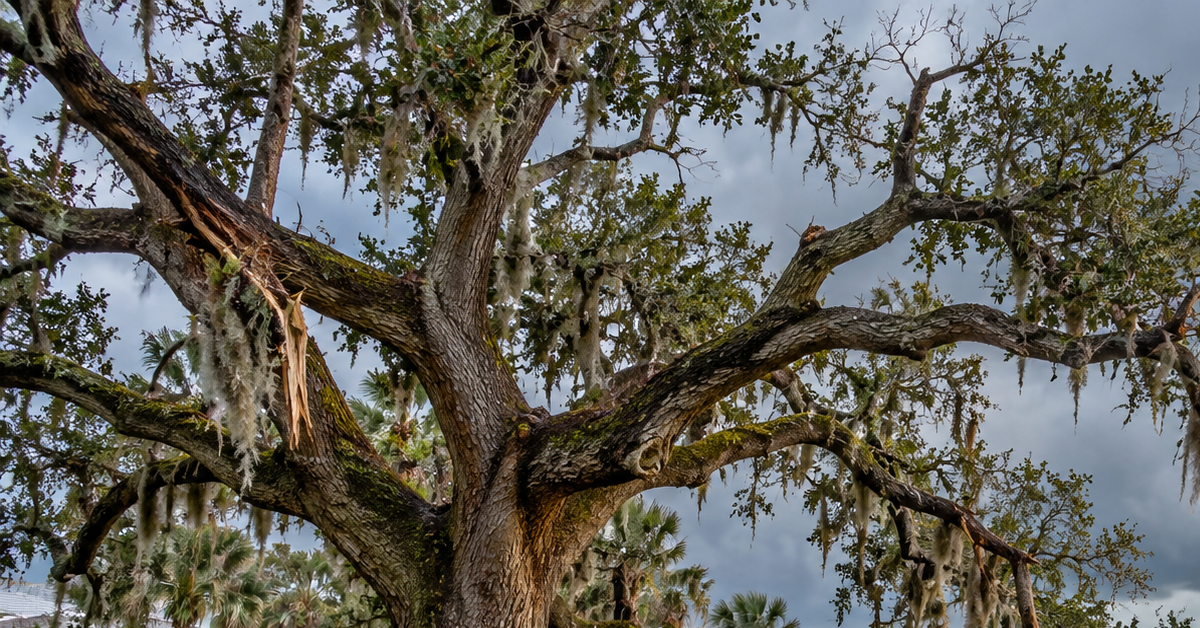
The common failure points are predictable. Co-dominant stems with tight V-shaped unions split apart. Decayed trunks snap at the weak point. Root plates lift in saturated soil. Long, heavy lateral limbs tear away from the trunk.
Species matters as well. Laurel oak and water oak are common in Pensacola and both are comparatively short-lived and failure-prone as they mature. Live oak, by contrast, is among the most wind-resistant shade trees in the South. Sand pine and slash pine snap more readily than longleaf pine. Fast-growing ornamentals with brittle wood rarely hold up well.
Hurricane damage can be partly prevented with proper tree care. A professional tree service firm in Pensacola, Florida can perform tree trimming to reduce weight on overextended limbs and remove dead wood. They can correct weak branch unions in younger trees and assess declining trees before hurricane season.
The National Hurricane Center is the authoritative source for tracking active systems in the Gulf. Planning tree work around that forecast window is far more effective than reacting to it.
Heavy Rainfall, Flooding, and Saturated Soil
Rain damages Pensacola trees in two distinct ways.
- The first is immediate. Saturated sandy soil loses its grip on the root plate. Add sustained wind and the tree simply tips. This is why so many local failures happen during storms that were not record-breaking on wind speed alone.
- The second way is slower. Prolonged standing water starves roots of oxygen. Fine feeder roots die. Root rot fungi move in. The tree looks normal for a season or two. Then the canopy thins, limbs die back, and the decline becomes visible long after the flooding that caused it.
Watch for warning signs after a wet year. Soil heaving or cracking on one side of the trunk is serious. Mushrooms or conks at the base suggest internal decay. Sudden leaf drop out of season points to root stress. Any of these justifies a professional tree risk assessment rather than a wait-and-see approach.
Heat, Humidity, and Disease Pressure
Pensacola summers are hard on trees. Daytime highs sit in the low 90s for weeks. Overnight humidity stays high. That combination is ideal for fungal pathogens.
Common local problems include –
- hypoxylon canker on stressed oaks
- root and butt rot fungi
- leaf spot diseases, and
- various cankers on ornamentals
Insect pressure follows the same pattern. Southern pine beetle and Ips engraver beetles target pines already weakened by drought or construction damage. Heat stress rarely kills a tree outright. It opens the door. A tree under repeated summer stress has fewer reserves for compartmentalizing decay, sealing wounds, and recovering from storm damage. That is how a heat problem becomes a wind problem two years later.
Lightning Strikes Are More Common Than Homeowners Realize
Florida is at the 2nd spot in the nation in lightning strike density. The Panhandle sees frequent activity through the summer convective season. Tall, isolated, or high-moisture trees are preferred targets.
A strike may leave an obvious spiral scar down the trunk. Often it leaves almost nothing visible. The internal damage still happened. Cambium tissue is destroyed, moisture in the wood flashes to steam, and the tree loses vascular function in the affected sector.
Struck trees can survive. Many do. But they should be evaluated, monitored for at least a full growing season, and watched closely for secondary beetle attack. A struck tree near a house or driveway is a candidate for structural review.
Drought, Salt Air, and Coastal Exposure
Pensacola is wet overall but still experiences meaningful dry spells, particularly in late spring and fall. Sandy soil holds very little water. A three-week dry stretch affects local trees faster than the same stretch would inland. Coastal properties face an additional problem. Salt spray burns foliage on sensitive species. Storm surge pushes saltwater into root zones, and salt in sandy soil can persist long enough to kill trees that were otherwise undamaged by the storm itself.
Species selection is the practical defense. Live oak, southern magnolia, sabal palm, yaupon holly, and eastern red cedar all handle coastal conditions well. Less tolerant species planted close to the water tend to struggle regardless of care.
Occasional Freezes and Cold Snaps
Northwest Florida is colder than most people outside the region expect. Hard freezes reach Pensacola periodically. Marginal tropical species planted here for their appearance often take heavy damage.
Freeze injury frequently shows up as bark splitting, dieback in the outer canopy, or delayed leaf-out the following spring. Damaged tissue becomes an entry point for decay. Pruning out freeze-killed wood cleanly, once the extent of damage is clear, protects the rest of the tree.
What Pensacola Homeowners Should Actually Do
The weather is not going to change. Tree management is the variable you control. A practical approach looks like this.
- Have mature trees near structures inspected by a certified arborist in Pensacola, Florida every 2-3 years.
- Schedule structural and clearance pruning in late winter or early spring, ahead of hurricane season.
- Remove dead wood promptly rather than waiting for it to fall
- Address leaning, heaving soil, or basal decay immediately
- Replant with wind-resistant, salt-tolerant species suited to the Gulf Coast
- Keep mulch rings wide and shallow, and keep mowers away from trunks
- Know who to call before a storm, not after
Florida weather stresses Pensacola trees through intense winds, saturated soil, heat, and fungal exposure. Over time, these conditions weaken branch structures and root systems, causing sudden structural failure.
D’s Trees offers specialized, weather-aware tree trimming & pruning services across Northwest Florida. Our skilled arborists assess local environmental factors on your property and apply targeted solutions. This includes – including crown thinning to increase wind airflow, crown reduction to remove weight from heavy limbs, and clearance pruning to protect structures. We serve Pace, Pensacola, and Milton and safeguard your landscape before, during, and after severe weather strikes.
Frequently Asked Questions About How Florida Weather Affects Trees in Pensacola, FL
What weather causes the most tree damage in Pensacola?
Tropical systems cause the most dramatic damage, but saturated soil is usually the deciding factor. Heavy rain loosens sandy soil, and sustained wind then lifts the root plate. Wind speed alone rarely explains local failures.
Which trees hold up best in Pensacola hurricanes?
Live oak, southern magnolia, sabal palm, bald cypress, and longleaf pine perform well in high wind. Laurel oak, water oak, sand pine, and brittle fast-growing ornamentals fail far more often.
When should I prune trees for hurricane season in Northwest Florida?
Late winter through early spring is ideal. That timing allows wounds to close before peak storm season and avoids pruning during the hottest, most disease-prone months.
Does sandy soil make trees more likely to fall?
Yes. Sandy Gulf Coast soil drains quickly but provides weaker anchorage than clay. When it becomes fully saturated, root plates lift more easily under wind load.
Can a tree survive a lightning strike in Florida?
Many do. Survival depends on how much cambium was destroyed and whether secondary decay or beetles follow. A struck tree should be monitored for at least one full growing season.
How do I know if my tree was damaged by flooding?
Look for thinning canopy, out-of-season leaf drop, mushrooms or conks at the base, and soil cracking near the trunk. Flood damage often appears a season or two after the water recedes.
How often should Pensacola trees be inspected?
Every two to three years for mature trees near structures, and after any major storm. Trees with known defects or recent construction nearby should be checked annually.
Summary Checklist: Pensacola Weather and Tree Health
| Evaluation Area | What to Confirm |
| Wind resistance | Species, branch unions, and canopy weight distribution |
| Root anchorage | Soil heaving, leaning, and drainage around the root plate |
| Storm readiness | Dead wood removed and clearance pruning completed before June |
| Disease and pests | Canker, conks, beetle activity, and canopy thinning |
| Lightning history | Trunk scarring or sudden decline after summer storms |
| Salt and drought exposure | Foliage burn, dieback, and species suitability near the coast |
| Freeze damage | Bark splitting and delayed spring leaf-out |
| Professional review | Certified arborist inspection every two to three years |
Final Advice
Pensacola trees face a unique mix of high winds, saturated soil, extreme heat, and severe weather that can quietly compromise structural integrity. Treating tree care as proactive risk management rather than an occasional expense is the best way to safeguard your property.
It is pivotal to schedule structural and clearance pruning well before hurricane season to reduce canopy wind resistance and relieve weight on heavy limbs. Inspect trees regularly, addressing leaning trunks, heaving soil, dead wood, or basal fungal growth immediately. When replacing trees, select wind-resistant and salt-tolerant species suited to Gulf Coast conditions. Most catastrophic storm failures are preventable when potential hazards are identified and corrected early.
D’s Trees provides certified arborist assessments and hurricane preparation pruning. Our ISA-certified arborists evaluate your trees before storms hit to keep your property protected year-round.