July 22, 2026
In Santa Rosa County, clearing tied to construction or development requires approval through the county’s permitting process, while routine vegetation management on uplands of your own residential property generally does not. The rules change fast when wetlands, protected species like gopher tortoises, drainage easements, or heritage trees are involved: wetlands fall under state and federal jurisdiction regardless of who owns the land. The most expensive clearing mistakes happen before the first tree drops, so walk the property with someone who knows what triggers a stop-work order before you book equipment.
In This Article
- When land clearing requires a permit in Santa Rosa County
- Which trees can come down without approval
- How wetlands, easements, and protected areas change the rules
- What actually stops clearing projects midway
- The oversights we see property owners make most
- A pre-clearing checklist before equipment arrives
Key Takeaways
- Clearing tied to a building permit or development order goes through county review. Standalone brush management on your own upland residential lot usually doesn’t.
- Wetlands are regulated by the state and federal government, not just the county. Ownership doesn’t exempt them.
- Gopher tortoises are protected in Florida. Clearing over an occupied burrow without a relocation permit is a violation.
- Florida Statute 163.045 lets homeowners remove documented dangerous trees without local permits, but it doesn’t cover wholesale clearing.
- Stumps left in the ground complicate every future use of the land.
- An hour of due diligence costs nothing compared to a stop-work order.
Land Clearing by the Numbers
- Wetland impacts can require both Florida DEP and federal review before a single tree is cut.
- Gopher tortoise burrows must be surveyed before clearing; occupied burrows require a state relocation permit.
- A typical residential homesite clear in Pace or Milton runs 1 to 3 days with the right equipment.
- Forestry mulching processes brush in place, often eliminating haul-off and burn permits entirely.
- Unauthorized wetland clearing penalties can reach tens of thousands of dollars plus restoration costs.
Why Land Clearing Gets Complicated in Santa Rosa County
Santa Rosa County is one of the fastest-growing areas in the state, and most of that growth is happening on land that was timber, pasture, or pine flatwoods a decade ago. That land comes with Northwest Florida realities: seasonal wetlands that look dry in October and obvious in April, gopher tortoises in the sandy uplands, drainage patterns that flood the neighbor when you change them, and scattered live oaks worth more standing than the lot premium for removing them. Clearing here isn’t just a machinery question. It’s a regulatory and land-value question, and getting it wrong stalls construction timelines for months.
Do You Need a Permit to Clear Land in Santa Rosa County?
The practical answer splits three ways.
Clearing for construction or development: yes. Land disturbance connected to a building permit, subdivision, or commercial project runs through Santa Rosa County development review, which looks at stormwater, erosion control, and protected resources before equipment moves.
Routine vegetation management on your own residential upland lot: generally no permit for mowing, brush hogging, and removing ordinary trees outside protected areas. This is where most homeowner projects live.
Anything touching wetlands, creeks, or protected species: state and federal rules apply no matter the parcel size or zoning. More on that below.
Rules change and parcels differ, so we verify before every job. Our municipal permits service exists because the paperwork is half the project on some sites.
Which Trees Can Be Removed Without Approval?
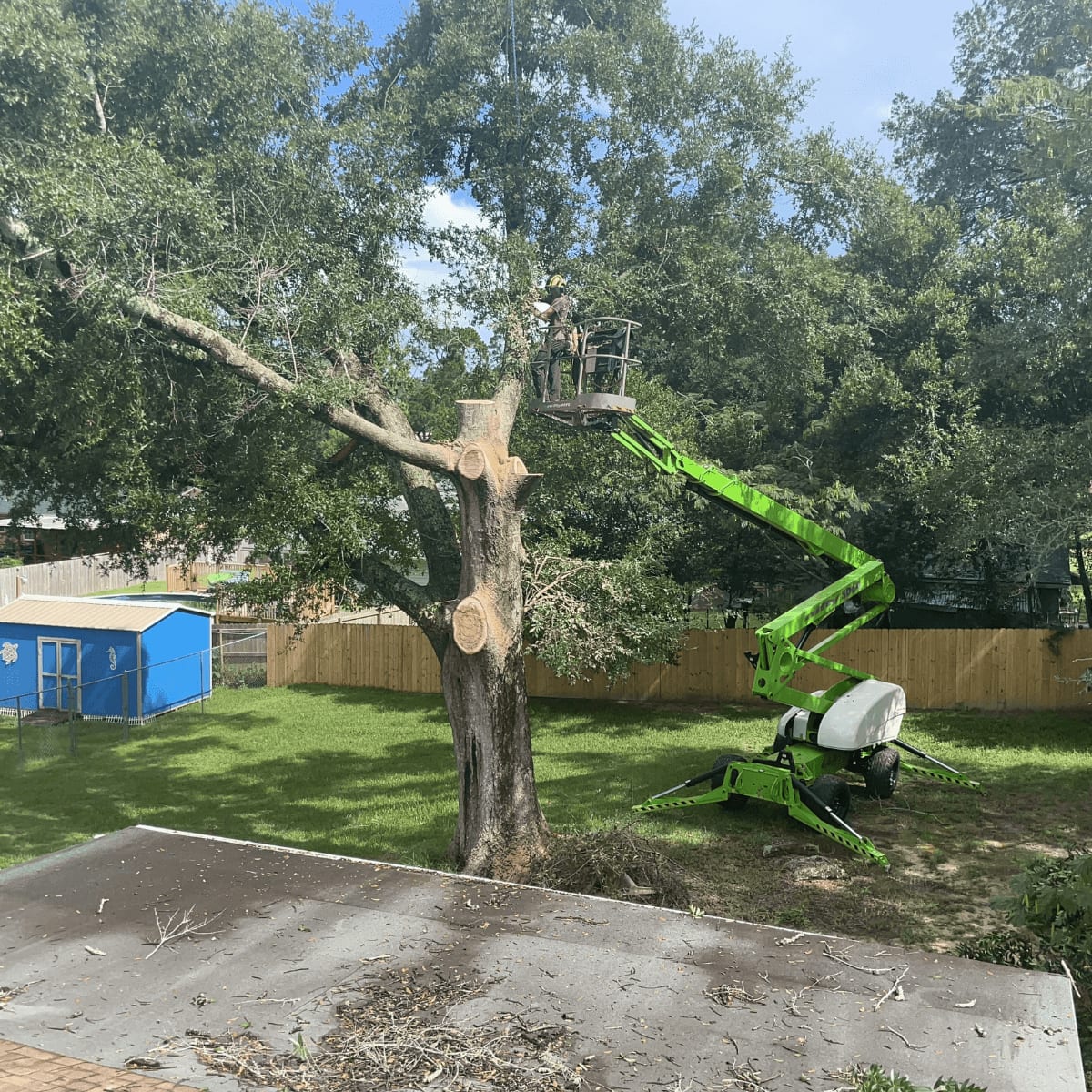
On a typical unincorporated residential lot, ordinary upland trees can be removed at the owner’s discretion. Two useful additions: under Florida Statute 163.045, a tree documented as dangerous by an ISA-certified arborist can be removed without local permitting anywhere in the state, and our arborist service produces that documentation. Inside city limits or in deed-restricted subdivisions, check first; HOA covenants and municipal codes sometimes protect specimen oaks even where the county doesn’t. When in doubt about one tree versus a whole site, treat them as different projects, because regulators do. Single hazardous trees are tree removal. Acreage is land clearing.
Wetlands, Easements, and Protected Areas: What Changes the Rules?
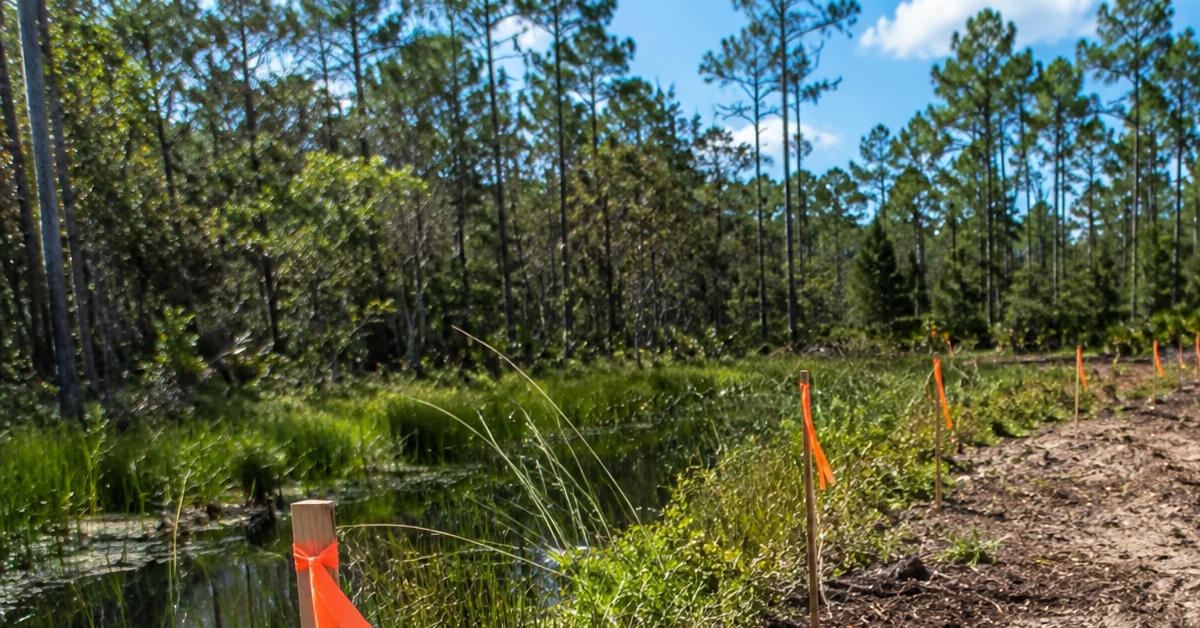
Wetlands: Jurisdiction belongs to the Florida Department of Environmental Protection and, for federal waters, the U.S. Army Corps under the Clean Water Act framework administered with the EPA. Wetlands aren’t always wet to the eye. Soil type and vegetation define them, and a formal delineation is the only reliable boundary. Clearing into one without authorization is the single most expensive mistake on this list.
Protected species: Gopher tortoises are state-listed, and their burrows dot the sandy uplands of Santa Rosa County. A pre-clearing survey is standard practice; occupied burrows require a Florida Fish and Wildlife Conservation Commission relocation permit before disturbance.
Easements: Utility and drainage easements cross private land everywhere in this county. Clearing them is usually fine; filling, grading, or blocking them is not, and the utility may have its own vegetation rules.
Heritage and specimen trees: Some jurisdictions and most quality subdivisions protect large live oaks. We flag these early because they’re usually worth designing around anyway.
What Stops a Land Clearing Project Midway?
The same four things, over and over: an undelineated wetland edge discovered by a neighbor’s complaint, an occupied tortoise burrow found under the brush line, erosion-control measures that weren’t installed before disturbance, and debris disposal with no plan, leaving piles that violate burn rules or sit for months. Every one of these is preventable in the planning week.
What We Commonly See Property Owners Miss
One of the most common calls we receive is from an owner who hired the cheapest bulldozer quote and now has a problem the quote never mentioned: a torn-up hardpan full of buried stumps that will sink every future structure, fence post, and sprinkler line. Clearing isn’t just knocking vegetation down. It’s what’s left when the machine leaves. Mulched-in-place brush from forestry mulching builds soil and controls erosion; bulldozed root balls buried in a fill pile rot into sinkholes under tomorrow’s driveway. The second miss: clearing every tree because the lot looked easier bare, then learning the appraisal valued the mature live oaks higher than the cleared footprint. Keep the keepers. We mark them before equipment arrives, and stump grinding the removals properly means the site is actually buildable, not just bare.
Land Clearing Checklist Before Equipment Arrives
- Pull the parcel record and check zoning, easements, and flood zone.
- Walk the property in wet season if possible. Note standing water, wetland vegetation, and burrows.
- Order a wetland delineation if anything looks marginal.
- Survey for gopher tortoise burrows in sandy open areas.
- Decide tree by tree: keep, remove, or get an arborist’s call on it.
- Plan debris: mulch in place, haul, or burn (with authorization).
- Confirm erosion control requirements before the first pass.
- Get the scope in writing, including stumps, grade, and final condition.
What Homeowners and Developers Should Do Next
For a homesite or small acreage, start with a walkthrough, not a quote. The right contractor will tell you what triggers review on your specific parcel before talking price. Bring your survey, ask how they handle wetland edges and tortoise burrows, and require the final-condition spec in writing. Then schedule clearing for the dry season when the ground carries equipment without rutting.
Common Questions About Land Clearing in Santa Rosa County
Can I clear my own land without a permit in Florida?
On your own upland residential property, routine clearing and brush management generally need no permit. Clearing tied to construction, or touching wetlands or protected species, requires approvals first. Verify your specific parcel before starting.
How much does land clearing cost in Northwest Florida?
It varies with vegetation density, acreage, stump handling, and disposal method. Forestry mulching is often the most economical for brush and small timber because nothing leaves the site. Site-specific quotes are the only honest answer.
Can you clear trees near wetlands at all?
Often yes, up to the delineated boundary, and selective hand-clearing within buffers is sometimes allowable with authorization. The boundary itself is the critical fact, which is why delineation comes before equipment.
What happens if you clear a wetland without a permit?
Stop-work orders, fines that can reach tens of thousands of dollars, and mandatory restoration that costs more than the original project. It’s the most expensive shortcut in land development.
What is the difference between brush hogging and land clearing?
Brush hogging and forestry mulching cut and mulch vegetation in place, ideal for maintenance and pre-development cleanup. Full land clearing removes trees, stumps, and roots to leave a buildable site. Many projects need the first long before the second.
Should stumps be removed during clearing or later?
During. Equipment is already mobilized, and buried or skipped stumps become settling, pest, and construction problems later. Grinding or extraction at clearing time is always cheaper than a return trip.
Clear It Once, Clear It Right
The cheapest land clearing in Santa Rosa County is the project that never gets stopped: boundaries known, burrows surveyed, debris planned, stumps handled, and the right trees still standing when the dust settles. That’s planning, not luck.
Planning to build or reclaim overgrown land in Pace, Milton, or anywhere in Northwest Florida? Contact D’s Trees for a walkthrough or request a free estimate. We clear sites the county never has to call about.