March 31, 2026
Tree borers are silent destroyers, often wreaking havoc on your valuable landscape before you even notice. In Pensacola, these insidious pests pose a significant threat to the health and structural integrity of countless trees. Understanding common borers and their destructive habits is the first step in protecting your property.
Key Takeaways
- Pensacola’s climate and environmental stressors make local trees highly susceptible to borer infestations.
- Key borers in the area include Laurel Wilt disease (transmitted by redbay ambrosia beetle), various Bark Beetles, and Clearwing Moths.
- Borers damage trees by tunneling beneath the bark, disrupting the vascular system and preventing water and nutrient transport.
- Early detection of signs like frass, exit holes, or sap oozing is crucial for effective treatment and tree survival.
- Prevention through proper tree care and professional intervention from a certified arborist like D’s Trees offers the best protection.
- Pensacola’s tree protection ordinances may require permits for removing borer-infested ‘protected’ or ‘heritage’ trees.
What Are Tree Borers?
Tree borers are the larval stage of certain insects, including beetles and moths, that feed on the inner bark and wood of trees. These pests are particularly destructive because their tunneling activity cuts off the tree’s ability to move water and nutrients from its roots to its canopy, essentially starving it.
- Life Cycle: Most borers start as eggs laid on the bark. Once hatched, the larvae bore into the tree, creating tunnels (galleries) where they feed and grow.
- Preferred Targets: Borers often target trees already weakened by stress from drought, poor soil, physical injury, or disease.
- Hidden Damage: Much of the damage occurs out of sight, beneath the bark, making early detection challenging without knowing what to look for.
Why Pensacola Trees Are Vulnerable to Borers
Pensacola’s unique environmental conditions create a fertile ground for tree borers to thrive and spread rapidly. Understanding these local factors explains why vigilance is so important for homeowners and property managers in the area.
Climate and Environmental Stressors
Our humid subtropical climate, while beautiful, also encourages the proliferation of pests and diseases. Trees in Pensacola face constant environmental pressures that can weaken their natural defenses.
- High Humidity and Heat: These conditions create an ideal breeding ground for many insect populations and fungal diseases.
- Frequent Storms and Hurricanes: Severe weather causes physical damage to trees, creating entry points for borers and stressing the tree’s overall health.
- Drought Periods: Even with significant rainfall, mid-to-late winter can bring dry spells, stressing trees and making them more susceptible to borer attacks.
- Salty Air: For trees near the coast, salt exposure can add another layer of stress, further compromising their immune systems.
Impact of Local Regulations
The City of Pensacola’s ordinances, designed to protect the urban forest, also mean that removing a borer-infested tree isn’t always straightforward. This can inadvertently allow infestations to spread if not managed properly.
- Permit Requirements: Removing ‘protected trees’ or ‘heritage trees,’ even if borer-damaged, requires a permit from the City of Pensacola. City of Pensacola Ordinances specify these rules.
- Arborist Approval: For heritage trees, an arborist’s approval is often a prerequisite for obtaining removal or pruning permits, adding a necessary but sometimes time-consuming step.
- Tree Protection Plans: New developments require detailed tree protection plans, emphasizing preservation, but existing trees can still fall victim to pests if not regularly monitored.
Identifying Common Tree Borers in Pensacola
Several types of borers commonly plague trees in Pensacola and the wider Northwest Florida region. Knowing which pests to look for is crucial for early intervention.
Emerald Ash Borer (EAB)
While not yet widespread in Florida, the Emerald Ash Borer (EAB) remains a significant future threat. This invasive beetle has devastated ash tree populations across North America.
- Target: Primarily ash trees.
- Damage: Larvae tunnel under the bark, disrupting water and nutrient flow, leading to tree death.
- Signs: D-shaped exit holes (about 1/8 inch wide), S-shaped galleries under the bark, canopy dieback starting from the top. USDA EAB Information provides further details.
Laurel Wilt Disease (Redbay Ambrosia Beetle)
This is arguably the most destructive invasive tree disease in North Florida, transmitted by the redbay ambrosia beetle. It has caused widespread damage to native redbay and other related species.
- Target: Redbay, avocado, sassafras, and other trees in the Lauraceae family.
- Damage: The beetle introduces a fungus that clogs the tree’s vascular system, causing rapid wilting and death, often within weeks or months.
- Signs: Sudden wilting or browning leaves that remain attached, black streaking in the sapwood under the bark. University of Florida IFAS Extension offers comprehensive guidance.
Bark Beetles
Various bark beetle species are common problems for pine trees in the Florida Panhandle, especially when trees are under stress from drought or heat.
- Target: Primarily pine trees, especially stressed ones.
- Damage: Tunnel under the bark, girdling the tree and preventing nutrient transport.
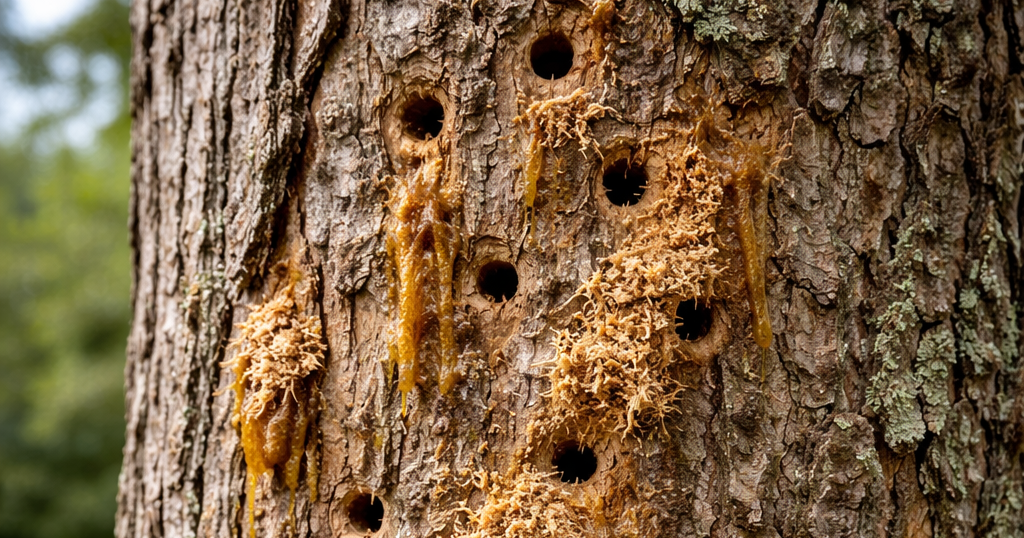
- Signs: Small pitch tubes (resin oozing from holes), reddish-brown boring dust (frass) in bark crevices or at the tree base, discolored needles, and eventual branch dieback.
Clearwing Moths
These moths have larvae that bore into the trunks and branches of various trees and shrubs, often mimicking wasps in their adult form.
- Target: Peachtree borer attacks peach, plum, and cherry trees. Ash borer (lilac borer) targets ash and lilac.
- Damage: Larvae tunnel into the woody tissue, weakening branches and trunks, leading to structural instability and dieback.
- Signs: Sawdust-like frass mixed with gummy sap, exit holes, and wilting foliage on affected branches.
Signs of Borer Infestation: What to Look For
Catching a borer infestation early significantly improves the chances of saving your tree. Knowing what specific clues to look for helps you act quickly.
- Sawdust-like Frass: This fine, powdery material is often expelled from borer tunnels and can accumulate on the bark or at the base of the tree.
- Exit Holes: Small, circular, oval, or D-shaped holes in the bark are where adult borers emerged. The shape can often indicate the specific borer type.
- Oozing Sap or Resin: Trees may exude sap or resin from borer entry or exit holes as a defense mechanism.
- Swollen or Callused Bark: Irregular growth patterns or swollen areas on the bark can indicate tunneling activity beneath.
- Branch Dieback: Branches, particularly in the upper canopy, may start to wilt, turn brown, or die prematurely.
- Discolored or Undersized Leaves: A compromised vascular system can lead to leaves that are smaller than normal or have an unhealthy, off-color appearance.
- Loose or Peeling Bark: In advanced stages, large sections of bark may detach from the trunk due to extensive tunneling underneath.
The Damage Borers Cause to Pensacola Trees
The primary damage caused by tree borers is the severe disruption of the tree’s vascular system. This system, composed of xylem and phloem, is responsible for transporting water and nutrients throughout the tree. When borers tunnel through these layers, they effectively cut off the tree’s lifeline.
Progression of Damage
Borer damage doesn’t happen overnight, but it can progress rapidly, especially in vulnerable trees. Understanding this timeline helps you appreciate the urgency of intervention.
- Initial Infestation: Often subtle, with larvae beginning to tunnel. The tree may show minor stress but no obvious borer signs.
- Moderate Infestation: More noticeable signs appear, such as frass, sap, and early canopy thinning. The vascular system is significantly compromised.
- Severe Infestation: Extensive tunneling leads to widespread branch dieback, significant canopy loss, and visible exit holes. The tree’s structural integrity is weakened.
- Tree Death: If untreated, the tree eventually succumbs to the damage, becoming a hazard that may require removal.
Long-Term Health Risks
Beyond immediate decline, borer damage leaves trees vulnerable to secondary issues and can pose safety risks.
- Increased Susceptibility to Disease: A weakened tree is less able to fight off fungal infections and other pathogens.
- Structural Weakness: Extensive internal tunneling can hollow out trunks and branches, making them prone to breaking during storms.
- Hazardous Trees: Dead or severely compromised trees can fall, causing property damage or injury.
- Spread of Infestation: Infested trees act as breeding grounds, allowing borers to spread to healthy, susceptible trees nearby.
Preventing Tree Borer Infestations
The best defense against tree borers is a strong offense. Proactive measures can significantly reduce the likelihood of an infestation in your Pensacola landscape.
Proper Tree Care Practices
Healthy trees are naturally more resistant to borer attacks. Good horticultural practices are your first line of defense.
- Consistent Watering: Ensure trees receive adequate water, especially during dry spells, to prevent drought stress.
- Appropriate Fertilization: Provide balanced nutrients to promote vigorous growth and strong defenses. Avoid over-fertilizing.
- Mulching: Apply a 2-4 inch layer of organic mulch around the base of trees, keeping it a few inches away from the trunk. This helps retain moisture and regulate soil temperature.
- Avoid Wounding: Be careful during lawn mowing and trimming to prevent injuries to the trunk and roots, which can attract borers.
- Prune Properly: Remove dead, diseased, or damaged branches promptly and correctly. Improper pruning can stress trees.
Strategic Planting and Species Selection
Choosing the right tree for the right place and considering borer resistance can save you headaches down the line.
- Native Species: Often better adapted to local conditions and may have natural resistance to local pests.
- Resistant Varieties: Where known, select tree species or cultivars that are less susceptible to common borers in the region.
- Proper Spacing: Ensure trees have enough room to grow without competing for resources, reducing stress.
- Inspect New Trees: Always check new trees for signs of pests or disease before planting them on your property.
Treating Tree Borer Infestations in Pensacola
Once a borer infestation is confirmed, deciding on the best course of action depends on the borer species, the tree’s health, and the severity of the damage. For effective results, especially in Pensacola’s unique environment, professional expertise often makes the difference.
DIY vs. Professional Treatment
While some minor issues might tempt a DIY approach, the complexity of borer infestations usually calls for professional expertise. Here’s a quick comparison:
| Feature | DIY Approach | Professional Arborist |
| Identification | Often inaccurate, leading to incorrect treatment. | Certified experts accurately identify the borer species and severity of infestation. |
| Treatment Options | Limited to store-bought insecticides, often applied incorrectly with risk of chemical misuse. | Advanced treatments such as systemic insecticides, trunk injections, biological controls, and targeted pruning. |
| Effectiveness | Low success rate, especially for established infestations. | High success rate using targeted, science-based treatment methods. |
| Safety | Risk of injury from improper tool use, falling branches, or chemical exposure. | Professionals use specialized equipment and strict safety procedures. |
| Cost | Lower upfront cost, but often leads to repeated failures and eventual tree loss. | A higher initial investment can save the tree and avoid expensive removal. |
| Local Regulations | Often unaware of local tree protection rules or permit requirements. | Familiar with Pensacola tree ordinances and permit processes. |
When to Call a Certified Arborist
When faced with a borer problem, a certified arborist is your best resource. D’s Trees, with a Master Arborist leading the team, brings unparalleled expertise to Pensacola’s tree care needs.
- Uncertain Identification: If you’re unsure what type of borer is affecting your tree, an arborist can provide an accurate diagnosis.
- Extensive Damage: When signs of infestation are widespread or the tree’s health is rapidly declining, professional intervention is critical.
- Large or Mature Trees: Treating or removing large trees is dangerous and requires specialized equipment and training.
- Preventative Care: A professional can advise on preventative measures and apply treatments to protect valuable trees before an infestation takes hold.
- Permit Navigation: D’s Trees can help you understand and navigate Pensacola’s specific permit requirements for tree removal or extensive pruning.
Understanding the Cost of Borer Treatment and Tree Removal
The cost of dealing with tree borers can vary significantly based on several factors. It’s important to get a clear estimate and understand what goes into the pricing.
Factors Affecting Cost
Several variables influence the final price tag for addressing a borer infestation.
- Tree Size and Species: Larger trees require more time, equipment, and expertise, increasing costs. Some species are also harder to treat.
- Severity of Infestation: Early-stage treatments are typically less expensive than dealing with a widespread, advanced infestation.
- Treatment Method: Topical sprays, systemic injections, or biological controls each have different material and labor costs.
- Accessibility: Trees in hard-to-reach locations (e.g., near structures, power lines) will incur higher costs due to increased complexity and safety measures.
- Tree Removal: If the tree is too damaged to save, removal costs depend on its size, location, and whether stump grinding is included. Expect prices to range from a few hundred dollars for small trees to over $2,000 for very large, complex removals.
- Emergency Services: Urgent removals or treatments after a storm will typically be more expensive than scheduled services.
Permit Considerations in Pensacola
Pensacola’s tree ordinances can add layer of consideration and potential cost.
- Permit Fees: The City of Pensacola may charge a fee for tree removal or pruning permits, especially for protected or heritage trees.
- Arborist Reports: If an arborist’s report is required for a permit, this can be an additional service cost, though often a small one in the context of overall tree care.
- Compliance: Failing to obtain necessary permits can result in fines, making it essential to comply with local regulations. D’s Trees is familiar with these local requirements.
Frequently Asked Questions
What exactly are tree borers, and how do they harm trees?
Tree borers are insect larvae that tunnel into the wood beneath a tree’s bark, disrupting the flow of water and nutrients. This damage weakens the tree, making it vulnerable to disease and often leading to its eventual death if left untreated. They are particularly destructive to stressed trees.
What are the common signs of a tree borer infestation?
Look for signs like sawdust-like frass on the bark or at the base, small exit holes (often D-shaped), oozing sap or resin, swollen or callused bark, and branch dieback. Discolored or undersized leaves can also indicate a problem.
Why are trees in Pensacola particularly vulnerable to borers?
Pensacola’s humid subtropical climate, coupled with stresses from storms, drought, and urban conditions, weakens trees. Stressed trees release chemical signals that attract borers, making them more susceptible to attack and rapid infestation spread.
How can I prevent tree borers from attacking my trees?
Preventative measures include proper watering, fertilization, and mulching to keep trees healthy. Avoid wounding trees and inspect them regularly for early signs of borers. Strategic planting of resistant species also helps reduce risk.
Can I treat tree borers myself, or do I need a professional?
While some minor infestations might be manageable, professional intervention is often necessary for effective treatment, especially for widespread or severe cases. A certified arborist can accurately identify the borer and recommend the best course of action.
Do I need a permit to remove a borer-infested tree in Pensacola?
Yes, for ‘protected trees’ and ‘heritage trees’ in Pensacola, permits are required for removal or pruning, even if they are borer-infested. An arborist’s approval is often needed for heritage trees. Always check with the City of Pensacola before removal.
What is the typical cost for tree borer treatment or removal in Pensacola?
Costs vary widely based on tree size, borer type, infestation severity, and treatment method. Simple insecticide applications might be less, while tree removal for severely damaged trees can range from hundreds to thousands of dollars. Get an estimate from a reputable arborist.
Conclusion
Tree borers pose a serious threat to the health and longevity of Pensacola’s trees, but early detection and informed action can make a real difference. Identifying infestations early and choosing the right treatment helps protect both your landscape and surrounding trees. D’s Trees, led by a Master Arborist, provides professional tree care across Northwest Florida, offering accurate diagnosis, effective treatment, and safe solutions for long-term tree health.