July 23, 2026
In most cases, stump grinding should happen at the same time as tree removal. Waiting often leads to sprouting, pest activity, lawn settling, and additional labor costs. Grinding the stump while the crew is already on site is usually the most cost-effective option.
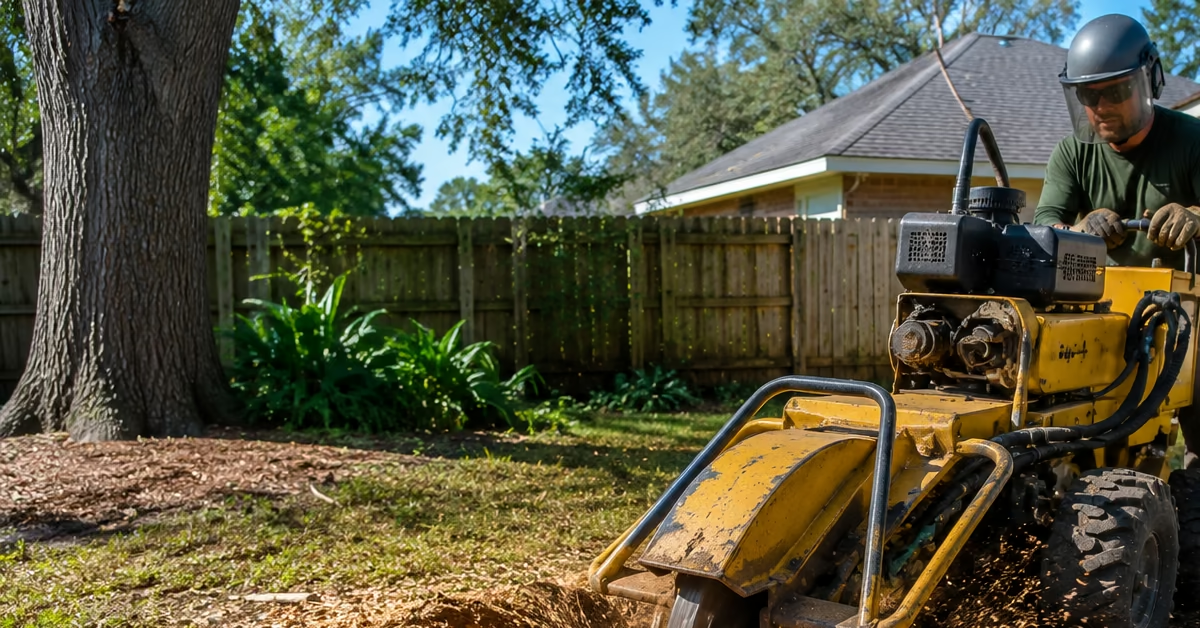
Grind the stump when the tree comes down, not later. In Pace and the rest of Santa Rosa County, a leftover stump becomes three problems on a schedule: subterranean termites and other pests colonize the decaying wood within a couple of seasons, oaks and crape myrtles send up persistent sprout thickets within months, and the slow-rotting root system leaves a sinking soft spot in the lawn for a decade. Grinding 6 to 12 inches below grade removes the food source, stops regrowth at the source, and leaves the spot ready for sod or replanting, all at the lowest price you’ll ever get for it: while the crew is already on site.
In This Article
- Why does grinding at removal time cost the least
- What actually happens to a stump left in a Pace yard
- The pest and disease signals to watch for
- Stump grinding versus full stump removal, honestly compared
- What we find in local yards years after a cheap removal
- When delaying turns a small job into a big one
Key Takeaways
- A stump is not inert. It’s a slow event: pests, sprouts, fungus, and settling on a predictable timeline.
- Subterranean termite pressure in Northwest Florida is among the highest in the country, and stumps are a standing invitation.
- Oak and crape myrtle stumps re-sprout aggressively; cutting the shoots without grinding feeds the cycle.
- Grinding goes 6 to 12 inches below grade. That’s enough for sod, gardens, and most replanting.
- Full stump removal (extraction) is rarely needed except where construction will go.
- Grinding at removal time skips a second mobilization charge entirely.
Stump Grinding by the Numbers
- Standard grind depth: 6 to 12 inches below grade, deeper on request for replanting or construction.
- A medium oak stump grinds out in under an hour once equipment is on site.
- Termite activity on decaying stumps commonly appears within 1 to 3 years in our climate.
- A large stump’s root system can take 10+ years to fully rot, settling the whole time.
- Re-sprouting from oak and crape myrtle stumps starts within weeks in a Florida growing season.
Why This Matters in Northwest Florida
Pace sits on warm, sandy, humid ground that decomposers love. The same conditions that grow a water oak fast also dissolve its stump fast, and everything that does the dissolving is something you don’t want migrating toward the house. Northwest Florida carries some of the heaviest subterranean termite pressure in the country, including established Formosan populations in the Pensacola area, and the University of Florida IFAS Extension identifies stumps and buried wood debris as classic harborage. A stump near the foundation can become an attractive food source for termites and other pests.
Should You Grind a Stump Immediately After Tree Removal?
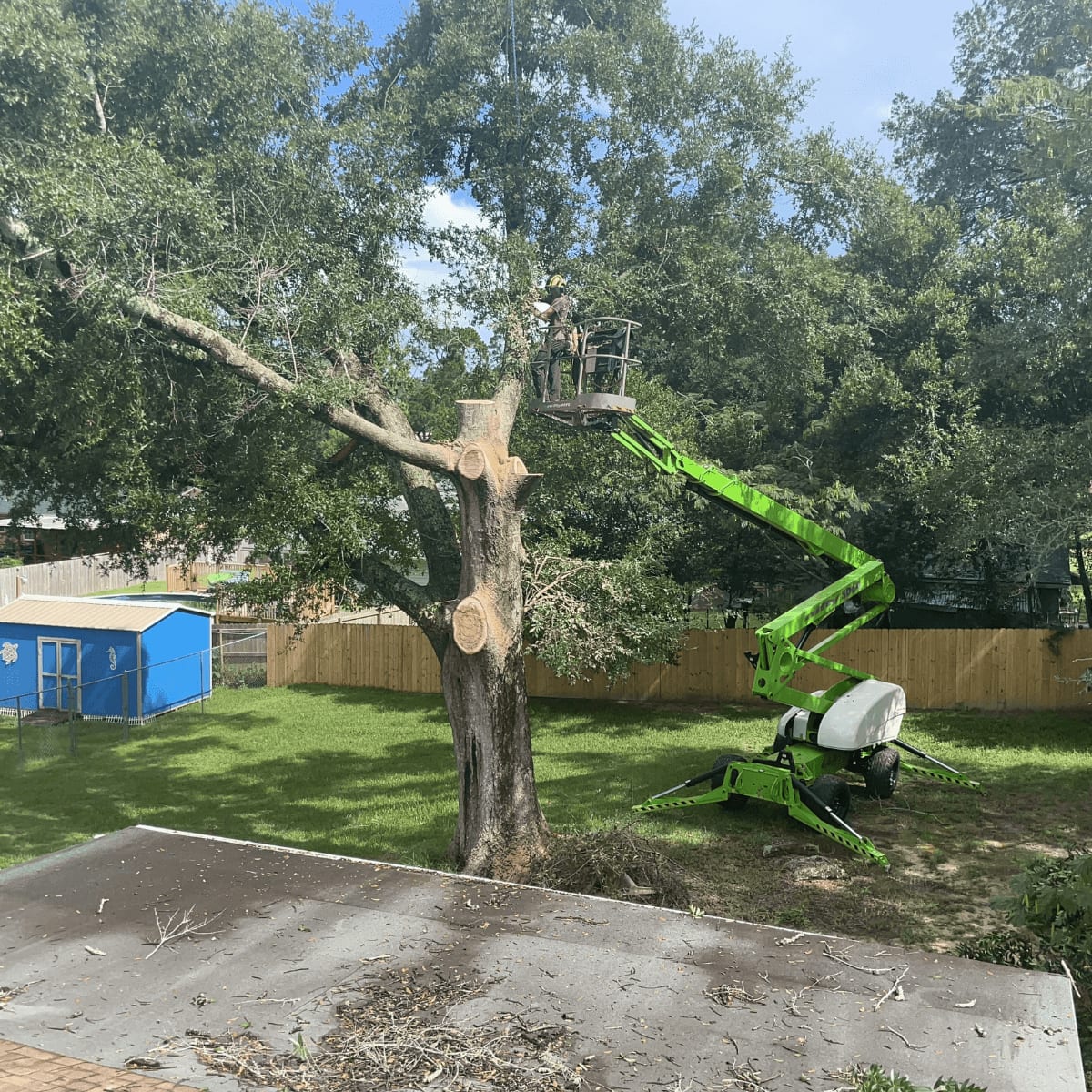
Yes, and the reasons are practical rather than cosmetic. The grinder arrives with the removal crew, so you pay no second trip charge. The ground is already disturbed, so one cleanup covers everything. And the countdown never starts: no colonization window, no sprout cycle, no year-three soft spot. Every tree removal quote we write in Pace includes the stump grinding line for exactly this reason, and Many homeowners who postpone grinding eventually schedule it later after dealing with sprouts, settling, or pest concerns, paying the mobilization charge the original visit would have absorbed.
How Much More Does Waiting Actually Cost?
Waiting rarely saves money. In most cases, it simply moves the expense into the future and adds new costs along the way.
- Grinding during tree removal eliminates a second mobilization fee.
- Delayed grinding often requires additional cleanup and regrading.
- Established sprout growth can increase labor time.
- Pest activity may lead to separate termite inspections or treatment costs.
- Lawn repair and sod replacement add expenses that could have been avoided.
What Happens If You Leave a Tree Stump Behind?
A predictable sequence plays out in this climate:
Months 1 to 6: Oaks, crape myrtles, Bradford pears, and chinaberry send up sprout clusters from the stump and surface roots. Mowing them off just signals the root system to push more.
Years 1 to 3: Decay fungi soften the wood. Carpenter ants move in, then subterranean termites find it. Mushrooms appear after rains, and in yards with pets and kids, some local fungi are nothing you want at ground level.
Years 3 to 10: The stump and root plate rot and the soil above them settles. The result is the familiar lawn crater that twists ankles and collects water, plus root channels that settle in lines radiating across the yard.
The whole time: Pest pressure sits closer to your foundation than it needs to be, and the USDA Forest Service notes that decaying wood also harbors root-disease fungi like Armillaria that can infect nearby healthy trees through root contact.
Signs a Stump Is Attracting Pests or Disease
- Mud tubes on or near the stump: subterranean termites at work
- Piles of coarse sawdust at the base: carpenter ants excavating
- Soft, spongy wood you can push a screwdriver into
- Mushroom clusters or honey-colored fungal growth at the base after rain
- Wilting or dieback in a nearby tree that shares root space
- Hollowed sections that hold standing water and breed mosquitoes
Any of these means the stump is past due. If termites are visible, it’s also worth a pest inspection at the house itself, since the stump may not be their only stop. The Florida Department of Agriculture and Consumer Services maintains consumer resources on termite protection worth a read for any homeowner in this county.
Stump Grinding vs Full Stump Removal
| Factor | Stump Grinding | Full Stump Removal (Extraction) |
| What happens | The stump is ground into wood chips 6 to 12 inches below grade. | The entire stump and root ball are excavated and removed. |
| Yard impact | Minimal. One machine with a small footprint. | Major excavation with a large hole and heavy equipment. |
| Cost | Moderate | Several times higher |
| Ready for sod or a garden | Yes, after the wood chips settle or are replaced with soil. | Yes, after significant backfilling. |
| Replanting a tree in the same spot | Usually possible with a slight offset. | Best option for replanting in the exact same location. |
| When it’s the right choice | The best option for most homeowners. | Ideal for construction projects, driveways, and foundation work. |
For nearly every Pace yard, grinding is the answer. Extraction earns its cost only where a slab, pool, or driveway is going, which is really a land clearing decision rather than a landscaping one. One bonus of grinding: the chips. Mixed into beds or composted, they’re useful mulch, and we also supply clean wood chips separately if you want more.
What We Commonly See in Pace Yards
One of the most common calls we receive is from a homeowner who paid a fly-by-night crew for a “removal” three years ago and now has a crater ringed by oak sprouts, a termite letter from their pest company, and a stump the original crew quietly cut flush and left. Flush-cutting hides the stump; it doesn’t remove it. Grass clippings cover it, the mower finds it, and the decay timeline runs underneath regardless. The detail competitors rarely mention: surface roots matter too. On big water oaks we chase the major laterals a few feet out during grinding, because grinding only the center leaves a wheel of woody ridges that surface as the lawn settles. Ask any grinder what their pass actually covers. The good ones will show you.
When Delaying Stump Grinding Creates Bigger Problems
Delay converts a small line item into three bigger ones. The sprout thicket becomes established regrowth with its own root reinforcement, which takes longer to grind and kill. The pest colony matures and starts scouting the house. And the settling begins, which means topsoil, regrading, and sod on top of the eventual grind. There’s also a season factor in Santa Rosa County: stumps left through a wet summer decay and attract pests fastest, so a spring removal with a skipped stump is colonized by fall. If the stump is already years old, nothing is lost yet. Old stumps grind the same as fresh ones. The only thing that got more expensive is everything around them.
What Homeowners Should Do Next
Walk the yard and count the stumps, including the flush-cut ones hiding in the grass. Probe each with a screwdriver and check for mud tubes, sawdust, and mushrooms. If you’re planning a tree removal, get the grind included in the same quote. If a stump shows pest signs, schedule grinding promptly and have the house’s termite protection verified while you’re at it.
Common Questions About Stump Grinding in Pace
How much does stump grinding cost in Pace, FL?
It scales with stump diameter, wood hardness, depth requested, and access. Bundled with tree removal it’s at its cheapest because the trip charge disappears. Standalone grinding of multiple stumps in one visit is the next best value.
How deep does a stump grinder go?
Standard is 6 to 12 inches below grade, which handles sod, flower beds, and most replanting. We grind deeper on request for construction or exact-spot replanting.
Can I plant a new tree where a stump was ground?
Yes, ideally offset a couple of feet from the old center, with fresh soil replacing the chip-heavy backfill. For planting in the exact spot, a deeper grind or extraction is the better setup.
Do termites in a stump mean my house is next?
Not automatically, but subterranean termites forage outward from harborage, and a colonized stump near the foundation shortens their trip. Remove the stump and have the home’s termite protection checked.
What happens to the wood chips after grinding?
Your choice: we can leave them as backfill that settles naturally, rake them out for use as mulch, or haul them and backfill with soil so the spot is sod-ready immediately.
Will grinding stop the stump from sprouting?
Yes. Grinding removes the crown tissue the sprouts grow from, which is why it succeeds where repeated cutting and herbicides struggle on oaks and crape myrtles.
Finish the Job While the Crew Is Already There
A tree removal that leaves the stump isn’t finished; it’s paused, and the pause has a price that compounds in this climate. Grinding on removal day closes the loop for the lowest cost it will ever be.
Got a stump, or a removal coming up, in Pace or anywhere in Santa Rosa County? Contact D’s Trees or request a free estimate. One visit, no leftovers.