September 4, 2026
A tree can look rough after a storm, drop leaves during a stressful season, or develop a noticeable lean without automatically needing to come down. The question of when to remove a tree in Navarre, FL starts with a closer look at the tree’s health, structure, roots, surroundings, and likelihood of failure.
If your first search was “tree removal Navarre FL,” pause before assuming removal is the only outcome. Some trees can be pruned, treated, supported, or monitored. Others have damage that cannot be corrected safely, especially when the tree could strike a home, driveway, pool, fence, utility line, or frequently used part of the yard.
Start With an Evaluation, Not an Assumption
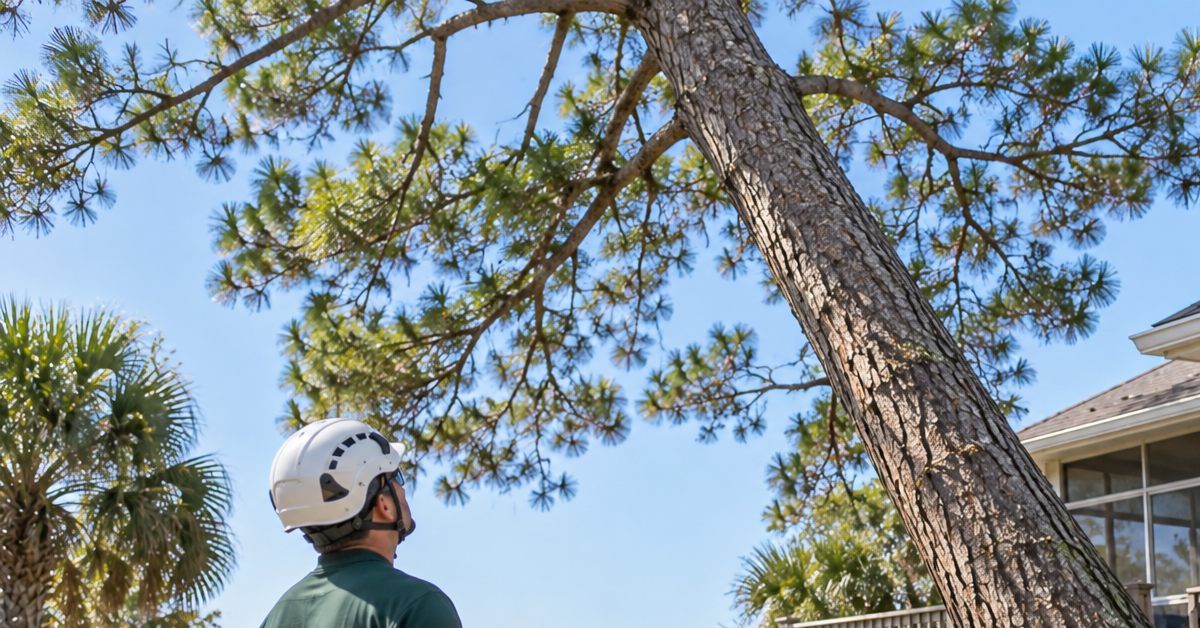
One visible defect rarely tells the whole story. A tree may have sparse foliage because of drought stress, flooding, root disturbance, insects, disease, or normal seasonal behavior. A lean may have developed gradually as the tree grew toward light, or it may have appeared suddenly because roots shifted during a storm.
The condition also has to be considered in context. A defect in a tree standing well away from people and structures may call for monitoring. The same defect over a bedroom, parking area, or play space can carry a very different level of risk.
The International Society of Arboriculture explains that tree risk depends on both the potential for failure and the presence of a target that could be struck. It also identifies pruning, cabling or bracing, routine care, target management, and removal as possible ways to reduce risk. That is why a professional tree-risk assessment should focus on reasonable options, not begin with a predetermined recommendation.
When to Remove a Tree in Navarre, FL
Removal may be the safest recommendation when a tree has no realistic path to recovery or when available treatments cannot reduce risk to an acceptable level. The decision should account for the entire tree, including the crown, trunk, major roots, soil, and nearby targets.
Situations that often justify a prompt removal evaluation include:
- A dead tree or one with advanced, irreversible decline
- Extensive trunk or root decay that has weakened essential supporting wood
- A deep crack, split main trunk, or major failed union
- A new lean accompanied by lifted roots, exposed roots, or moving soil
- Severe storm damage that leaves the remaining crown or trunk structurally unbalanced
- Major root loss from construction, trenching, grade changes, erosion, or physical injury
- An unavoidable conflict with approved construction where preservation is not practical
These signs still require professional interpretation. A cavity does not reveal how much sound wood remains, and mushrooms at the base do not identify the full extent of root decay by themselves. An arborist may use a detailed visual inspection and, when warranted, additional diagnostic methods to evaluate concealed defects.
For a closer look at health-related clues, see D’s Trees’ guide to signs of a sick or dying tree. The purpose of this article is different: it helps connect those observations to the decision between removal and other risk-reduction options.
When Pruning, Treatment, Support, or Monitoring May Be Possible
Removal is not automatically necessary because a tree has dead branches, storm damage, pests, or a structural concern. A tree that is otherwise vigorous and has intact major support structures may respond well to focused care.
Depending on the species, condition, and location, an arborist may recommend:
- Selective pruning or deadwood removal to address damaged branches
- Structural pruning to improve branch arrangement and reduce specific loads
- Cabling or bracing for certain weak unions that are suitable for support
- Treatment for a correctly identified pest or disease problem
- Root-zone or soil improvements when site stress can be corrected
- Scheduled monitoring to document whether a defect is stable or progressing
- Moving a planned walkway, structure, or landscape feature when that preserves a valuable tree safely
Each alternative has limits. Support hardware does not make every weak tree safe and requires future inspection. Pruning cannot repair a split trunk or replace failed anchoring roots. Treatment is useful only when the underlying problem can be identified and managed.
Storms and Saturated Ground Can Change Stability Quickly
Navarre homeowners are familiar with tropical systems, strong thunderstorms, and heavy rain. A tree that appeared stable before a storm may deserve another look after high winds, prolonged rainfall, or a sudden change in drainage around the property.
Pay particular attention to a lean that is new rather than longstanding. Fresh gaps in the soil, a raised root plate, exposed or torn roots, and soil mounding on one side of the trunk can indicate that the anchoring system moved. Those changes matter more than the angle alone.
After the weather clears, inspect from a safe distance and take photographs from the same positions. Compare the trunk angle, soil line, visible roots, and canopy with older photos if available. Do not stand beneath hanging branches or try to push, pull, cut, or stabilize a leaning tree yourself.
For broader seasonal planning, review the company’s hurricane tree-preparation guide. If damage has already occurred, its article on insurance and storm-related tree removal addresses a separate question that may become relevant after the site is safe.
Location Can Turn a Defect Into a Serious Risk
Tree condition is only part of the decision. A professional also considers what is within reach if the entire tree, a trunk section, or a major limb fails.
On a residential lot, potential targets may include the house, garage, driveway, fence, pool, vehicles, septic components, utility lines, and areas where people spend time. Limited clearance can also affect how urgently a defect should be addressed and how any work must be planned, but proximity to a structure alone does not prove that removal is needed.
Root conflicts need the same careful approach. Visible surface roots, for example, are not automatically defective. Concern increases when roots are severed, decayed, girdling the trunk, lifting with the soil, or damaged throughout a critical part of the root zone. D’s Trees covers these issues in more detail in when tree roots become a safety or structural concern.
Warning Signs That Need Urgent Attention
Some conditions should not wait for a routine appointment. Keep people and pets out of the possible fall zone and request prompt help if you see:
- A tree that suddenly leaned after wind or heavy rain
- Freshly lifted soil, exposed roots, or a moving root plate
- A split trunk, widening crack, or large branch separating from the tree
- A broken limb hanging over a roof, driveway, walkway, or occupied area
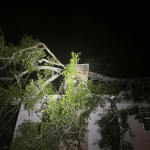
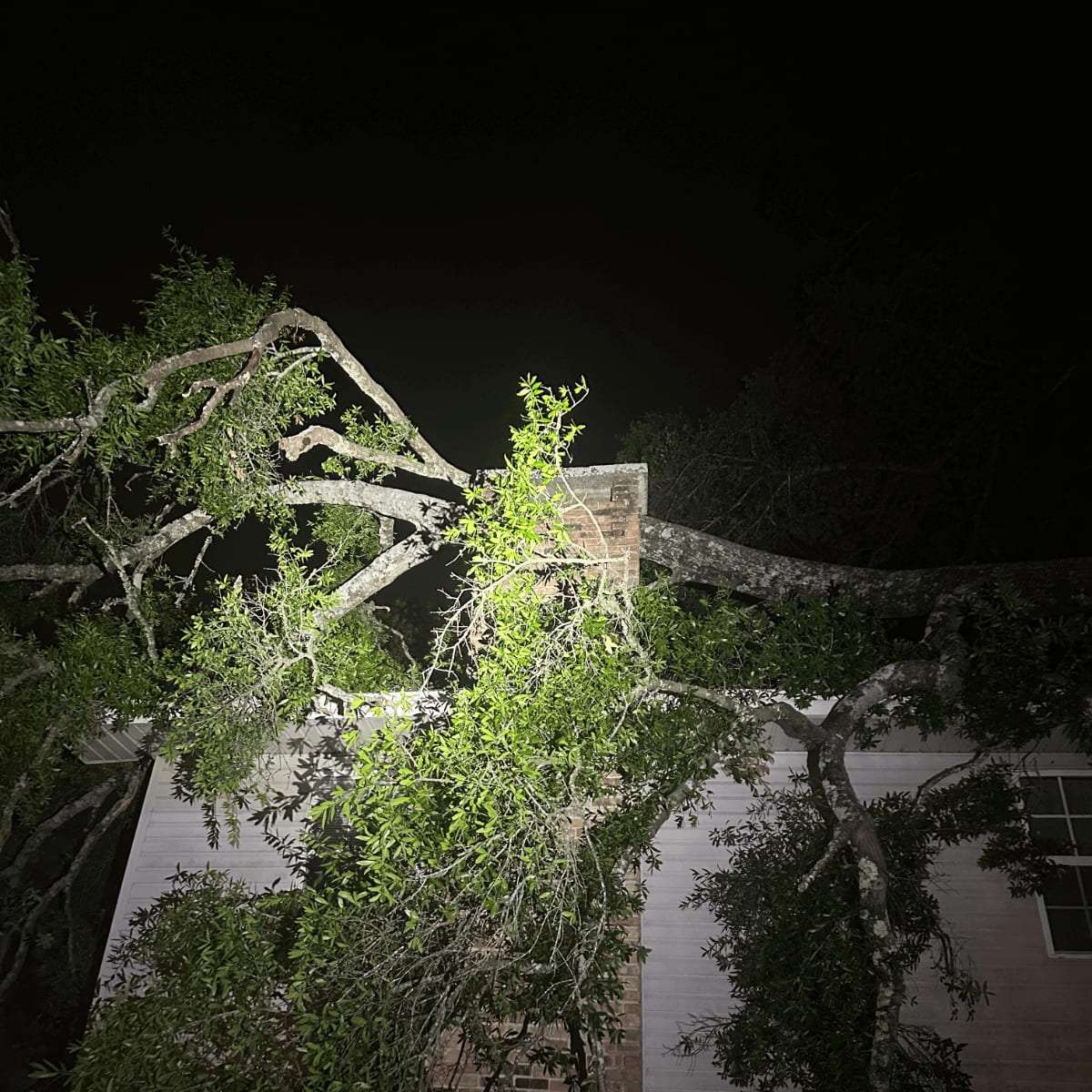
- A tree resting on a building, blocking access, or threatening to fall farther
- Any tree or branch in contact with an electrical line
A tree can remain under tension after a storm, and broken wood may shift without warning. Do not climb the tree, work beneath suspended limbs, operate a chainsaw at height, or attempt large-branch removal near a structure.
For an active hazard, call the utility first if wires are involved. For other urgent tree conditions, contact D’s Trees through its 24/7 emergency tree service at (850) 999-0110.
What a Professional Tree-Risk Evaluation Considers
A professional evaluation connects visible conditions to the likelihood and consequences of failure. The arborist may examine crown density, deadwood, branch unions, old wounds, cracks, decay indicators, trunk flare, major roots, soil changes, and evidence of recent construction or storm movement.
The assessment should also consider the tree’s species, size, condition before the damage, expected weather exposure, and the use of the surrounding space. A low-use corner of a large property presents different consequences than a tree beside the only driveway or directly over a home.
Not every assessment requires specialized equipment. Some decisions can be made through a systematic visual inspection. When the extent of decay or root damage is unclear, the arborist may recommend additional evaluation or monitoring rather than guessing.
The final recommendation should explain the concern, the likely failure area, what could be struck, and the practical ways to reduce risk. Those options may range from pruning or changing how the target area is used to support systems, treatment, monitoring, or professional tree removal.
What to Check Before Authorizing Removal
Once removal is recommended, ask enough questions to understand the basis and scope of the work. A clear proposal helps prevent surprises and gives you a record of the planned service.
Before scheduling, confirm:
- Why removal is recommended and whether reasonable alternatives were considered
- Which trees and branches are included in the written estimate
- How nearby structures, access points, utilities, and landscape features affect the plan
- Whether wood, brush, and cleanup are included
- Whether stump grinding is included or priced separately
- Whether an HOA review, property restriction, or government approval applies
- What documentation you should keep if storm damage or insurance is involved
Plan for the Stump and Remaining Site
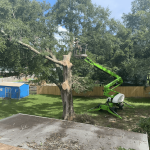
Tree removal usually leaves a stump and major roots in place unless the scope says otherwise. Stump grinding may be recommended when the remaining stump would interfere with mowing, replanting, access, or future use of the space.
Grinding and complete root removal are different services, so discuss the intended depth, cleanup, and plans for the area before work begins. The right choice depends on utilities, nearby hardscape, drainage, the future landscape plan, and how the site will be used. D’s Trees explains the timing considerations in its article on stump grinding after tree removal and provides a separate stump removal and grinding service.
Request a Professional Tree Evaluation in Navarre
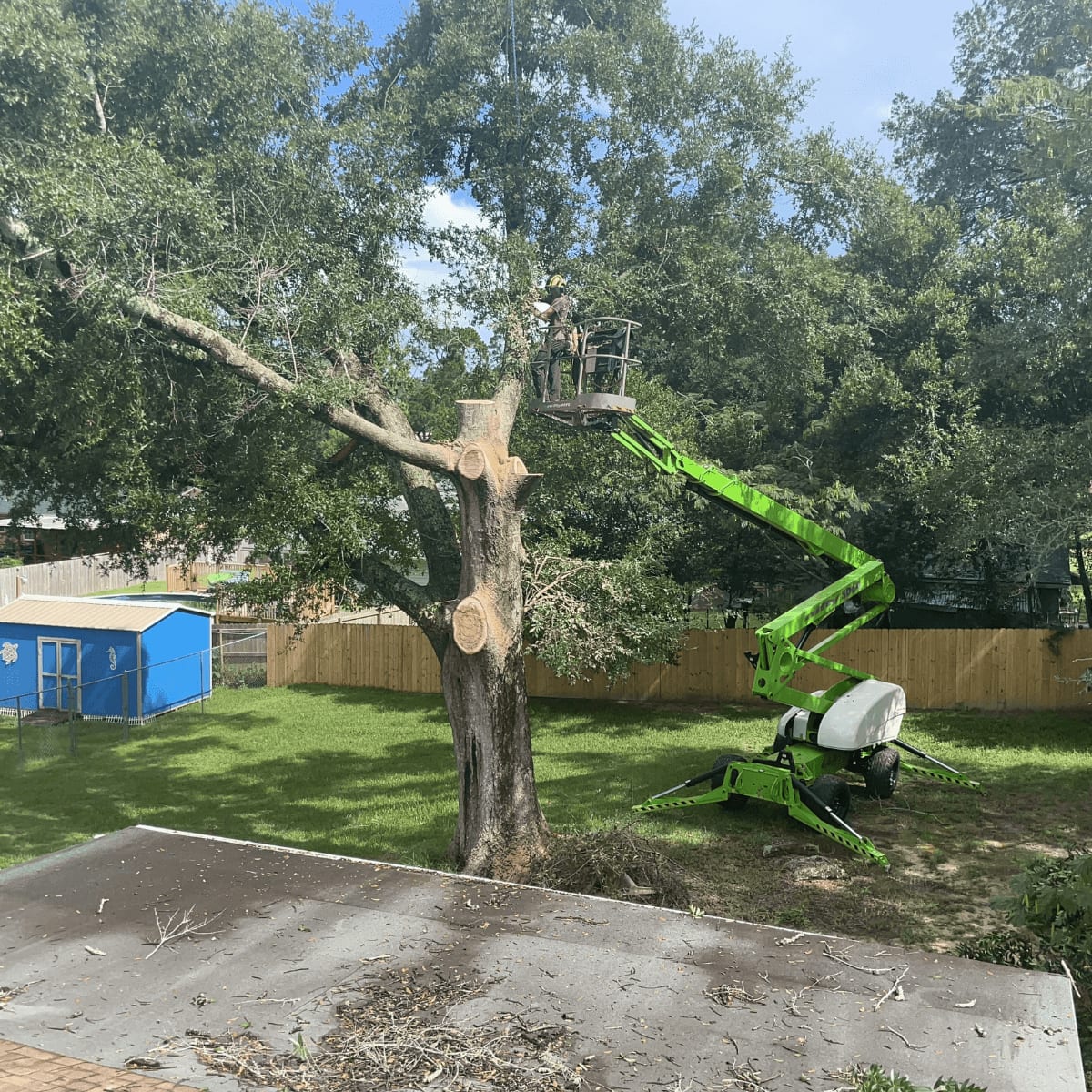
If a tree is declining, leaning, storm-damaged, or close to something it could strike, an on-site evaluation can clarify what the visible signs actually mean. D’s Trees serves Navarre and lists an ISA Board Certified Master Arborist and Certified Arborists on staff. Our team provides arborist consultations, tree-risk assessments, pruning, cabling and bracing, removal, stump grinding, and emergency service.
Visit the Navarre tree-service page to review local service information, or request a free estimate for a professional evaluation. For an urgent hazard that does not involve electrical contact, call (850) 999-0110. If power lines are involved, stay away and contact the utility provider first.